 Woyɛ dino bɛn? Nsɛmmisa agoro
 Dino ko
 Dino mmirikatuo
 Dino agodie nketewa
 Stika nwoma
 Dino TOP nhyehyɛeɛ
 Ma me nwanwa!
Berɛ bɛn na ɛtenaa ase?

Na ne kɛseɛ yɛ sɛn?
Na ne tenten yɛ sɛn?
Na ne korɔn yɛ sɛn?
Na ne mu yɛ duru sɛn?
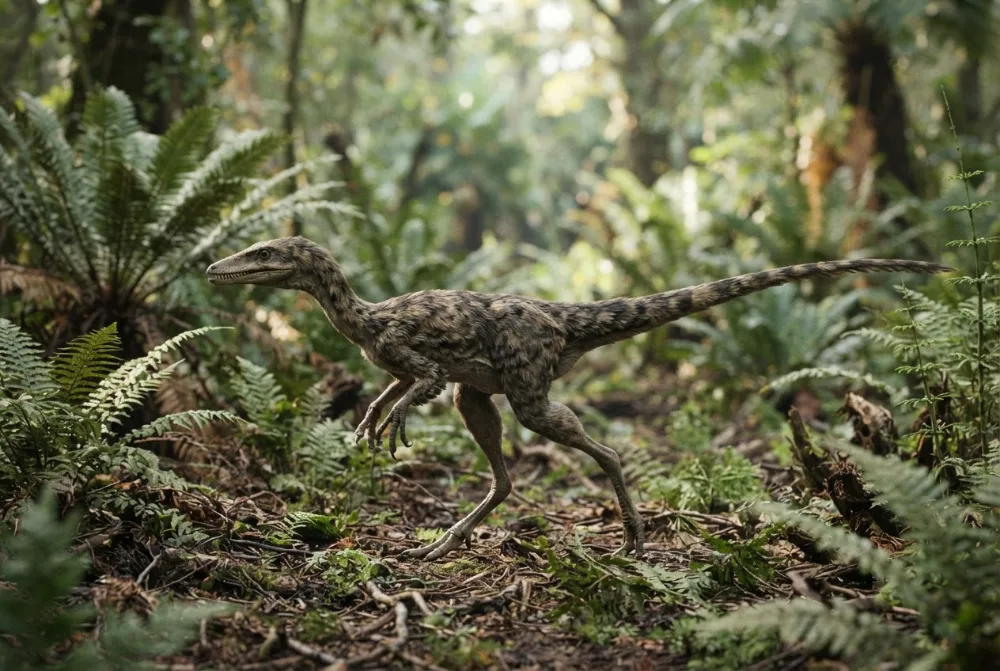
 ne tenten te sɛ fie agyinamoa 3 firi hwene kɔsi dua🍌ne tenten te sɛ kwadu 8 a wɔde abɔ toatoa sone mu duru bɛyɛ sɛ fie agyinamoa🍌ne mu duru te sɛ kwadu 25🪑ketewa ara ma ɔbɛtumi afa akonnwa ase🏃anka ɔbɛtumi atu mmirika mita 100 wɔ sikɛn 5.6 mu (onipa a ɔyɛ ntɛm sen biara hia 9.6)
Compsognathus kɛseɛ yɛ sɛn sɛ wode toto WO ho a?
Akontaa nko ara wɔ wo browser mu. Yɛnkora biribiara so, na yɛmmfa biribiara nkɔ baabiara.
Na ɛyɛ ntɛm sɛn?


Nsɛm a ɛyɛ anigye
Compsognathus was one of the smallest dinosaurs ever discovered. Until the 1990s, it was the smallest known non-bird dinosaur.1
Scientists know exactly what Compsognathus ate because both fossils have the remains of lizards in their bellies.1
The first Compsognathus fossil was found in Germany in the 1850s. It was originally thought to be a lizard, not a dinosaur.1
Compsognathus lived on islands in a warm, tropical sea. Its fossils were preserved in fine limestone that was once lagoon mud.1
The German specimen of Compsognathus is only about 0.7 metres (2.3 feet) long. Scientists think it was a juvenile.21
Compsognathus had small, sharp teeth. The front teeth had no serrations, but the back teeth had fine serrations on the rear edge.1
Nsɛm a wɔbisa bebree fa Compsognathus ho
?How big was Compsognathus?
The smaller German specimen was about 0.7 to 0.9 m (2.3 to 3 ft) long and weighed around 0.3 to 0.6 kg (0.7 to 1.3 lb). The larger French specimen reached about 1.25 to 1.4 m (4.1 to 4.6 ft) and weighed up to 3.5 kg (7.7 lb).12
?Was Compsognathus a dinosaur?
Yes, Compsognathus was a small, bipedal, carnivorous theropod dinosaur. It is one of the first theropod dinosaurs known from a nearly complete skeleton.1
?What did Compsognathus eat?
Compsognathus was a carnivore that ate small vertebrates, especially lizards. Both known fossils have lizard remains preserved in their stomachs.12
?How fast could Compsognathus run?
Maybe up to about 64 km/h (40 mph), almost as fast as a galloping horse! A computer model of its legs and muscles worked this out, though some scientists think that is too fast. It was small, light and very quick.3
?Did Compsognathus have feathers?
No direct feather fossils have been found with Compsognathus. It lived in the same environment as the feathered dinosaur Archaeopteryx, so some scientists think it may have had simple feathers, but there is no proof yet.1
?Was Compsognathus smaller than a chicken?
The German specimen was roughly chicken-sized, about 0.7 m (2.3 ft) long. The French specimen was larger, about 1.25 to 1.4 m (4.1 to 4.6 ft).12
?When did Compsognathus live?
Compsognathus lived about 150 million years ago, during the late Jurassic period. Its fossils are from the Tithonian age.12
?Where was Compsognathus found?
Two nearly complete fossils have been found: one in Bavaria, Germany, discovered in the 1850s, and one in Canjuers near Nice, France, discovered in the 1970s. Possible teeth have also been found in Portugal.12
?Could Compsognathus swim?
There is no evidence that Compsognathus could swim, but it lived on tropical islands near lagoons and may have occasionally entered shallow water.1
?Was Compsognathus the smallest dinosaur?
Until the 1990s, it was the smallest known non-bird dinosaur, but later discoveries like Microraptor and Mahakala are even smaller.1
Atosɛm sɛefoɔ
Atosɛm: Compsognathus is often shown as a tiny dinosaur that hunted in packs.
Nokorɛ: There is no evidence that Compsognathus lived or hunted in groups. The fossils found are of single animals.1
Ma dino ho animdefoɔ
- Nyansahu din
- Compsognathus
- Obi a ɔtoo din
- Wagner 18614
- Kuo
- Dino a wɔwe nam
- Abusua / kuo kɛseɛ
- Compsognathidae4
- Nkyekyɛmu
- Theropoda > Compsognathidae4
- Abotan no mfeɛ
- mfeɛ ɔpepem 155 kɔsi 145 (Kimmeridgian / Tithonian)4
- Abotan nhyehyɛeɛ
- Alcobaça, Painten4
- Aman
- Frɛnse, Pɔtugal, Gyaaman4
- Fɔsil nkyerɛwee
- 4 wɔ The Paleobiology Database mu4
- Nhunumu
- The first Compsognathus fossil was found in Germany in the 1850s by a doctor named Joseph Oberndorfer. He lent it to paleontologist Johann A. Wagner, who named it Compsognathus longipes in 1859.1
- Wɔda so gye ho akyinnye
- Scientists are not sure if the smaller German specimen is a juvenile or a different species. Some think both fossils belong to the same species, Compsognathus longipes.1
Baabi a nsɛm no firi
- Compsognathus (en.wikipedia.org)
- Compsognathus | Natural History Museum (nhm.ac.uk)
- Compsognathus- Enchanted Learning Software (enchantedlearning.com)
- Compsognathus in The Paleobiology Database (CC BY 4.0): mfeɛ, mmeaeɛ, abotan nhyehyɛeɛ, nkyekyɛmu.
Asɛm biara a ɛwɔ krataafa yi so wɔ nɔma a ɛkyerɛ baabi a ɛfiri. Sɛ yɛfom biribi a, kafra, yɛyɛ dino dɔfoɔ, yɛnyɛ nyansahu nsɛmma krataa. Ka kyerɛ yɛn wɔ [email protected] na yɛbɛsiesie.
 Ɔkɔm de Rex! Dino Wiki yɛ agya bi adwuma a ɔyɛɛ maa ne babarima a ɔdɔ dino. Ɛyɛ kwa, dawurubɔ biara nni mu, akyidifoɔ biara nni mu. Mpanimfoɔ bɛtumi ama Rex aduane kakra, na aboa ama Dino Wiki atena intanɛt so.Ma Rex aduane
 Allosaurus
 Carnotaurus
 Dilophosaurus
 Giganotosaurus
 Paronychodon
 Megalosaurus
 Brachiosaurus
 Diplodocus
 Brontosaurus
 Camarasaurus
 Morosaurus
 Apatosaurus