 Woyɛ dino bɛn? Nsɛmmisa agoro
 Dino ko
 Dino mmirikatuo
 Dino agodie nketewa
 Stika nwoma
 Dino TOP nhyehyɛeɛ
 Ma me nwanwa!
Berɛ bɛn na ɛtenaa ase?

Na ne kɛseɛ yɛ sɛn?
Na ne tenten yɛ sɛn?
Na ne korɔn yɛ sɛn?
nsusuiɛ
Halszkaraptor kɛseɛ yɛ sɛn sɛ wode toto WO ho a?
Akontaa nko ara wɔ wo browser mu. Yɛnkora biribiara so, na yɛmmfa biribiara nkɔ baabiara.
Na ɛyɛ ntɛm sɛn?


Nsɛm a ɛyɛ anigye
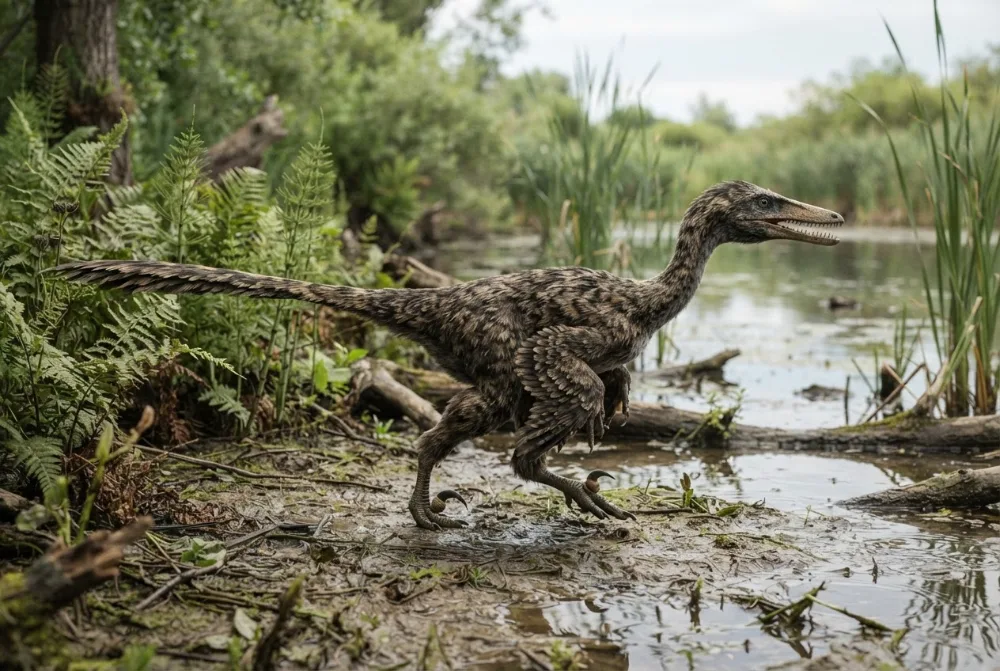
Halszkaraptor had a very long neck for a dinosaur, about 20 cm (7.9 in) long, which is almost half its total body length.1
Its front limbs were short and flipper-like, which scientists think it may have used to paddle in water.1
The snout had many tiny holes that might have held sensors to detect vibrations in water, like a crocodile.1
The only known fossil was smuggled out of Mongolia and later returned after scientists proved it was real using a powerful X-ray scanner.1
It lived about 75 million years ago, during the Late Cretaceous period.1
Some scientists think Halszkaraptor was an insectivore that hunted small bugs in murky water or at night, because its eyes were large.1
Nsɛm a wɔbisa bebree fa Halszkaraptor ho
?Was Halszkaraptor a dinosaur?
Yes, Halszkaraptor was a small, duck-sized dromaeosaurid dinosaur from the Late Cretaceous.1
?How big was Halszkaraptor?
About the size of a mallard duck. Its head was 7 cm long and its neck was 20 cm long.1
?Could Halszkaraptor swim?
Some scientists think it could swim using flipper-like forelimbs and a long neck, but others disagree because its bones were not dense enough.12
?What did Halszkaraptor eat?
It likely ate small fish or insects. Its sharp, backward-curving teeth and snout sensors helped it catch prey in water.13
?Why did Halszkaraptor have a long neck?
Its long, swan-like neck helped it strike at prey in the water, similar to how herons hunt today.13
?When did Halszkaraptor live?
It lived about 75 million years ago, during the Late Cretaceous period.1
Atosɛm sɛefoɔ
Atosɛm: Halszkaraptor was a fully aquatic dinosaur like a dolphin.
Nokorɛ: Scientists debate whether it was semi-aquatic. It had some adaptations for water, like a long neck and flipper-like arms, but also strong legs for running on land. It likely spent time both in water and on land.1
Ma dino ho animdefoɔ
- Nyansahu din
- Halszkaraptor
- Obi a ɔtoo din
- Cau et al. 20174
- Kuo
- Raptɔ
- Abusua / kuo kɛseɛ
- Dromaeosauridae4
- Nkyekyɛmu
- Theropoda > Dromaeosauridae4
- Abotan no mfeɛ
- mfeɛ ɔpepem 84 kɔsi 72 (Campanian)4
- Abotan nhyehyɛeɛ
- Djadokhta4
- Aman
- Mongolia4
- Fɔsil nkyerɛwee
- 1 wɔ The Paleobiology Database mu4
- Nhunumu
- The fossil was found by poachers in Mongolia before 2011, then bought by a dealer who showed it to scientists in 2015. It was named Halszkaraptor escuilliei in 2017 by Andrea Cau and colleagues.1
- Wɔda so gye ho akyinnye
- Scientists are still debating whether Halszkaraptor was truly semi-aquatic or mainly lived on land and ate insects.1
Baabi a nsɛm no firi
- Halszkaraptor (en.wikipedia.org)
- Synchrotron scanning reveals amphibious ecomorphology in a new clade of bird-like dinosaurs | Nature (nature.com)
- Duck-Like Dinosaur Is Among Oddest Fossils Yet Found | National Geographic (nationalgeographic.com)
- Halszkaraptor in The Paleobiology Database (CC BY 4.0): mfeɛ, mmeaeɛ, abotan nhyehyɛeɛ, nkyekyɛmu.
Asɛm biara a ɛwɔ krataafa yi so wɔ nɔma a ɛkyerɛ baabi a ɛfiri. Sɛ yɛfom biribi a, kafra, yɛyɛ dino dɔfoɔ, yɛnyɛ nyansahu nsɛmma krataa. Ka kyerɛ yɛn wɔ [email protected] na yɛbɛsiesie.
 Ɔkɔm de Rex! Dino Wiki yɛ agya bi adwuma a ɔyɛɛ maa ne babarima a ɔdɔ dino. Ɛyɛ kwa, dawurubɔ biara nni mu, akyidifoɔ biara nni mu. Mpanimfoɔ bɛtumi ama Rex aduane kakra, na aboa ama Dino Wiki atena intanɛt so.Ma Rex aduane
 Velociraptor
 Microraptor
 Deinonychus
 Asiamericana
 Richardoestesia
 Saurornitholestes
 Tyrannosaurus
 Triceratops
 Spinosaurus
 Ankylosaurus
 Parasaurolophus
 Pteranodon