 Woyɛ dino bɛn? Nsɛmmisa agoro
 Dino ko
 Dino mmirikatuo
 Dino agodie nketewa
 Stika nwoma
 Dino TOP nhyehyɛeɛ
 Ma me nwanwa!
Kazaklambia
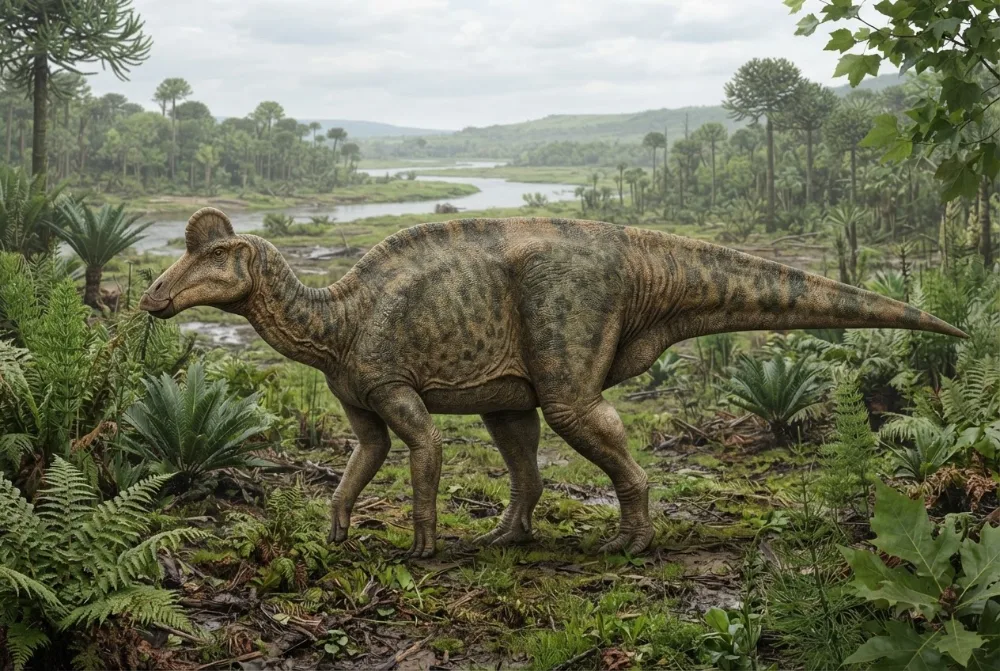
Kazaklambia was a duck-billed dinosaur that lived in what is now Kazakhstan. It was a plant-eater and one of the oldest members of its group, the lambeosaurines. Its nearly complete skeleton helped scientists learn a lot about it.1
Berɛ bɛn na ɛtenaa ase?
Na ne kɛseɛ yɛ sɛn?
Na ne tenten yɛ sɛn?
Na ne korɔn yɛ sɛn?
nsusuiɛ
Na ne mu yɛ duru sɛn?
 ne tenten te sɛ nkraman 5 firi hwene kɔsi dua🍌ne tenten te sɛ kwadu 26 a wɔde abɔ toatoa so🍉ne mu duru te sɛ watamɛlɔn 100🧸ne mu duru te sɛ nkɔkɔaa sukuu mmofra 26🎒ne mu duru te sɛ sukuu mmofra 16🏃anka ɔbɛtumi atu mmirika mita 100 wɔ sikɛn 9.2 mu (onipa a ɔyɛ ntɛm sen biara hia 9.6)
Kazaklambia kɛseɛ yɛ sɛn sɛ wode toto WO ho a?
Akontaa nko ara wɔ wo browser mu. Yɛnkora biribiara so, na yɛmmfa biribiara nkɔ baabiara.
Na ɛyɛ ntɛm sɛn?


Nsɛm a ɛyɛ anigye
Kazaklambia is known from a nearly complete skeleton, missing only the snout, hands, left foot, and tail tip. It is the most complete dinosaur ever found in Kazakhstan and the whole former Soviet Union.1
This dinosaur was first thought to be a species of Procheneosaurus, but scientists later realized it was a different animal and gave it a new name in 2013.1
Kazaklambia lived about 86 to 84 million years ago, during the Santonian stage of the Late Cretaceous.1
The skeleton of Kazaklambia is from a juvenile, so scientists are not sure how big adults would have been.1
Kazaklambia is one of the oldest known lambeosaurines, a group of duck-billed dinosaurs with hollow crests on their heads.1
Its discovery helped support the idea that lambeosaurine dinosaurs first evolved in Asia before spreading to North America.1
Nsɛm a wɔbisa bebree fa Kazaklambia ho
?What did Kazaklambia eat?
Kazaklambia was a herbivore, meaning it ate plants. It was a duck-billed dinosaur, so it likely used its beak to crop vegetation.14
?How big was Kazaklambia?
Scientists are not sure how big Kazaklambia grew because the only known skeleton is from a juvenile. Its size as an adult is unknown.14
Ma dino ho animdefoɔ
- Nyansahu din
- Kazaklambia
- Obi a ɔtoo din
- Bell and Brink 20135
- Kuo
- Dabodabo ano dino
- Abusua / kuo kɛseɛ
- Hadrosauridae5
- Nkyekyɛmu
- Ornithischia > Ornithopoda > Iguanodontia > Hadrosauridae5
- Abotan no mfeɛ
- mfeɛ ɔpepem 90 kɔsi 84 (Coniacian / Santonian)5
- Abotan nhyehyɛeɛ
- Dabrazhin5
- Aman
- Kazakstan5
- Fɔsil nkyerɛwee
- 1 wɔ The Paleobiology Database mu5
- Nhunumu
- The skeleton was found in 1961 at the Syuk-Syuk locality in southern Kazakhstan. It was named Procheneosaurus convincens by Soviet paleontologist Anatoly Rozhdestvensky in 1968, and renamed Kazaklambia by Phil Bell and Kirstin Brink in 2013.1
- Wɔda so gye ho akyinnye
- Scientists are not sure exactly how Kazaklambia is related to other lambeosaurines because the only known specimen is a juvenile.1
Baabi a nsɛm no firi
- Kazaklambia (en.wikipedia.org)
- Kazaklambia convincens | Dinosaur Database by DinoAnimals.com (dinoanimals.com)
- Episode 377: Correcting misconceptions of paleontology with Roy Plotnick - I Know Dino: The Big Dinosaur Podcast (iknowdino.com)
- KAZAKLAMBIA : DinoChecker dinosaur archive (dinochecker.com)
- Kazaklambia in The Paleobiology Database (CC BY 4.0): mfeɛ, mmeaeɛ, abotan nhyehyɛeɛ, nkyekyɛmu.
Asɛm biara a ɛwɔ krataafa yi so wɔ nɔma a ɛkyerɛ baabi a ɛfiri. Sɛ yɛfom biribi a, kafra, yɛyɛ dino dɔfoɔ, yɛnyɛ nyansahu nsɛmma krataa. Ka kyerɛ yɛn wɔ [email protected] na yɛbɛsiesie.
 Ɔkɔm de Rex! Dino Wiki yɛ agya bi adwuma a ɔyɛɛ maa ne babarima a ɔdɔ dino. Ɛyɛ kwa, dawurubɔ biara nni mu, akyidifoɔ biara nni mu. Mpanimfoɔ bɛtumi ama Rex aduane kakra, na aboa ama Dino Wiki atena intanɛt so.Ma Rex aduane
 Parasaurolophus
 Edmontosaurus
 Saurolophus
 Hypacrosaurus
 Corythosaurus
 Kritosaurus
 Tyrannosaurus
 Triceratops
 Velociraptor
 Spinosaurus
 Ankylosaurus
 Pteranodon