 Woyɛ dino bɛn? Nsɛmmisa agoro
 Dino ko
 Dino mmirikatuo
 Dino agodie nketewa
 Stika nwoma
 Dino TOP nhyehyɛeɛ
 Ma me nwanwa!
Lariosaurus
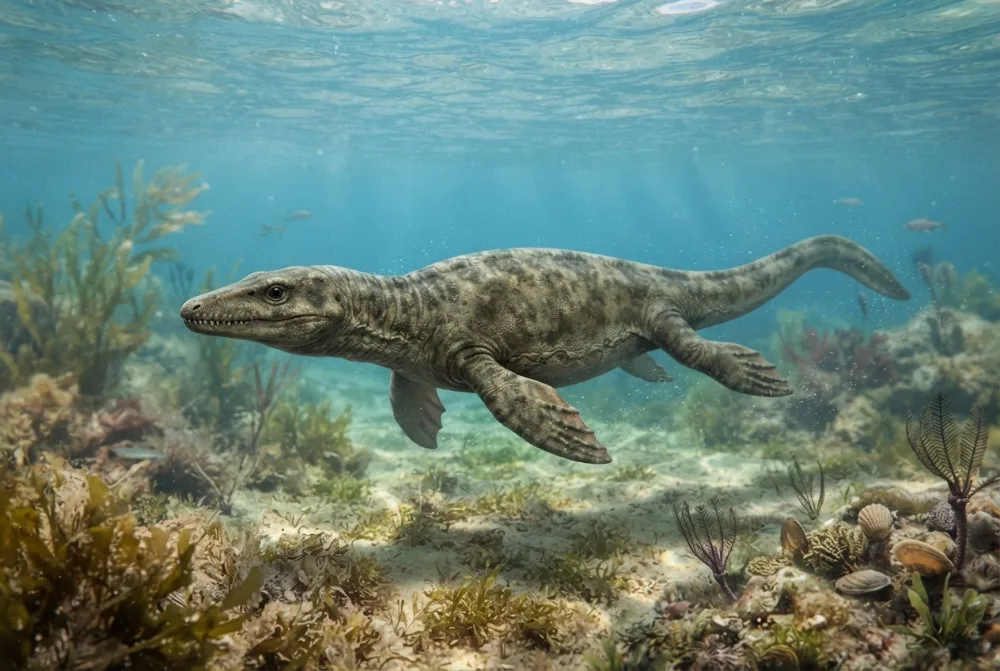
Lariosaurus was a small, ancient sea reptile that lived in warm, shallow seas during the Triassic Period. It had a short neck, small flippers, and webbed feet, and it probably spent a lot of time hunting in shallow water or even on land.12
Berɛ bɛn na ɛtenaa ase?
Na ne kɛseɛ yɛ sɛn?
Na ne tenten yɛ sɛn?
 ne tenten te sɛ fie agyinamoa 1.5 firi hwene kɔsi dua🍌ne tenten te sɛ kwadu 4 a wɔde abɔ toatoa so🏊anka ɔbɛtumi aguare nsuguarebea kɛseɛ (50 m) tenten wɔ sikɛn 26 mu
Lariosaurus kɛseɛ yɛ sɛn sɛ wode toto WO ho a?
Akontaa nko ara wɔ wo browser mu. Yɛnkora biribiara so, na yɛmmfa biribiara nkɔ baabiara.
Na ɛyɛ ntɛm sɛn?


Nsɛm a ɛyɛ anigye
Lariosaurus was one of the smallest nothosaurs, measuring less than one meter long.1
Its front legs were adapted into paddles, but its back legs still had five toes, which is unusual among nothosaurs.1
Scientists think Lariosaurus could give birth to live young, because fossils of babies have been found inside adults.1
A fossil with preserved skin shows that Lariosaurus had webbed hands and feet, like a duck.2
Lariosaurus had a short neck and small flippers, making it a poor swimmer compared to other nothosaurs.1
The first Lariosaurus fossil was discovered in 1830 near Lake Como, Italy, making it one of the earliest known marine reptiles from the Alps.1
Lariosaurus had a sturdy armor of belly ribs (gastralia) that protected its underside.1
Nsɛm a wɔbisa bebree fa Lariosaurus ho
?What did Lariosaurus eat?
It ate small prey like fish and other reptiles. One fossil had two young placodonts (a type of shelled reptile) in its stomach.1
?How did Lariosaurus swim?
It swam by rowing its strong front limbs like a seal, using a 'flying-rowing' motion. Its hands and feet were webbed, not flippers.23
?Did Lariosaurus have live babies?
Yes, scientists think it gave birth to live young. Fossils of baby Lariosaurus have been found inside adults.1
Atosɛm sɛefoɔ
Atosɛm: Some people thought Lariosaurus was a dinosaur or a stegosaur.
Nokorɛ: Lariosaurus is a nothosaur, a type of marine reptile, not a dinosaur. The nothosaur Eupodosaurus was once mistaken for a stegosaurian dinosaur but is now considered the same as Lariosaurus.1
Ma dino ho animdefoɔ
- Nyansahu din
- Lariosaurus
- Obi a ɔtoo din
- Curioni 18474
- Kuo
- Ɛpo mu mmoa a wɔwea
- Abusua / kuo kɛseɛ
- Nothosauridae4
- Nkyekyɛmu
- Sauropterygia4
- Abotan no mfeɛ
- mfeɛ ɔpepem 251 kɔsi 237 ()4
- Abotan nhyehyɛeɛ
- Falang, Meride, Perledo-Varenna4
- Aman
- Itali, Kyaena, Gyaaman, Spania, Swizaland, Nɛdalands4
- Fɔsil nkyerɛwee
- 27 wɔ The Paleobiology Database mu4
- Wɔsan frɛ no
- Deirosaurus, Eupodosaurus, Macromerosauro, Macromerosaurus, Macromirosaurus, Rhaeticonia, Silvestrosaurus (din dada no nso, yɛkan no sɛ aboa korɔ no ara)4
- Nhunumu
- Lariosaurus was named in 1847 by Curioni, based on a fossil found in 1830 at Perledo on Lake Como, Italy.1
- Wɔda so gye ho akyinnye
- Scientists debate whether the genera Ceresiosaurus and Silvestrosaurus should be considered the same as Lariosaurus.1
Baabi a nsɛm no firi
- Lariosaurus (en.wikipedia.org)
- The first specimen with skin preserved of Lariosaurus (Eusauropterygia) from the Middle Triassic of Monte San Giorgio (Switzerland) allows inferences about its swimming method | Swiss Journal of Palaeontology | Springer Nature Link (link.springer.com)
- An ancient reptile’s fossilized skin reveals how it swam like a seal (sciencenews.org)
- Lariosaurus in The Paleobiology Database (CC BY 4.0): mfeɛ, mmeaeɛ, abotan nhyehyɛeɛ, nkyekyɛmu.
Asɛm biara a ɛwɔ krataafa yi so wɔ nɔma a ɛkyerɛ baabi a ɛfiri. Sɛ yɛfom biribi a, kafra, yɛyɛ dino dɔfoɔ, yɛnyɛ nyansahu nsɛmma krataa. Ka kyerɛ yɛn wɔ [email protected] na yɛbɛsiesie.
 Ɔkɔm de Rex! Dino Wiki yɛ agya bi adwuma a ɔyɛɛ maa ne babarima a ɔdɔ dino. Ɛyɛ kwa, dawurubɔ biara nni mu, akyidifoɔ biara nni mu. Mpanimfoɔ bɛtumi ama Rex aduane kakra, na aboa ama Dino Wiki atena intanɛt so.Ma Rex aduane
 Nothosaurus
 Placodus
 Cyamodus
 Cymatosaurus
 Proneusticosaurus
 Simosaurus
 Chonespondylus
 Cymbospondylus
 Phalarodon
 Mixosaurus
 Chaohusaurus
 Chensaurus