 Woyɛ dino bɛn? Nsɛmmisa agoro
 Dino ko
 Dino mmirikatuo
 Dino agodie nketewa
 Stika nwoma
 Dino TOP nhyehyɛeɛ
 Ma me nwanwa!
Cymbospondylus
Cymbospondylus was a huge, ancient marine reptile that swam in the seas long before the first dinosaurs. It looked like a giant lizard with flippers and a long snout, and some species were as long as a school bus!1
Berɛ bɛn na ɛtenaa ase?
Na ne kɛseɛ yɛ sɛn?
Na ne tenten yɛ sɛn?
Na ne mu yɛ duru sɛn?

 ne tenten te sɛ kaa 4 a wɔde agyina toatoa so🍌ne tenten te sɛ kwadu 94 a wɔde abɔ toatoa so🍉ne mu duru te sɛ watamɛlɔn 8900🎒ne mu duru te sɛ sukuu klaas mũ 56 mu mmofra🐻❄️ne mu duru te sɛ polar bea 99🏊anka ɔbɛtumi aguare nsuguarebea kɛseɛ (50 m) tenten wɔ sikɛn 4.9 mu
Cymbospondylus kɛseɛ yɛ sɛn sɛ wode toto WO ho a?
Akontaa nko ara wɔ wo browser mu. Yɛnkora biribiara so, na yɛmmfa biribiara nkɔ baabiara.
Na ɛyɛ ntɛm sɛn?


Nsɛm a ɛyɛ anigye
Cymbospondylus is one of the oldest and largest ichthyosaurs, living about 251 to 242 million years ago during the Triassic Period.1
The biggest species, Cymbospondylus youngorum, was over 17 metres (56 feet) long, making it one of the largest animals of its time.1
Unlike later dolphin-shaped ichthyosaurs, Cymbospondylus had a long, slender body and a less pronounced tail.1
A Swiss species, Cymbospondylus buchseri, was found with the hooks of squid-like animals in its stomach, showing it ate soft-bodied cephalopods.1
Cymbospondylus lived alongside other marine reptiles like Thalattoarchon and Augustasaurus in the seas of Nevada.1
Its teeth were conical and pointed with ridges, perfect for grabbing slippery fish and squid.1
Cymbospondylus reached huge sizes very quickly after the Permian-Triassic extinction, probably because there was lots of food available.1
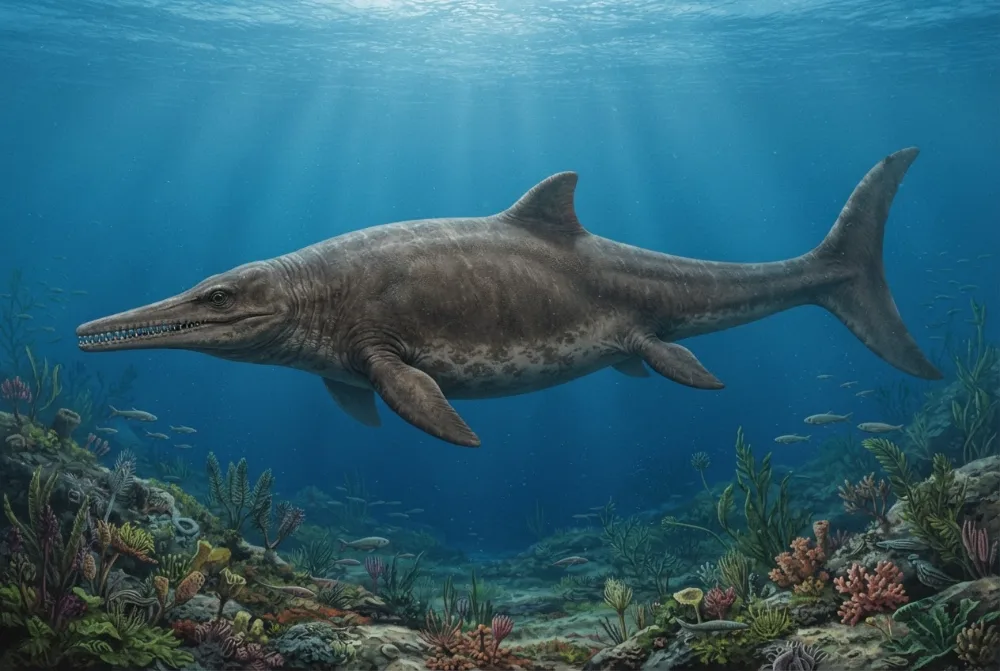
Ma dino ho animdefoɔ
- Nyansahu din
- Cymbospondylus
- Obi a ɔtoo din
- Leidy 18684
- Kuo
- Iktiosɔɔ
- Abusua / kuo kɛseɛ
- Cymbospondylidae4
- Nkyekyɛmu
- Ichthyosauria > Ichthyosauromorpha4
- Abotan no mfeɛ
- mfeɛ ɔpepem 251 kɔsi 237 ()4
- Abotan nhyehyɛeɛ
- Prida, Botneheia, Favret4
- Aman
- Amerika, Itali, Nɔɔwe, Swizaland, Gyaaman4
- Fɔsil nkyerɛwee
- 17 wɔ The Paleobiology Database mu4
- Nhunumu
- The first fossils of Cymbospondylus were vertebrae found in Nevada, USA, and were named by the scientist Joseph Leidy in 1868.14
- Wɔda so gye ho akyinnye
- Scientists are still debating whether larger species of Cymbospondylus hunted other marine reptiles or only ate fish and squid.1
Baabi a nsɛm no firi
- Cymbospondylus (en.wikipedia.org)
- Cymbospondylus (Ichthyopterygia) from the Early Triassic of Svalbard and the early evolution of large body size in ichthyosaurs | PalZ | Springer Nature Link (link.springer.com)
- Early giant reveals faster evolution of large body size in ichthyosaurs than in cetaceans (science.org)
- Cymbospondylus in The Paleobiology Database (CC BY 4.0): mfeɛ, mmeaeɛ, abotan nhyehyɛeɛ, nkyekyɛmu.
Asɛm biara a ɛwɔ krataafa yi so wɔ nɔma a ɛkyerɛ baabi a ɛfiri. Sɛ yɛfom biribi a, kafra, yɛyɛ dino dɔfoɔ, yɛnyɛ nyansahu nsɛmma krataa. Ka kyerɛ yɛn wɔ [email protected] na yɛbɛsiesie.
 Ɔkɔm de Rex! Dino Wiki yɛ agya bi adwuma a ɔyɛɛ maa ne babarima a ɔdɔ dino. Ɛyɛ kwa, dawurubɔ biara nni mu, akyidifoɔ biara nni mu. Mpanimfoɔ bɛtumi ama Rex aduane kakra, na aboa ama Dino Wiki atena intanɛt so.Ma Rex aduane
 Ichthyosaurus
 Platypterygius
 Stenopterygius
 Khudiakovia
 Ophthalmosaurus
 Chonespondylus
 Placodus
 Lariosaurus
 Cyamodus
 Cymatosaurus
 Proneusticosaurus
 Neusticosaurus