 Woyɛ dino bɛn? Nsɛmmisa agoro
 Dino ko
 Dino mmirikatuo
 Dino agodie nketewa
 Stika nwoma
 Dino TOP nhyehyɛeɛ
 Ma me nwanwa!
Liliensternus
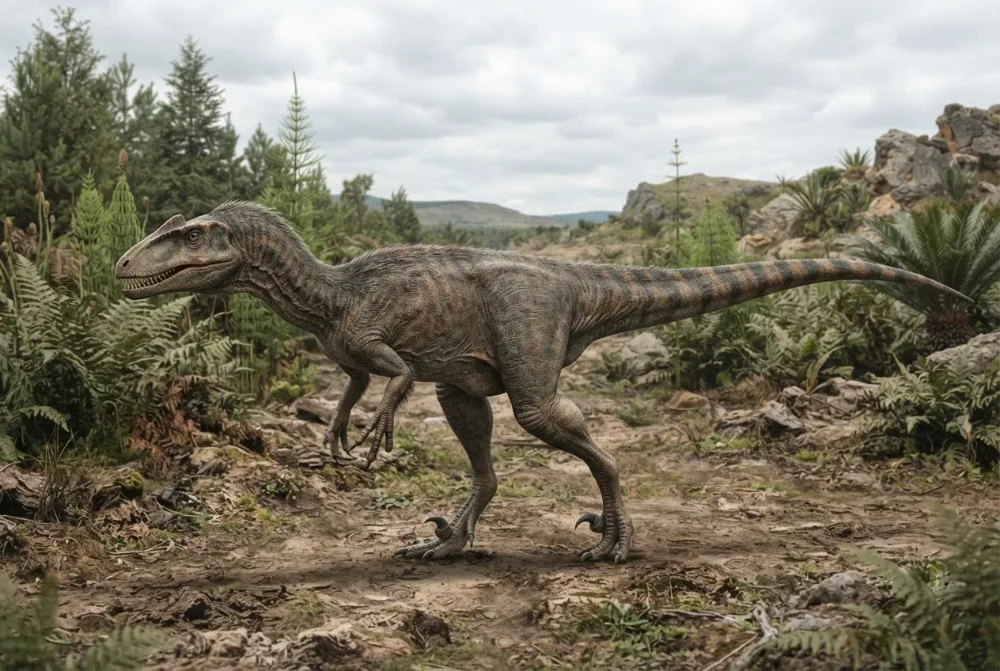
Liliensternus was a meat-eating dinosaur that lived in what is now Germany during the Late Triassic. It walked on two legs and was one of the largest predators of its time in Europe.1
Berɛ bɛn na ɛtenaa ase?
Na ne kɛseɛ yɛ sɛn?
Na ne tenten yɛ sɛn?
Na ne korɔn yɛ sɛn?
Na ne mu yɛ duru sɛn?
 ne tenten te sɛ nkraman 5 firi hwene kɔsi dua🍌ne tenten te sɛ kwadu 29 a wɔde abɔ toatoa so🍉ne mu duru te sɛ watamɛlɔn 40🧸ne mu duru te sɛ nkɔkɔaa sukuu mmofra 11🎒ne mu duru te sɛ sukuu mmofra 6🏃anka ɔbɛtumi atu mmirika mita 100 wɔ sikɛn 7.2 mu (onipa a ɔyɛ ntɛm sen biara hia 9.6)
Liliensternus kɛseɛ yɛ sɛn sɛ wode toto WO ho a?
Akontaa nko ara wɔ wo browser mu. Yɛnkora biribiara so, na yɛmmfa biribiara nkɔ baabiara.
Na ɛyɛ ntɛm sɛn?


Nsɛm a ɛyɛ anigye
Liliensternus is the best-known Triassic theropod from Europe.1
The fossils were found by Count Hugo Rühle von Lilienstern in the winter of 1932/1933 near Großer Gleichberg in Germany.1
Liliensternus had a shorter shin bone (tibia) than thigh bone (femur), which is different from some other early theropods like Coelophysis.1
It lived about 210 million years ago, during the Late Triassic Period.1
The dinosaur's name honors Count Hugo Rühle von Lilienstern, who helped paleontology in Germany by starting a museum in his castle.1
Some scientists think Liliensternus could run fast to catch small ornithischian dinosaurs.1
Nsɛm a wɔbisa bebree fa Liliensternus ho
?How big was Liliensternus?
About 5.15 metres (16.9 feet) long and maybe 127 kilograms (280 pounds), but some fragmentary remains suggest adults could reach 7 to 9 metres.1
?What did Liliensternus eat?
It was a meat-eater that probably hunted large herbivores like Plateosaurus and also chased fast ornithischian dinosaurs.1
?Did Liliensternus have feathers?
Nobody knows for sure. The fossils don't show feathers, and most Triassic theropods are not known to have them.1
?When did Liliensternus live?
It lived about 210 million years ago, during the Late Triassic Period.12
?Could Liliensternus run fast?
Yes, it was a fast runner. Paul (1988) noted it used its speed to catch swift ornithischian dinosaurs.1
?Was Liliensternus bigger than T. rex?
No, T. rex was much bigger. Liliensternus was about 5 metres long, while T. rex was over 12 metres long.1
Ma dino ho animdefoɔ
- Nyansahu din
- Liliensternus
- Obi a ɔtoo din
- Welles 19844
- Kuo
- Dino a wɔwe nam
- Abusua / kuo kɛseɛ
- Neotheropoda4
- Nkyekyɛmu
- Theropoda4
- Abotan no mfeɛ
- mfeɛ ɔpepem 227 kɔsi 201 (Norian / Rhaetian)4
- Abotan nhyehyɛeɛ
- Trossingen, Klettgau, Löwenstein4
- Aman
- Gyaaman, Swizaland4
- Fɔsil nkyerɛwee
- 5 wɔ The Paleobiology Database mu4
- Nhunumu
- Liliensternus was first named Halticosaurus liliensternus by Friedrich von Huene in 1934, but in 1984 Samuel Paul Welles gave it its own genus name Liliensternus.1
- Wɔda so gye ho akyinnye
- Scientists are not sure if Liliensternus belongs to the group Coelophysoidea or is a more primitive neotheropod.1
Baabi a nsɛm no firi
- Liliensternus (en.wikipedia.org)
- Liliensternus | Natural History Museum (nhm.ac.uk)
- Liliensternus | Earth and Atmospheric Sciences | Research Starters | EBSCOhost (ebsco.com)
- Liliensternus in The Paleobiology Database (CC BY 4.0): mfeɛ, mmeaeɛ, abotan nhyehyɛeɛ, nkyekyɛmu.
Asɛm biara a ɛwɔ krataafa yi so wɔ nɔma a ɛkyerɛ baabi a ɛfiri. Sɛ yɛfom biribi a, kafra, yɛyɛ dino dɔfoɔ, yɛnyɛ nyansahu nsɛmma krataa. Ka kyerɛ yɛn wɔ [email protected] na yɛbɛsiesie.
 Ɔkɔm de Rex! Dino Wiki yɛ agya bi adwuma a ɔyɛɛ maa ne babarima a ɔdɔ dino. Ɛyɛ kwa, dawurubɔ biara nni mu, akyidifoɔ biara nni mu. Mpanimfoɔ bɛtumi ama Rex aduane kakra, na aboa ama Dino Wiki atena intanɛt so.Ma Rex aduane
 Allosaurus
 Carnotaurus
 Dilophosaurus
 Giganotosaurus
 Compsognathus
 Paronychodon
 Nothosaurus
 Massospondylus
 Plateosaurus
 Simosaurus
 Thecodontosaurus
 Eudimorphodon