 Woyɛ dino bɛn? Nsɛmmisa agoro
 Dino ko
 Dino mmirikatuo
 Dino agodie nketewa
 Stika nwoma
 Dino TOP nhyehyɛeɛ
 Ma me nwanwa!
Livyatan
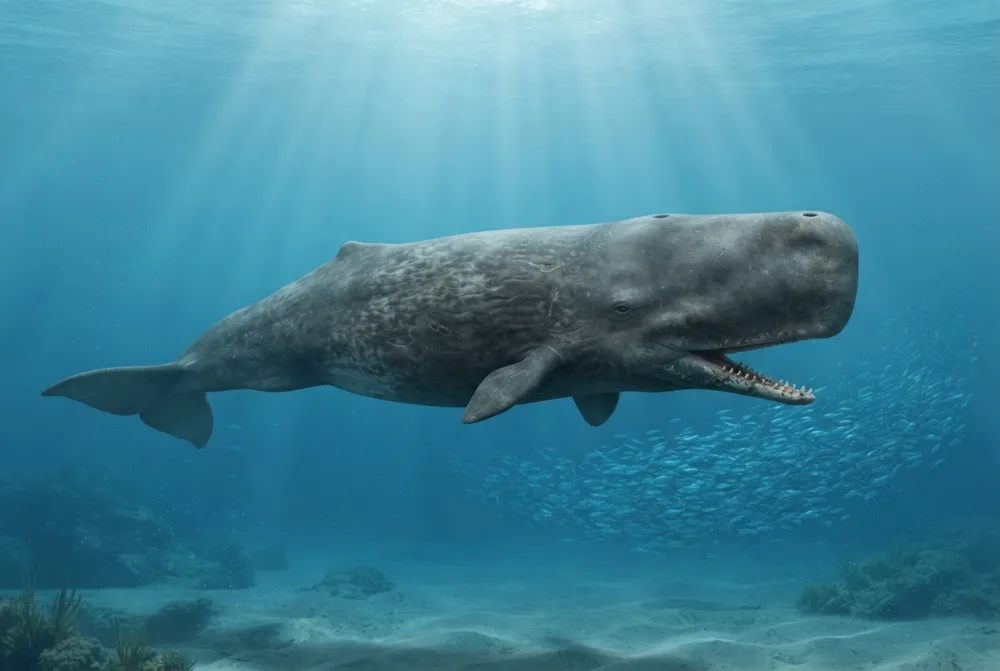
Livyatan was a giant sperm whale that lived in the ocean millions of years ago. It had huge teeth and was one of the biggest hunters in the sea. It was not a dinosaur, but a mammal like whales today.1
Berɛ bɛn na ɛtenaa ase?
Na ne kɛseɛ yɛ sɛn?
Na ne tenten yɛ sɛn?
Na ne mu yɛ duru sɛn?

 ne tenten te sɛ kaa 4 a wɔde agyina toatoa so🍌ne tenten te sɛ kwadu 97 a wɔde abɔ toatoa so🍉ne mu duru te sɛ watamɛlɔn 11000🎒ne mu duru te sɛ sukuu klaas mũ 71 mu mmofra🐻❄️ne mu duru te sɛ polar bea 130🏊anka ɔbɛtumi aguare nsuguarebea kɛseɛ (50 m) tenten wɔ sikɛn 5.1 mu
Livyatan kɛseɛ yɛ sɛn sɛ wode toto WO ho a?
Akontaa nko ara wɔ wo browser mu. Yɛnkora biribiara so, na yɛmmfa biribiara nkɔ baabiara.
Na ɛyɛ ntɛm sɛn?


Nsɛm a ɛyɛ anigye
Livyatan had teeth up to 36 centimeters (over 14 inches) long, bigger than any other sperm whale.1
Its skull was about 3 meters (10 feet) long, making it the largest fossil sperm whale skull known.1
Livyatan lived at the same time as the giant shark Carcharocles megalodon, and both were top predators.1
Scientists think Livyatan could bite harder than any other four-legged animal ever found.1
Unlike modern sperm whales that suck in food, Livyatan used its teeth to hunt and tear large prey.1
The name Livyatan comes from a Hebrew word for a sea monster, and the species name melvillei honors the author of Moby-Dick.1
Nsɛm a wɔbisa bebree fa Livyatan ho
?How big was Livyatan?
About 13.5 to 17.5 meters (44 to 57 feet) long, similar to a modern sperm whale.2
?What did Livyatan eat?
It hunted large prey like medium-sized baleen whales, using its huge teeth to bite and tear flesh.12
?Did Livyatan live at the same time as megalodon?
Yes, Livyatan and the giant shark megalodon lived in the same oceans and may have competed for food.23
?Why did Livyatan go extinct?
It probably died out because of a cooling event at the end of the Miocene that reduced its food supply.2
?Is Livyatan a dinosaur?
No, Livyatan was a mammal, a giant sperm whale, not a dinosaur.2
?How long were Livyatan's teeth?
Its teeth were up to 36.2 centimeters (14.3 inches) long, the largest biting teeth of any known animal.21
?Where was Livyatan discovered?
Its fossil skull was found in the Pisco Formation of Peru, in a coastal desert near Ica.21
Atosɛm sɛefoɔ
Atosɛm: Some people think Livyatan was a dinosaur.
Nokorɛ: Livyatan was a whale, a mammal, not a dinosaur.1
Ma dino ho animdefoɔ
- Nyansahu din
- Livyatan
- Obi a ɔtoo din
- Lambert et al. 20104
- Kuo
- Tete abakɔsɛm mmoa
- Abusua / kuo kɛseɛ
- Physeteroidea4
- Nkyekyɛmu
- Mammalia > Cetacea > Physeteroidea4
- Abotan no mfeɛ
- mfeɛ ɔpepem 23 kɔsi 3.6 (Aquitanian / Zanclean)4
- Abotan nhyehyɛeɛ
- Pisco4
- Aman
- Afrika Anaafoɔ, Peru, Argentina, Kyili, Amerika4
- Fɔsil nkyerɛwee
- 6 wɔ The Paleobiology Database mu4
- Nhunumu
- Scientists found a skull with teeth in the Pisco desert of Peru, and they named it Livyatan melvillei in 2010.1
- Wɔda so gye ho akyinnye
- Scientists are still debating what the big basin on its head was for, like echolocation or display.1
Baabi a nsɛm no firi
- The giant bite of a new raptorial sperm whale from the Miocene epoch of Peru (nature.com)
- Livyatan (en.wikipedia.org)
- Behold Livyatan: the sperm whale that killed other whales | National Geographic (nationalgeographic.com)
- Livyatan in The Paleobiology Database (CC BY 4.0): mfeɛ, mmeaeɛ, abotan nhyehyɛeɛ, nkyekyɛmu.
Asɛm biara a ɛwɔ krataafa yi so wɔ nɔma a ɛkyerɛ baabi a ɛfiri. Sɛ yɛfom biribi a, kafra, yɛyɛ dino dɔfoɔ, yɛnyɛ nyansahu nsɛmma krataa. Ka kyerɛ yɛn wɔ [email protected] na yɛbɛsiesie.
 Ɔkɔm de Rex! Dino Wiki yɛ agya bi adwuma a ɔyɛɛ maa ne babarima a ɔdɔ dino. Ɛyɛ kwa, dawurubɔ biara nni mu, akyidifoɔ biara nni mu. Mpanimfoɔ bɛtumi ama Rex aduane kakra, na aboa ama Dino Wiki atena intanɛt so.Ma Rex aduane
 Megalodon
 Sabre-toothed cat
 Dimetrodon
 Woolly mammoth
 Arthropleura
 Helicoprion