 Woyɛ dino bɛn? Nsɛmmisa agoro
 Dino ko
 Dino mmirikatuo
 Dino agodie nketewa
 Stika nwoma
 Dino TOP nhyehyɛeɛ
 Ma me nwanwa!
Lokiceratops
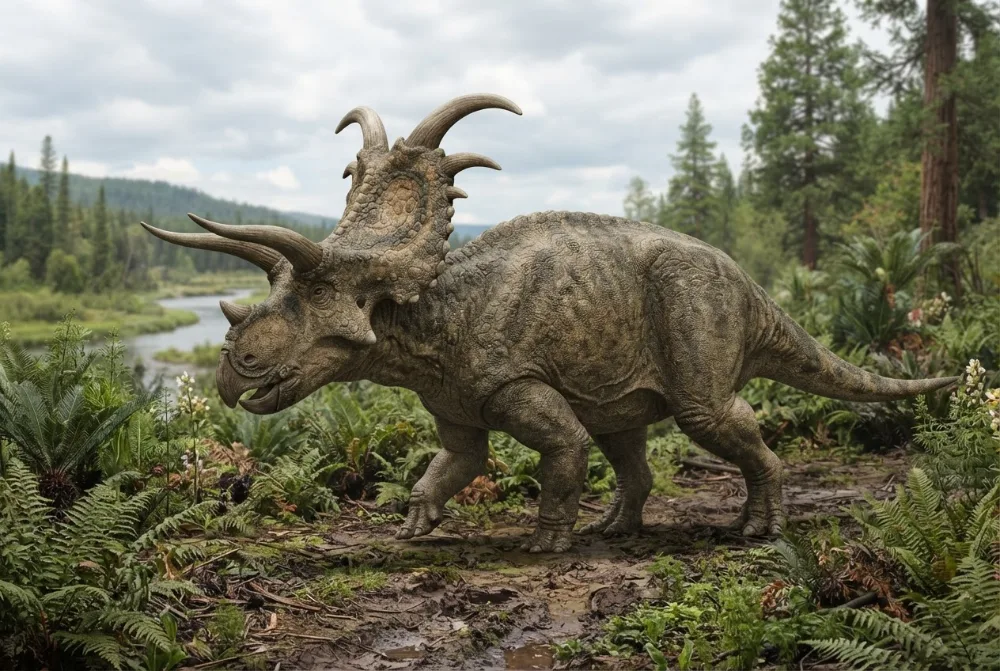
Lokiceratops was a horned dinosaur that lived about 78 million years ago in what is now Montana. It had a big frill on its head and two long, curved horns above its eyes. This plant-eater was a close relative of Triceratops.41
Berɛ bɛn na ɛtenaa ase?
Na ne kɛseɛ yɛ sɛn?
Na ne tenten yɛ sɛn?
Na ne korɔn yɛ sɛn?
nsusuiɛ
Na ne mu yɛ duru sɛn?

 ne tenten te sɛ nkraman 7 firi hwene kɔsi dua🍌ne tenten te sɛ kwadu 39 a wɔde abɔ toatoa sone mu duru te sɛ nkraman 100🍉ne mu duru te sɛ watamɛlɔn 400🎒ne mu duru te sɛ sukuu klaas mũ 2.5 mu mmofra🐻❄️ne mu duru te sɛ polar bea 4🏃anka ɔbɛtumi atu mmirika mita 100 wɔ sikɛn 10 mu (onipa a ɔyɛ ntɛm sen biara hia 9.6)
Lokiceratops kɛseɛ yɛ sɛn sɛ wode toto WO ho a?
Akontaa nko ara wɔ wo browser mu. Yɛnkora biribiara so, na yɛmmfa biribiara nkɔ baabiara.
Na ɛyɛ ntɛm sɛn?


Nsɛm a ɛyɛ anigye
Lokiceratops was named after the Norse god Loki because its horns look like the curved blades Loki used.1
It lived alongside at least three other horned dinosaurs in the same area, which is very rare.1
Lokiceratops belonged to a group called centrosaurines, which had big nose horns and smaller brow horns.4
Its fossils were found in rocks that were once a coastal plain along an ancient sea.1
The full name Lokiceratops rangiformis means 'Loki's horned face that looks like a reindeer' because of its antler-like horns.1
Nsɛm a wɔbisa bebree fa Lokiceratops ho
?How big was Lokiceratops?
It was about 6.7 metres (22 feet) long and weighed around 5 tonnes (11,000 pounds). That makes it one of the largest known centrosaurine horned dinosaurs.3
?Did Lokiceratops have a nose horn?
No, unlike its closest relatives, Lokiceratops appears to have lacked a nose horn. Instead, it had two huge, blade-like horns on its frill.3
?What did Lokiceratops eat?
Lokiceratops was a plant-eater. It lived alongside other horned dinosaurs that had very similar jaws and teeth, so they probably ate similar plants.3
?Where was Lokiceratops found?
Its fossils were discovered in the badlands of northern Montana, near the Canadian border, in rocks that were once a coastal plain beside an ancient sea.3
?When did Lokiceratops live?
Lokiceratops lived about 78 million years ago, during the Late Cretaceous Period.3
?Is Lokiceratops a dinosaur?
Yes, Lokiceratops is a dinosaur. It is a type of horned dinosaur called a ceratopsian, closely related to Triceratops.3
Atosɛm sɛefoɔ
Atosɛm: Lokiceratops is often thought to be a type of Triceratops.
Nokorɛ: Lokiceratops is a centrosaurine, not a chasmosaurine like Triceratops. It had a different skull shape and horn arrangement.4
Ma dino ho animdefoɔ
- Nyansahu din
- Lokiceratops
- Obi a ɔtoo din
- Loewen et al. 20244
- Kuo
- Dino a wɔwɔ mmɛn
- Abusua / kuo kɛseɛ
- Ceratopsidae4
- Nkyekyɛmu
- Ornithischia > Ceratopsia > Ceratopsidae4
- Abotan no mfeɛ
- mfeɛ ɔpepem 84 kɔsi 72 (Campanian)4
- Abotan nhyehyɛeɛ
- Judith River4
- Aman
- Amerika4
- Fɔsil nkyerɛwee
- 1 wɔ The Paleobiology Database mu4
- Nhunumu
- Lokiceratops was named in 2024 by a team led by Mark Loewen from the Natural History Museum of Utah. The fossils were found in the Judith River Formation in Montana.42
- Wɔda so gye ho akyinnye
- Scientists are still debating why so many horned dinosaurs lived in the same small area at the same time.1
Baabi a nsɛm no firi
- Lokiceratops rangiformis gen. et sp. nov. (Ceratopsidae: Centrosaurinae) from the Campanian Judith River Formation of Montana reveals rapid regional radiations and extreme endemism within centrosaurine dinosaurs (exa.ai)
- Lokiceratops rangiformis gen. et sp. nov. (Ceratopsidae: Centrosaurinae) from the Campanian Judith River Formation of Montana reveals rapid regional radiations and extreme endemism within centrosaurine dinosaurs. - Abstract - Europe PMC (europepmc.org)
- Lokiceratops (en.wikipedia.org)
- Lokiceratops in The Paleobiology Database (CC BY 4.0): mfeɛ, mmeaeɛ, abotan nhyehyɛeɛ, nkyekyɛmu.
Asɛm biara a ɛwɔ krataafa yi so wɔ nɔma a ɛkyerɛ baabi a ɛfiri. Sɛ yɛfom biribi a, kafra, yɛyɛ dino dɔfoɔ, yɛnyɛ nyansahu nsɛmma krataa. Ka kyerɛ yɛn wɔ [email protected] na yɛbɛsiesie.
 Ɔkɔm de Rex! Dino Wiki yɛ agya bi adwuma a ɔyɛɛ maa ne babarima a ɔdɔ dino. Ɛyɛ kwa, dawurubɔ biara nni mu, akyidifoɔ biara nni mu. Mpanimfoɔ bɛtumi ama Rex aduane kakra, na aboa ama Dino Wiki atena intanɛt so.Ma Rex aduane
 Triceratops
 Protoceratops
 Ojoceratops
 Tatankaceratops
 Psittacosaurus
 Centrosaurus
 Tyrannosaurus
 Velociraptor
 Spinosaurus
 Ankylosaurus
 Parasaurolophus
 Pteranodon