 Woyɛ dino bɛn? Nsɛmmisa agoro
 Dino ko
 Dino mmirikatuo
 Dino agodie nketewa
 Stika nwoma
 Dino TOP nhyehyɛeɛ
 Ma me nwanwa!
Berɛ bɛn na ɛtenaa ase?

Na ne kɛseɛ yɛ sɛn?
Na ne tenten yɛ sɛn?
Na ne korɔn yɛ sɛn?
nsusuiɛ
Na ne mu yɛ duru sɛn?
 ne tenten te sɛ nkraman 4 firi hwene kɔsi dua🍌ne tenten te sɛ kwadu 19 a wɔde abɔ toatoa so🍉ne mu duru te sɛ watamɛlɔn 50🧸ne mu duru te sɛ nkɔkɔaa sukuu mmofra 13🎒ne mu duru te sɛ sukuu mmofra 8🏃anka ɔbɛtumi atu mmirika mita 100 wɔ sikɛn 8.4 mu (onipa a ɔyɛ ntɛm sen biara hia 9.6)
Minqaria kɛseɛ yɛ sɛn sɛ wode toto WO ho a?
Akontaa nko ara wɔ wo browser mu. Yɛnkora biribiara so, na yɛmmfa biribiara nkɔ baabiara.
Na ɛyɛ ntɛm sɛn?


Nsɛm a ɛyɛ anigye
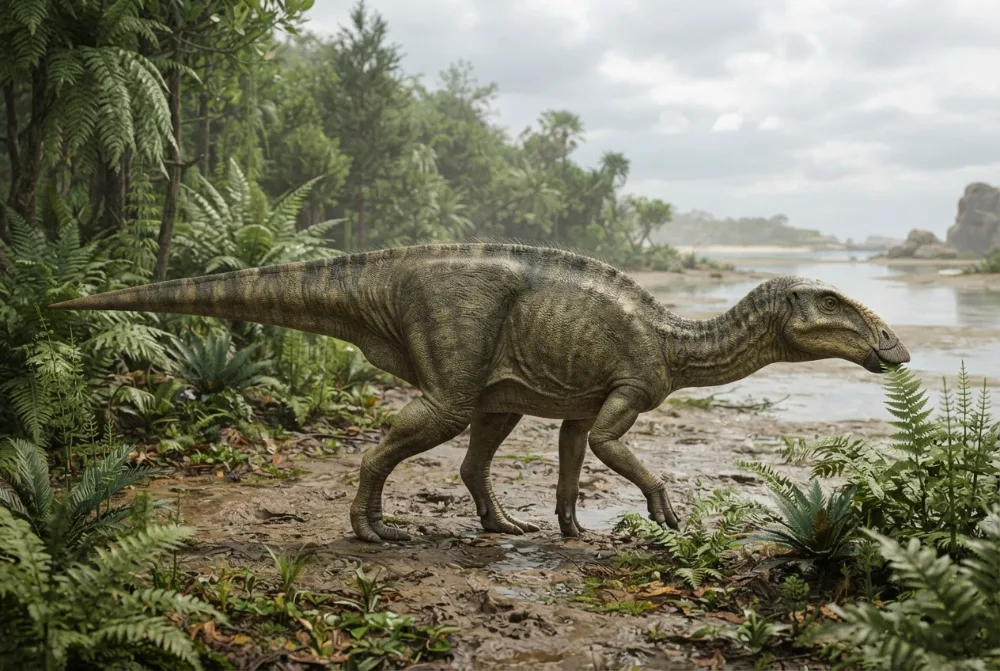
Minqaria was a dwarf dinosaur, only about 3.5 metres (11 feet) long, much smaller than its giant relatives like Edmontosaurus.21
Its skull bones were fused together, which tells scientists it was a fully grown adult, not a baby.21
Minqaria lived alongside other dinosaurs in Morocco, including the duck-billed Ajnabia and the meat-eating Chenanisaurus.2
The name Minqaria comes from the Arabic word for 'beak', and bata means 'duck', so its full name is 'beak duck'.1
Minqaria belonged to a group of duck-billed dinosaurs called lambeosaurines, which often had fancy crests on their heads.21
Fossils of Minqaria were found in marine rocks, meaning its body washed out to sea after death.2
Nsɛm a wɔbisa bebree fa Minqaria ho
?How big was Minqaria?
Minqaria was about 3.5 metres long and weighed about 250 kilograms, similar in size to a large motorcycle.12
?Was Minqaria a baby or an adult?
It was a fully grown adult. Its skull bones were fused together, which shows it was mature even though it was small.12
?What did Minqaria eat?
Minqaria was a duck-billed dinosaur, so it ate plants. It had teeth in its jaws for chewing plant material.1
?When did Minqaria live?
Minqaria lived in the very latest Cretaceous period, about 1 million years before the asteroid impact that wiped out the dinosaurs.1
Ma dino ho animdefoɔ
- Nyansahu din
- Minqaria
- Obi a ɔtoo din
- Longrich et al. 20244
- Kuo
- Dabodabo ano dino
- Abusua / kuo kɛseɛ
- Hadrosauridae4
- Nkyekyɛmu
- Ornithischia > Ornithopoda > Iguanodontia > Hadrosauridae4
- Abotan no mfeɛ
- mfeɛ ɔpepem 72 kɔsi 66 (Maastrichtian)4
- Abotan nhyehyɛeɛ
- Couche III4
- Aman
- Moroko4
- Fɔsil nkyerɛwee
- 1 wɔ The Paleobiology Database mu4
- Nhunumu
- Minqaria was named in 2024 by paleontologist Nick Longrich and his team. The fossils were found by local miners in the phosphate mines of Sidi Chennane, Morocco.21
- Wɔda so gye ho akyinnye
- Scientists are not sure why Minqaria and other African duck-billed dinosaurs were so small, but they think it might be because giant sauropods outcompeted them for food.2
Baabi a nsɛm no firi
- Minqaria (en.wikipedia.org)
- A new small duckbilled dinosaur (Hadrosauridae: Lambeosaurinae) from Morocco and dinosaur diversity in the late Maastrichtian of North Africa (pmc.ncbi.nlm.nih.gov)
- PBDB Taxon (paleobiodb.org)
- Minqaria in The Paleobiology Database (CC BY 4.0): mfeɛ, mmeaeɛ, abotan nhyehyɛeɛ, nkyekyɛmu.
Asɛm biara a ɛwɔ krataafa yi so wɔ nɔma a ɛkyerɛ baabi a ɛfiri. Sɛ yɛfom biribi a, kafra, yɛyɛ dino dɔfoɔ, yɛnyɛ nyansahu nsɛmma krataa. Ka kyerɛ yɛn wɔ [email protected] na yɛbɛsiesie.
 Ɔkɔm de Rex! Dino Wiki yɛ agya bi adwuma a ɔyɛɛ maa ne babarima a ɔdɔ dino. Ɛyɛ kwa, dawurubɔ biara nni mu, akyidifoɔ biara nni mu. Mpanimfoɔ bɛtumi ama Rex aduane kakra, na aboa ama Dino Wiki atena intanɛt so.Ma Rex aduane
 Parasaurolophus
 Edmontosaurus
 Saurolophus
 Hypacrosaurus
 Corythosaurus
 Kritosaurus
 Tyrannosaurus
 Triceratops
 Velociraptor
 Spinosaurus
 Ankylosaurus
 Pteranodon