 Woyɛ dino bɛn? Nsɛmmisa agoro
 Dino ko
 Dino mmirikatuo
 Dino agodie nketewa
 Stika nwoma
 Dino TOP nhyehyɛeɛ
 Ma me nwanwa!
Mosaiceratops
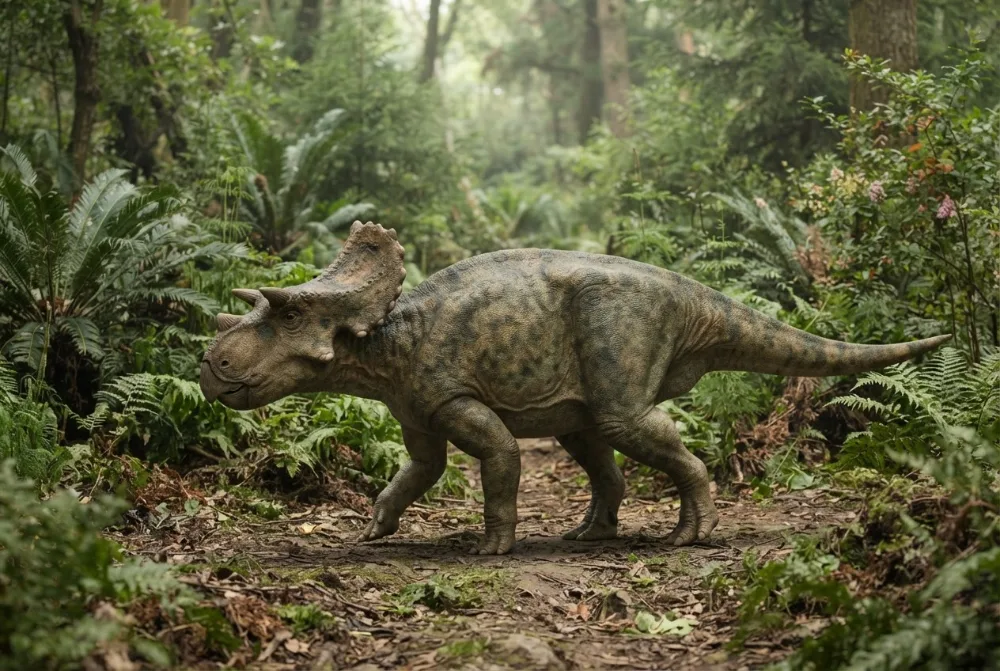
Mosaiceratops was a small, plant-eating dinosaur with a beak and a frill on its head. It lived in what is now China during the Late Cretaceous, about 93 to 72 million years ago. This little dinosaur is special because it had a mix of features from different horned dinosaurs, like a mosaic.12
Berɛ bɛn na ɛtenaa ase?
Na ne kɛseɛ yɛ sɛn?
Na ne tenten yɛ sɛn?
Na ne korɔn yɛ sɛn?
nsusuiɛ
Na ne mu yɛ duru sɛn?
 ne tenten te sɛ fie agyinamoa 2 firi hwene kɔsi dua🍌ne tenten te sɛ kwadu 6 a wɔde abɔ toatoa so🍌ne mu duru te sɛ kwadu 83🪑ketewa ara ma ɔbɛtumi afa akonnwa ase🏃anka ɔbɛtumi atu mmirika mita 100 wɔ sikɛn 13 mu (onipa a ɔyɛ ntɛm sen biara hia 9.6)
Mosaiceratops kɛseɛ yɛ sɛn sɛ wode toto WO ho a?
Akontaa nko ara wɔ wo browser mu. Yɛnkora biribiara so, na yɛmmfa biribiara nkɔ baabiara.
Na ɛyɛ ntɛm sɛn?


Nsɛm a ɛyɛ anigye
Mosaiceratops had a mix of features from different horned dinosaur groups, which is why it's named after a mosaic.1
It was one of the smallest horned dinosaurs, only about 1 meter (3.3 feet) long and weighing around 10 kilograms (22 pounds).1
Unlike many other horned dinosaurs, Mosaiceratops had no teeth in its premaxilla (the front part of its upper jaw).1
Its skeleton shows that it was a ground-dwelling, active animal that walked on four legs.2
Mosaiceratops lived in a time when the Earth was warmer and had different plants than today.2
Atosɛm sɛefoɔ
Atosɛm: Some people think Mosaiceratops is a type of Psittacosaurus because it has similar features.
Nokorɛ: Scientists now think Mosaiceratops is a more primitive relative, and the similarities are due to convergent evolution, not direct ancestry.1
Ma dino ho animdefoɔ
- Nyansahu din
- Mosaiceratops
- Obi a ɔtoo din
- Zheng et al. 20153
- Kuo
- Dino a wɔwɔ mmɛn
- Abusua / kuo kɛseɛ
- Neoceratopsia3
- Nkyekyɛmu
- Ornithischia > Ceratopsia3
- Abotan no mfeɛ
- mfeɛ ɔpepem 94 kɔsi 72 (Turonian / Campanian)3
- Abotan nhyehyɛeɛ
- Xiaguan3
- Aman
- Kyaena3
- Fɔsil nkyerɛwee
- 1 wɔ The Paleobiology Database mu3
- Nhunumu
- Mosaiceratops was named and described in 2015 by Zheng Wenjie, Jin Xingsheng, and Xu Xing. The fossil was found in the Xiaguan Formation in Henan Province, China.12
- Wɔda so gye ho akyinnye
- Scientists are still debating whether Mosaiceratops is the most primitive neoceratopsian or if it's more closely related to Psittacosaurus.1
Baabi a nsɛm no firi
- Mosaiceratops (en.wikipedia.org)
- PBDB Taxon (paleobiodb.org)
- Mosaiceratops in The Paleobiology Database (CC BY 4.0): mfeɛ, mmeaeɛ, abotan nhyehyɛeɛ, nkyekyɛmu.
Asɛm biara a ɛwɔ krataafa yi so wɔ nɔma a ɛkyerɛ baabi a ɛfiri. Sɛ yɛfom biribi a, kafra, yɛyɛ dino dɔfoɔ, yɛnyɛ nyansahu nsɛmma krataa. Ka kyerɛ yɛn wɔ [email protected] na yɛbɛsiesie.
 Ɔkɔm de Rex! Dino Wiki yɛ agya bi adwuma a ɔyɛɛ maa ne babarima a ɔdɔ dino. Ɛyɛ kwa, dawurubɔ biara nni mu, akyidifoɔ biara nni mu. Mpanimfoɔ bɛtumi ama Rex aduane kakra, na aboa ama Dino Wiki atena intanɛt so.Ma Rex aduane
 Triceratops
 Protoceratops
 Ojoceratops
 Tatankaceratops
 Psittacosaurus
 Centrosaurus
 Tyrannosaurus
 Velociraptor
 Spinosaurus
 Ankylosaurus
 Parasaurolophus
 Pteranodon