 Woyɛ dino bɛn? Nsɛmmisa agoro
 Dino ko
 Dino mmirikatuo
 Dino agodie nketewa
 Stika nwoma
 Dino TOP nhyehyɛeɛ
 Ma me nwanwa!
Nanotyrannus
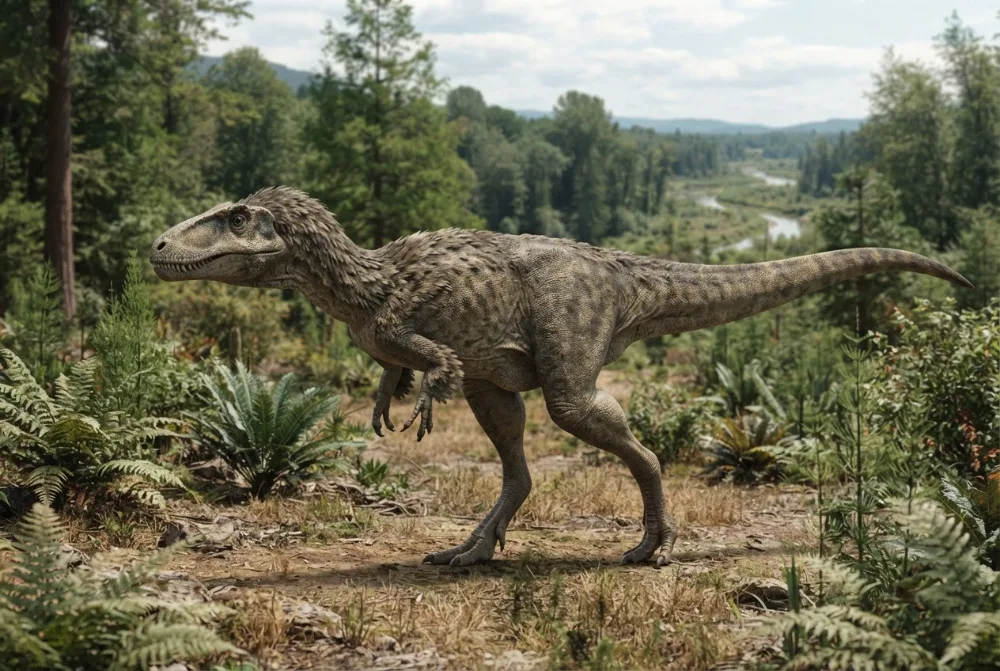
Nanotyrannus was a small, fast cousin of T. rex that lived near the end of the dinosaur age. It had a slender skull, big arms, and long legs for chasing prey. Scientists argue whether it was a separate dinosaur or just a baby T. rex.1
Berɛ bɛn na ɛtenaa ase?
Na ne kɛseɛ yɛ sɛn?
Na ne tenten yɛ sɛn?
Na ne korɔn yɛ sɛn?
nsusuiɛ
Na ne mu yɛ duru sɛn?
 ne tenten te sɛ nkraman 5 firi hwene kɔsi dua🍌ne tenten te sɛ kwadu 29 a wɔde abɔ toatoa so🍉ne mu duru te sɛ watamɛlɔn 240🧸ne mu duru te sɛ nkɔkɔaa sukuu mmofra 63🎒ne mu duru te sɛ sukuu mmofra 38🐻❄️ne mu duru te sɛ polar bea 2.5🏃anka ɔbɛtumi atu mmirika mita 100 wɔ sikɛn 7.2 mu (onipa a ɔyɛ ntɛm sen biara hia 9.6)
Nanotyrannus kɛseɛ yɛ sɛn sɛ wode toto WO ho a?
Akontaa nko ara wɔ wo browser mu. Yɛnkora biribiara so, na yɛmmfa biribiara nkɔ baabiara.
Na ɛyɛ ntɛm sɛn?


Nsɛm a ɛyɛ anigye
Nanotyrannus was about 5.2 metres (17 feet) long, much smaller than T. rex which could be over 12 metres (40 feet).1
Its arms were longer and stronger than those of T. rex, both in absolute size and compared to its body.1
Nanotyrannus had small horns or crests right in front of its eyes, which T. rex did not have.1
It was probably a fast runner. Scientists think it could chase down prey more easily than the bulky T. rex.1
The first Nanotyrannus skull was found in 1942 and was originally thought to be a new species of Gorgosaurus.1
In 2025, scientists named a second species, Nanotyrannus lethaeus, based on a skeleton nicknamed 'Jane'.1
Nanotyrannus lived right up to the asteroid impact that killed the non-avian dinosaurs, about 66 million years ago.1
Nsɛm a wɔbisa bebree fa Nanotyrannus ho
?Was Nanotyrannus a real dinosaur?
Yes. In 2025, scientists proved it was a separate dinosaur, not a baby T. rex.34
?How big was Nanotyrannus?
About 5.2 metres (17 feet) long. It weighed roughly 704 kilograms (1,552 pounds) for one species and up to 1,200 kilograms (2,600 pounds) for another.1
?When did Nanotyrannus live?
It lived about 67 to 66 million years ago, right up to the asteroid impact that killed the non-avian dinosaurs.1
?Could Nanotyrannus run fast?
Yes. It had long legs and was probably a fast runner, able to chase down prey more easily than the bulky T. rex.1
?Did Nanotyrannus have feathers?
Scientists are not sure. No feathers have been found on Nanotyrannus fossils, but many related dinosaurs had them.1
?What did Nanotyrannus eat?
It was a meat-eater. It probably hunted smaller dinosaurs and other animals, using its sharp teeth and strong arms.1
?How many teeth did Nanotyrannus have?
It had more teeth than T. rex. The front teeth were smooth, and the rest were serrated and blade-like.15
?Is Nanotyrannus bigger than T. rex?
No. Nanotyrannus was much smaller, about 5.2 metres (17 feet) long, while T. rex could be over 12 metres (40 feet) long.1
Atosɛm sɛefoɔ
Atosɛm: Nanotyrannus is just a baby T. rex.
Nokorɛ: Many scientists now think Nanotyrannus is a separate, smaller species. Studies in 2025 showed that some Nanotyrannus specimens were fully grown adults, not youngsters.1
Ma dino ho animdefoɔ
- Nyansahu din
- Nanotyrannus
- Obi a ɔtoo din
- Bakker et al. 19886
- Kuo
- Tiranosɔɔ
- Abusua / kuo kɛseɛ
- Nanotyrannidae6
- Nkyekyɛmu
- Theropoda > Tyrannosauroidea6
- Abotan no mfeɛ
- mfeɛ ɔpepem 72 kɔsi 66 (Maastrichtian)6
- Abotan nhyehyɛeɛ
- Hell Creek, Lance6
- Aman
- Amerika6
- Fɔsil nkyerɛwee
- 6 wɔ The Paleobiology Database mu6
- Nhunumu
- The first Nanotyrannus skull was found in 1942 by David Hosbrook Dunkle in the Hell Creek Formation of Montana. In 1988, Robert Bakker, Michael Williams, and Philip Currie named it Nanotyrannus, meaning 'dwarf tyrant'.12
- Wɔda so gye ho akyinnye
- Scientists still debate whether Nanotyrannus is a valid genus or just a juvenile Tyrannosaurus rex. New studies in 2025 support it being a real, separate dinosaur, but not everyone agrees.1
Baabi a nsɛm no firi
- Nanotyrannus (en.wikipedia.org)
- Nanotyrannus, a new genus of pygmy tyrannosaur, from the latest Cretaceous of Montana (zenodo.org)
- Nanotyrannus and Tyrannosaurus coexisted at the close of the Cretaceous | Nature (nature.com)
- Nanotyrannus Confirmed: Dueling Dinosaurs Fossil Rewrites the Story of T. rex | Department of Biological Sciences (bio.sciences.ncsu.edu)
- Agile and vicious Nanotyrannus was not just a teenage T. rex | Reuters (reuters.com)
- Nanotyrannus in The Paleobiology Database (CC BY 4.0): mfeɛ, mmeaeɛ, abotan nhyehyɛeɛ, nkyekyɛmu.
Asɛm biara a ɛwɔ krataafa yi so wɔ nɔma a ɛkyerɛ baabi a ɛfiri. Sɛ yɛfom biribi a, kafra, yɛyɛ dino dɔfoɔ, yɛnyɛ nyansahu nsɛmma krataa. Ka kyerɛ yɛn wɔ [email protected] na yɛbɛsiesie.
 Ɔkɔm de Rex! Dino Wiki yɛ agya bi adwuma a ɔyɛɛ maa ne babarima a ɔdɔ dino. Ɛyɛ kwa, dawurubɔ biara nni mu, akyidifoɔ biara nni mu. Mpanimfoɔ bɛtumi ama Rex aduane kakra, na aboa ama Dino Wiki atena intanɛt so.Ma Rex aduane
 Tyrannosaurus
 Tarbosaurus
 Albertosaurus
 Daspletosaurus
 Gorgosaurus
 Alectrosaurus
 Triceratops
 Velociraptor
 Spinosaurus
 Ankylosaurus
 Parasaurolophus
 Pteranodon