 Woyɛ dino bɛn? Nsɛmmisa agoro
 Dino ko
 Dino mmirikatuo
 Dino agodie nketewa
 Stika nwoma
 Dino TOP nhyehyɛeɛ
 Ma me nwanwa!
Berɛ bɛn na ɛtenaa ase?

Na ne kɛseɛ yɛ sɛn?
Na ne tenten yɛ sɛn?
Na ne korɔn yɛ sɛn?
nsusuiɛ
 ne tenten te sɛ nkraman 5 firi hwene kɔsi dua🍌ne tenten te sɛ kwadu 28 a wɔde abɔ toatoa so🏃anka ɔbɛtumi atu mmirika mita 100 wɔ sikɛn 21 mu (onipa a ɔyɛ ntɛm sen biara hia 9.6)
Nipponopelta kɛseɛ yɛ sɛn sɛ wode toto WO ho a?
Akontaa nko ara wɔ wo browser mu. Yɛnkora biribiara so, na yɛmmfa biribiara nkɔ baabiara.
Na ɛyɛ ntɛm sɛn?


Nsɛm a ɛyɛ anigye
Scientists used CT scans to see hidden bones inside the rock, like two complete teeth and part of the inner ear.12
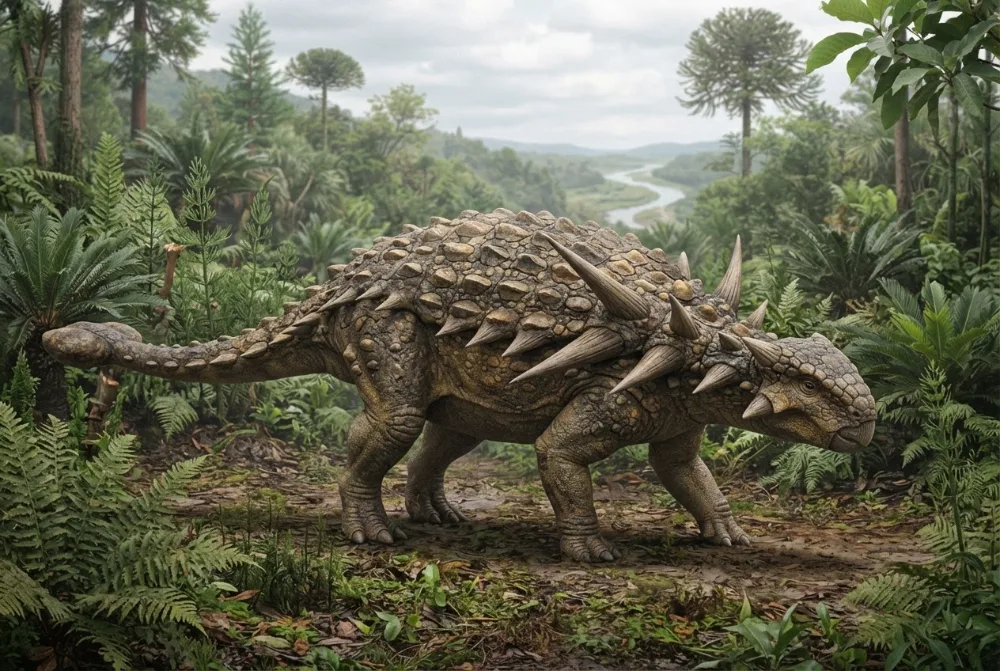
Nipponopelta belonged to a group called nodosaurids, which had long spikes on their shoulders but no tail club.23
Its ancestors likely walked from North America to Asia across a land bridge called Beringia about 100 million years ago.32
Nsɛm a wɔbisa bebree fa Nipponopelta ho
?How big was Nipponopelta?
Scientists do not know its exact size because only a partial skull and a few bones have been found. It was probably similar in size to other nodosaurids, which were medium-sized, four-legged plant-eaters.1
?What did Nipponopelta eat?
It ate plants. Its teeth were small and leaf-shaped, good for cropping vegetation.3
?When did Nipponopelta live?
It lived during the Late Cretaceous period, about 96 to 94 million years ago.5
?Where was Nipponopelta found?
Its fossils were found in Hokkaido, Japan, along the bank of the Omakizawa River in Yūbari city.1
?Did Nipponopelta have a tail club?
No. Nipponopelta was a nodosaurid, and nodosaurids did not have a tail club. Instead, they had long spikes on their shoulders.3
?How did Nipponopelta get to Japan?
Its ancestors likely walked from North America to Asia across a land bridge called Beringia about 100 million years ago.3
?Is Nipponopelta a dinosaur?
Yes, Nipponopelta is a dinosaur. It is a type of armored dinosaur called a nodosaurid ankylosaur.1
?Why is it called Nipponopelta?
Its name means 'Japanese shield' in Greek and Japanese. 'Nippon' means Japan and 'pelta' means shield.1
Ma dino ho animdefoɔ
- Nyansahu din
- Nipponopelta
- Obi a ɔtoo din
- Oyabu et al. 20276
- Kuo
- Dino a wɔwɔ akyɛm
- Abusua / kuo kɛseɛ
- Nodosauridae6
- Nkyekyɛmu
- Ornithischia > Ankylosauria > Nodosauridae > Thyreophora6
- Abotan no mfeɛ
- mfeɛ ɔpepem 100 kɔsi 94 (Cenomanian)6
- Abotan nhyehyɛeɛ
- Hikagenosawa6
- Aman
- Gyapan6
- Fɔsil nkyerɛwee
- 1 wɔ The Paleobiology Database mu6
- Nhunumu
- The fossil was found by Eijiro Goto in 1995 in Yūbari, Hokkaido, Japan. In 2026, Shumpei Oyabu and colleagues named it Nipponopelta yezoensis after studying it with CT scans.12
- Wɔda so gye ho akyinnye
- Scientists are not sure if Nipponopelta lived right on the coast or if its body was carried to the sea after death.13
Baabi a nsɛm no firi
- Nipponopelta (en.wikipedia.org)
- 北海道産恐竜化石を「ニッポノペルタ・エゾエンシス」と命名 (hokudai.ac.jp)
- Rare armored dinosaur found in Japan may have ancestors that migrated across a land bridge 100 million years ago | Live Science (livescience.com)
- Nipponopelta yezoensis, Japan's First Definitive Ankylosaur (blog.everythingdinosaur.com)
- New Species of Armored Dinosaur Identified in Japan | Sci.News (sci.news)
- Nipponopelta in The Paleobiology Database (CC BY 4.0): mfeɛ, mmeaeɛ, abotan nhyehyɛeɛ, nkyekyɛmu.
Asɛm biara a ɛwɔ krataafa yi so wɔ nɔma a ɛkyerɛ baabi a ɛfiri. Sɛ yɛfom biribi a, kafra, yɛyɛ dino dɔfoɔ, yɛnyɛ nyansahu nsɛmma krataa. Ka kyerɛ yɛn wɔ [email protected] na yɛbɛsiesie.
 Ɔkɔm de Rex! Dino Wiki yɛ agya bi adwuma a ɔyɛɛ maa ne babarima a ɔdɔ dino. Ɛyɛ kwa, dawurubɔ biara nni mu, akyidifoɔ biara nni mu. Mpanimfoɔ bɛtumi ama Rex aduane kakra, na aboa ama Dino Wiki atena intanɛt so.Ma Rex aduane
 Ankylosaurus
 Sauropelta
 Pinacosaurus
 Scutellosaurus
 Struthiosaurus
 Euoplocephalus
 Tyrannosaurus
 Triceratops
 Velociraptor
 Spinosaurus
 Parasaurolophus
 Pteranodon