 Woyɛ dino bɛn? Nsɛmmisa agoro
 Dino ko
 Dino mmirikatuo
 Dino agodie nketewa
 Stika nwoma
 Dino TOP nhyehyɛeɛ
 Ma me nwanwa!
Ornatops
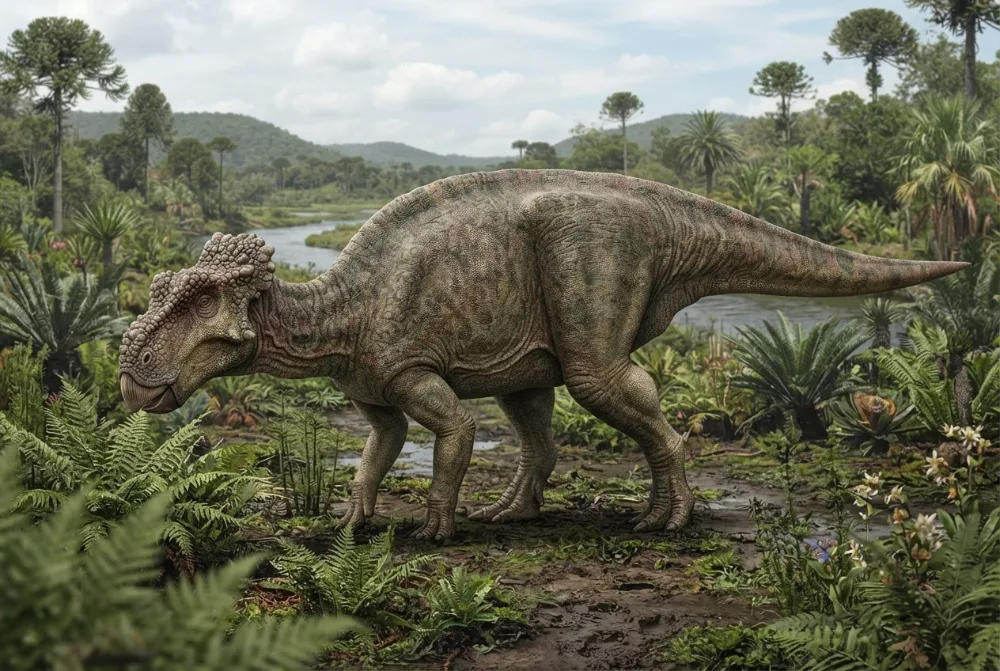
Ornatops was a duck-billed dinosaur that lived in what is now New Mexico, USA, about 78 million years ago. It had a fancy, bumpy skull that may have supported a small crest. This plant-eater is the first crested brachylophosaurin found in the southern part of its range.12
Berɛ bɛn na ɛtenaa ase?
Na ne kɛseɛ yɛ sɛn?
Na ne tenten yɛ sɛn?
Na ne korɔn yɛ sɛn?
nsusuiɛ
Na ne mu yɛ duru sɛn?
 ne tenten te sɛ kaa 2 a wɔde agyina toatoa so🍌ne tenten te sɛ kwadu 53 a wɔde abɔ toatoa so
 ne mu duru te sɛ nkraman 200🍉ne mu duru te sɛ watamɛlɔn 800🎒ne mu duru te sɛ sukuu klaas mũ 5 mu mmofra🐻❄️ne mu duru te sɛ polar bea 9🏃anka ɔbɛtumi atu mmirika mita 100 wɔ sikɛn 16 mu (onipa a ɔyɛ ntɛm sen biara hia 9.6)
Ornatops kɛseɛ yɛ sɛn sɛ wode toto WO ho a?
Akontaa nko ara wɔ wo browser mu. Yɛnkora biribiara so, na yɛmmfa biribiara nkɔ baabiara.
Na ɛyɛ ntɛm sɛn?


Nsɛm a ɛyɛ anigye
Ornatops was discovered in 2018 by staff and volunteers from the Western Science Center, Zuni Dinosaur Institute for Geosciences, and Southwest Paleontological Society.1
Its scientific name Ornatops incantatus means 'ornate face' and 'enchanted', a nod to New Mexico's nickname 'Land of Enchantment'.1
The holotype skull has a unique pair of bumps on the nasofrontal suture, suggesting it had a small crest in life.12
Ornatops is the southernmost brachylophosaurin dinosaur ever found, showing these duck-billed dinosaurs were widespread across North America.2
The fossil includes a well-preserved skull, parts of the backbone, ribs, shoulder blade, arm bones, and hip bones.1
Scientists think Ornatops was an intermediate species between Probrachylophosaurus and Brachylophosaurus.1
Nsɛm a wɔbisa bebree fa Ornatops ho
?What did Ornatops eat?
Ornatops was a plant-eater, like other duck-billed dinosaurs. It likely ate tough plants with its wide beak and many cheek teeth.1
?How big was Ornatops?
Scientists do not know the exact size yet because the paper describing it only studied the skull. A future study of the rest of the skeleton will give more details.1
?When did Ornatops live?
Ornatops lived about 78 million years ago, during the Late Cretaceous Period.1
Ma dino ho animdefoɔ
- Nyansahu din
- Ornatops
- Obi a ɔtoo din
- McDonald et al. 20214
- Kuo
- Dabodabo ano dino
- Abusua / kuo kɛseɛ
- Hadrosauridae4
- Nkyekyɛmu
- Ornithischia > Ornithopoda > Iguanodontia > Hadrosauridae4
- Abotan no mfeɛ
- mfeɛ ɔpepem 84 kɔsi 72 (Campanian)4
- Abotan nhyehyɛeɛ
- Menefee4
- Aman
- Amerika4
- Fɔsil nkyerɛwee
- 1 wɔ The Paleobiology Database mu4
- Nhunumu
- Ornatops was discovered in 2018 in the Menefee Formation of New Mexico by a team from the Western Science Center, Zuni Dinosaur Institute for Geosciences, and Southwest Paleontological Society. It was named Ornatops incantatus in 2021 by McDonald and colleagues.12
- Wɔda so gye ho akyinnye
- Scientists are not sure about the exact size and proportions of Ornatops because the original description focused only on the skull. A future study of the rest of the skeleton is planned.1
Baabi a nsɛm no firi
- Ornatops (en.wikipedia.org)
- A new brachylophosaurin (Dinosauria: Hadrosauridae) from the Upper Cretaceous Menefee Formation of New Mexico - PMC (pmc.ncbi.nlm.nih.gov)
- Ornatops incantatus | Dinosaur Database by DinoAnimals.com (dinoanimals.com)
- Ornatops in The Paleobiology Database (CC BY 4.0): mfeɛ, mmeaeɛ, abotan nhyehyɛeɛ, nkyekyɛmu.
Asɛm biara a ɛwɔ krataafa yi so wɔ nɔma a ɛkyerɛ baabi a ɛfiri. Sɛ yɛfom biribi a, kafra, yɛyɛ dino dɔfoɔ, yɛnyɛ nyansahu nsɛmma krataa. Ka kyerɛ yɛn wɔ [email protected] na yɛbɛsiesie.
 Ɔkɔm de Rex! Dino Wiki yɛ agya bi adwuma a ɔyɛɛ maa ne babarima a ɔdɔ dino. Ɛyɛ kwa, dawurubɔ biara nni mu, akyidifoɔ biara nni mu. Mpanimfoɔ bɛtumi ama Rex aduane kakra, na aboa ama Dino Wiki atena intanɛt so.Ma Rex aduane
 Parasaurolophus
 Edmontosaurus
 Saurolophus
 Hypacrosaurus
 Corythosaurus
 Kritosaurus
 Tyrannosaurus
 Triceratops
 Velociraptor
 Spinosaurus
 Ankylosaurus
 Pteranodon