 Woyɛ dino bɛn? Nsɛmmisa agoro
 Dino ko
 Dino mmirikatuo
 Dino agodie nketewa
 Stika nwoma
 Dino TOP nhyehyɛeɛ
 Ma me nwanwa!
Berɛ bɛn na ɛtenaa ase?

Na ne kɛseɛ yɛ sɛn?
Na ne tenten yɛ sɛn?
Na ne korɔn yɛ sɛn?
nsusuiɛ
Na ne mu yɛ duru sɛn?

 ne tenten te sɛ nkraman 8 firi hwene kɔsi dua🍌ne tenten te sɛ kwadu 44 a wɔde abɔ toatoa sone mu duru te sɛ nkraman 200🍉ne mu duru te sɛ watamɛlɔn 800🎒ne mu duru te sɛ sukuu klaas mũ 5 mu mmofra🐻❄️ne mu duru te sɛ polar bea 9🏃anka ɔbɛtumi atu mmirika mita 100 wɔ sikɛn 13 mu (onipa a ɔyɛ ntɛm sen biara hia 9.6)
Pachyrhinosaurus kɛseɛ yɛ sɛn sɛ wode toto WO ho a?
Akontaa nko ara wɔ wo browser mu. Yɛnkora biribiara so, na yɛmmfa biribiara nkɔ baabiara.
Na ɛyɛ ntɛm sɛn?


Nsɛm a ɛyɛ anigye
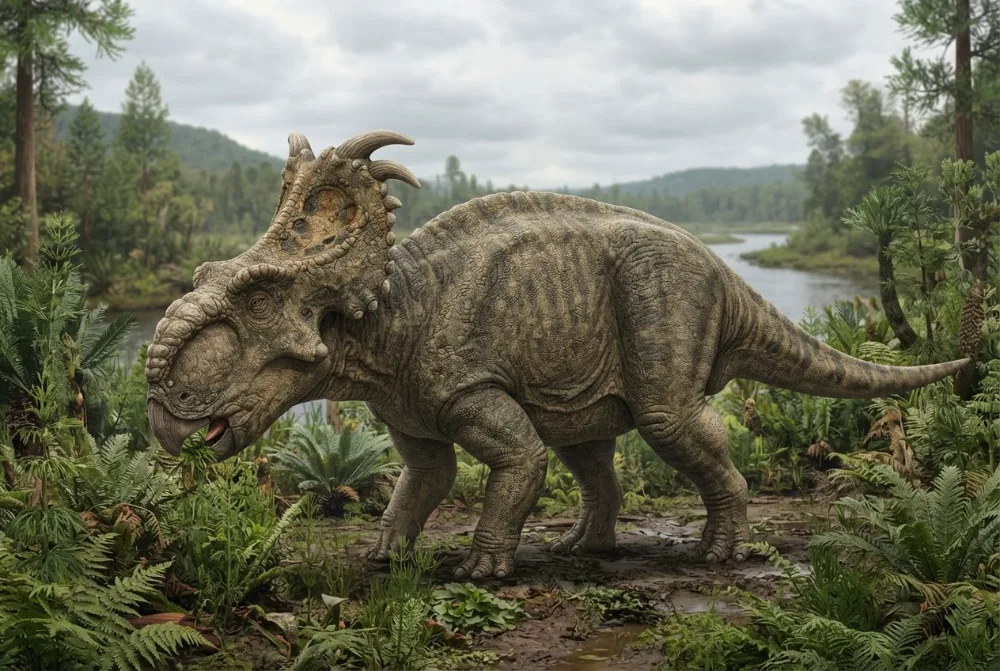
Pachyrhinosaurus had a large, flat boss on its nose and a smaller one over its eyes, instead of a nose horn.1
Three species of Pachyrhinosaurus have been found: P. canadensis, P. lakustai, and P. perotorum.1
Fossils of adults and juveniles are often found together, suggesting that Pachyrhinosaurus lived in herds and cared for its young.2
One bonebed in Alberta contained up to 100 bones per square metre, with over 3,500 bones and 14 skulls.1
The northernmost species, P. perotorum, lived in what is now Alaska about 73 million years ago.1
Pachyrhinosaurus lived during the Late Cretaceous, between about 74 and 68 million years ago.2
Nsɛm a wɔbisa bebree fa Pachyrhinosaurus ho
?How big was Pachyrhinosaurus?
The largest species, P. canadensis, was about 6 to 8 metres (20 to 26 feet) long and weighed 3 to 4 tonnes (3.3 to 4.4 tons). The other species were smaller, about 5 metres (16 feet) long and 2 tonnes (2.2 tons).12
?What did Pachyrhinosaurus eat?
Pachyrhinosaurus was a herbivore, meaning it ate plants. It had strong cheek teeth to cut tough, fibrous plants.12
?Did Pachyrhinosaurus have horns?
Instead of a nose horn like Triceratops, Pachyrhinosaurus had big, flat bony bumps called bosses on its snout and over its eyes. It did have a pair of horns that grew from its frill and pointed upward.12
?When did Pachyrhinosaurus live?
Pachyrhinosaurus lived during the Late Cretaceous Period, between about 74 and 68 million years ago.21
?Where was Pachyrhinosaurus found?
Fossils have been found in Alberta, Canada, and Alaska, USA. The first fossils were discovered in Alberta in 1946.21
?Did Pachyrhinosaurus live in herds?
Yes. Fossils of adults and juveniles are often found together, which suggests they lived in herds and cared for their young.21
Ma dino ho animdefoɔ
- Nyansahu din
- Pachyrhinosaurus
- Obi a ɔtoo din
- Sternberg 19503
- Kuo
- Dino a wɔwɔ mmɛn
- Abusua / kuo kɛseɛ
- Ceratopsidae3
- Nkyekyɛmu
- Ornithischia > Ceratopsia > Ceratopsidae3
- Abotan no mfeɛ
- mfeɛ ɔpepem 84 kɔsi 66 (Campanian / Maastrichtian)3
- Abotan nhyehyɛeɛ
- Horseshoe Canyon, Wapiti, St. Mary River3
- Aman
- Kanada, Amerika3
- Fɔsil nkyerɛwee
- 16 wɔ The Paleobiology Database mu3
- Nhunumu
- The first Pachyrhinosaurus fossils were found in 1946 in Alberta, Canada, by Charles M. Sternberg. He named the dinosaur Pachyrhinosaurus in 1950.12
- Wɔda so gye ho akyinnye
- Scientists are still debating whether the differences in the shape of the bosses (some convex, some concave) are due to male and female differences or just erosion.1
Baabi a nsɛm no firi
- Pachyrhinosaurus (en.wikipedia.org)
- Pachyrhinosaurus | Natural History Museum (nhm.ac.uk)
- Pachyrhinosaurus in The Paleobiology Database (CC BY 4.0): mfeɛ, mmeaeɛ, abotan nhyehyɛeɛ, nkyekyɛmu.
Asɛm biara a ɛwɔ krataafa yi so wɔ nɔma a ɛkyerɛ baabi a ɛfiri. Sɛ yɛfom biribi a, kafra, yɛyɛ dino dɔfoɔ, yɛnyɛ nyansahu nsɛmma krataa. Ka kyerɛ yɛn wɔ [email protected] na yɛbɛsiesie.
 Ɔkɔm de Rex! Dino Wiki yɛ agya bi adwuma a ɔyɛɛ maa ne babarima a ɔdɔ dino. Ɛyɛ kwa, dawurubɔ biara nni mu, akyidifoɔ biara nni mu. Mpanimfoɔ bɛtumi ama Rex aduane kakra, na aboa ama Dino Wiki atena intanɛt so.Ma Rex aduane
 Triceratops
 Protoceratops
 Ojoceratops
 Tatankaceratops
 Psittacosaurus
 Centrosaurus
 Tyrannosaurus
 Velociraptor
 Spinosaurus
 Ankylosaurus
 Parasaurolophus
 Pteranodon