 Woyɛ dino bɛn? Nsɛmmisa agoro
 Dino ko
 Dino mmirikatuo
 Dino agodie nketewa
 Stika nwoma
 Dino TOP nhyehyɛeɛ
 Ma me nwanwa!
Berɛ bɛn na ɛtenaa ase?

Na ne kɛseɛ yɛ sɛn?
Na ne tenten yɛ sɛn?
Na ne korɔn yɛ sɛn?
nsusuiɛ
 ne tenten te sɛ fie agyinamoa 2 firi hwene kɔsi dua🍌ne tenten te sɛ kwadu 6 a wɔde abɔ toatoa so🪑ketewa ara ma ɔbɛtumi afa akonnwa ase🏃anka ɔbɛtumi atu mmirika mita 100 wɔ sikɛn 15 mu (onipa a ɔyɛ ntɛm sen biara hia 9.6)
Papiliovenator kɛseɛ yɛ sɛn sɛ wode toto WO ho a?
Akontaa nko ara wɔ wo browser mu. Yɛnkora biribiara so, na yɛmmfa biribiara nkɔ baabiara.
Na ɛyɛ ntɛm sɛn?


Nsɛm a ɛyɛ anigye
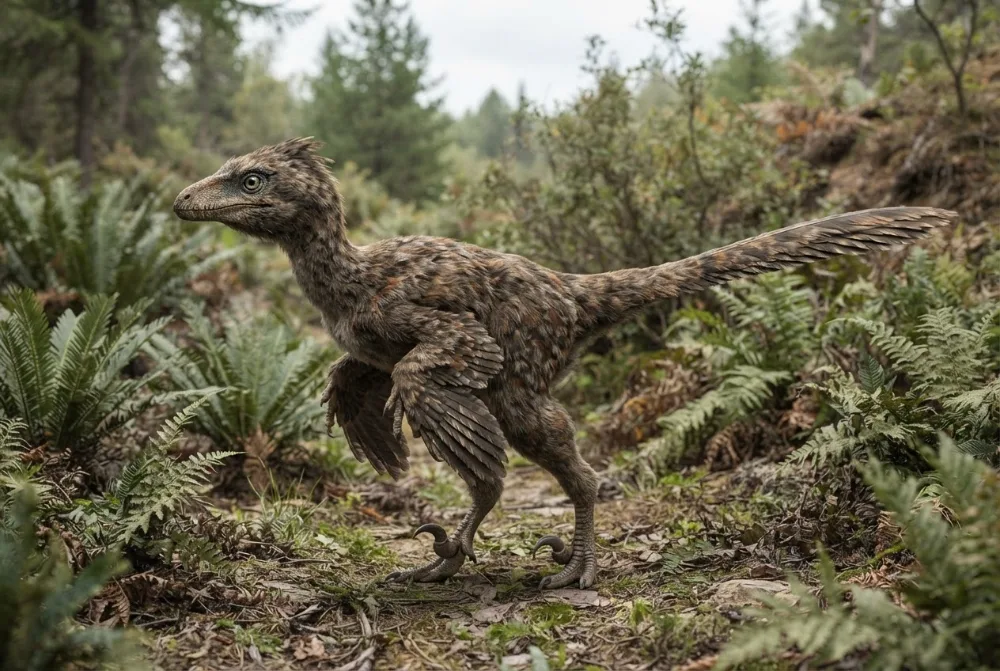
Papiliovenator gets its name from a butterfly-shaped bone in its back. The first two vertebrae of its spine had wide, wing-like parts that looked like a butterfly.1
Its snout was short and triangular, more like older troodontids from the Early Cretaceous. Most Late Cretaceous troodontids had long, low snouts.1
This dinosaur lived about 83 to 72 million years ago, during the Campanian age of the Late Cretaceous.12
Scientists think Papiliovenator was one of the earliest Late Cretaceous troodontids. Only one other troodontid, Almas, was more primitive.1
The only known fossil is a partial skeleton of a subadult, including a nearly complete skull and many other bones.1
Nsɛm a wɔbisa bebree fa Papiliovenator ho
?How big was Papiliovenator?
It was a small dinosaur. Scientists have not given an exact length or weight, but troodontids were usually about the size of a turkey or a small dog.14
?What did Papiliovenator eat?
It probably hunted small animals and maybe ate plants too. Its teeth had no serrations, which is unusual for a meat-eater, so it may have eaten softer food.1
?Did Papiliovenator have feathers?
Yes, it was a troodontid, a type of bird-like raptor, and scientists think it had feathers.1
Ma dino ho animdefoɔ
- Nyansahu din
- Papiliovenator
- Obi a ɔtoo din
- Pei et al. 20225
- Kuo
- Raptɔ
- Abusua / kuo kɛseɛ
- Troodontidae5
- Nkyekyɛmu
- Theropoda > Troodontidae5
- Abotan no mfeɛ
- mfeɛ ɔpepem 84 kɔsi 72 (Campanian)5
- Abotan nhyehyɛeɛ
- Wulansuhai5
- Aman
- Kyaena5
- Fɔsil nkyerɛwee
- 1 wɔ The Paleobiology Database mu5
- Nhunumu
- Papiliovenator was named in 2022 by a team of scientists led by R. Pei. The fossils were found at the Bayan Mandahu Fossil Preserve in Inner Mongolia, China.15
- Wɔda so gye ho akyinnye
- Scientists are not sure exactly what Papiliovenator ate. Its teeth lack serrations, which is rare for a carnivore, so its diet may have included plants or soft-bodied prey.12
Baabi a nsɛm no firi
- Papiliovenator (en.wikipedia.org)
- PBDB Taxon (paleobiodb.org)
- Papiliovenator neimengguensis a Short-snouted Troodontid (blog.everythingdinosaur.com)
- 【中国科学报】内蒙古发现小型伤齿龙科恐龙新属种----中国科学院古脊椎动物与古人类研究所 (ivpp.cas.cn)
- Papiliovenator in The Paleobiology Database (CC BY 4.0): mfeɛ, mmeaeɛ, abotan nhyehyɛeɛ, nkyekyɛmu.
Asɛm biara a ɛwɔ krataafa yi so wɔ nɔma a ɛkyerɛ baabi a ɛfiri. Sɛ yɛfom biribi a, kafra, yɛyɛ dino dɔfoɔ, yɛnyɛ nyansahu nsɛmma krataa. Ka kyerɛ yɛn wɔ [email protected] na yɛbɛsiesie.
 Ɔkɔm de Rex! Dino Wiki yɛ agya bi adwuma a ɔyɛɛ maa ne babarima a ɔdɔ dino. Ɛyɛ kwa, dawurubɔ biara nni mu, akyidifoɔ biara nni mu. Mpanimfoɔ bɛtumi ama Rex aduane kakra, na aboa ama Dino Wiki atena intanɛt so.Ma Rex aduane
 Velociraptor
 Microraptor
 Deinonychus
 Asiamericana
 Richardoestesia
 Saurornitholestes
 Tyrannosaurus
 Triceratops
 Spinosaurus
 Ankylosaurus
 Parasaurolophus
 Pteranodon