 Woyɛ dino bɛn? Nsɛmmisa agoro
 Dino ko
 Dino mmirikatuo
 Dino agodie nketewa
 Stika nwoma
 Dino TOP nhyehyɛeɛ
 Ma me nwanwa!
Prosaurolophus
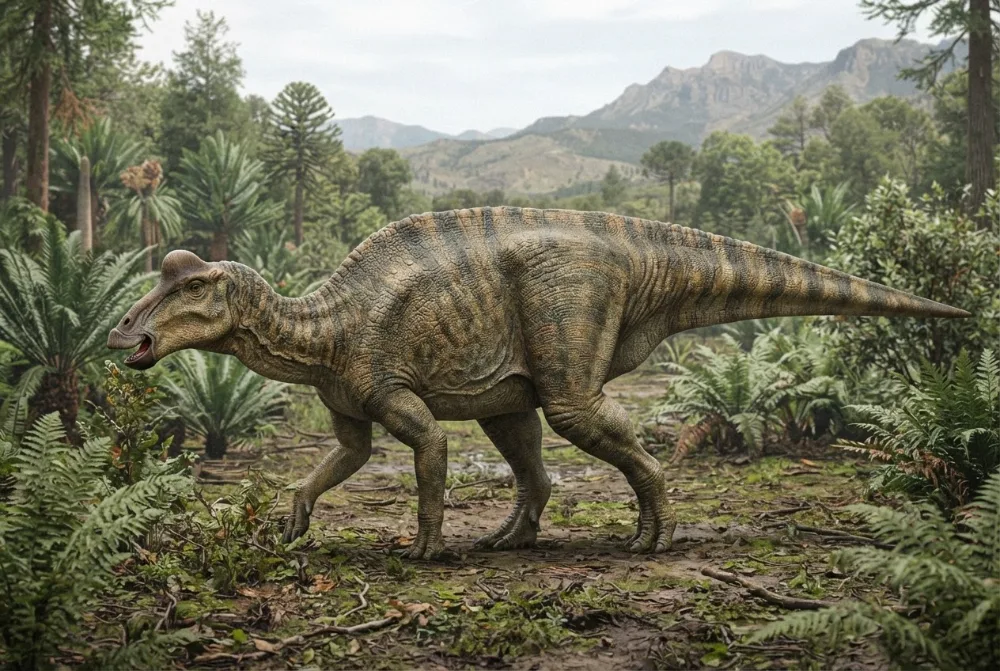
Prosaurolophus was a duck-billed dinosaur that lived in North America about 75 million years ago. It had a small, solid bump on its nose that looked like a little hat. This gentle giant munched on plants and could walk on two legs or all fours.1
Berɛ bɛn na ɛtenaa ase?
Na ne kɛseɛ yɛ sɛn?
Na ne tenten yɛ sɛn?
Na ne korɔn yɛ sɛn?
nsusuiɛ
Na ne mu yɛ duru sɛn?

 ne tenten te sɛ nkraman 8 firi hwene kɔsi dua🍌ne tenten te sɛ kwadu 47 a wɔde abɔ toatoa sone mu duru te sɛ nkraman 150🍉ne mu duru te sɛ watamɛlɔn 600🎒ne mu duru te sɛ sukuu klaas mũ 4 mu mmofra🐻❄️ne mu duru te sɛ polar bea 7🏃anka ɔbɛtumi atu mmirika mita 100 wɔ sikɛn 15 mu (onipa a ɔyɛ ntɛm sen biara hia 9.6)
Prosaurolophus kɛseɛ yɛ sɛn sɛ wode toto WO ho a?
Akontaa nko ara wɔ wo browser mu. Yɛnkora biribiara so, na yɛmmfa biribiara nkɔ baabiara.
Na ɛyɛ ntɛm sɛn?


Nsɛm a ɛyɛ anigye
Prosaurolophus had a small, triangular crest on its head made of bone, but scientists think it might have had inflatable nose sacs for display.1
Fossils of at least 25 individuals have been found, including some in a bonebed that suggests they lived together in groups near water.1
Its teeth were packed into dental batteries with hundreds of teeth, and they were replaced throughout its life.1
Prosaurolophus could probably walk on two legs or all fours, and it could reach plants up to 4 metres (13 feet) high.1
It lived in a warm, swampy environment with rivers and floodplains, alongside horned dinosaurs like Centrosaurus and the tyrannosaur Gorgosaurus.1
Nsɛm a wɔbisa bebree fa Prosaurolophus ho
?How big was Prosaurolophus?
About 8.5 metres (28 feet) long and weighed around 3 tonnes (3.3 tons). Its skull was about 0.9 metres (3 feet) long.1
?What did Prosaurolophus eat?
It was a herbivore that ate plants like conifer trees and tree bark, using its broad beak to crop food and hundreds of teeth to grind it.1
?Did Prosaurolophus have a crest?
Yes, it had a small, triangular crest on its forehead made of bone. Scientists think it might also have had inflatable nose sacs for display.13
?When did Prosaurolophus live?
It lived during the Late Cretaceous period, about 75.7 to 74.1 million years ago.1
?Where was Prosaurolophus found?
Fossils have been found in Alberta, Canada, and Montana, USA, in the Dinosaur Park Formation and Two Medicine Formation.12
?Did Prosaurolophus live in groups?
Yes, a bonebed of several individuals suggests they lived together in groups, possibly gathering near water during droughts.1
Ma dino ho animdefoɔ
- Nyansahu din
- Prosaurolophus
- Obi a ɔtoo din
- Brown 19164
- Kuo
- Dabodabo ano dino
- Abusua / kuo kɛseɛ
- Hadrosauridae4
- Nkyekyɛmu
- Ornithischia > Ornithopoda > Iguanodontia > Hadrosauridae4
- Abotan no mfeɛ
- mfeɛ ɔpepem 84 kɔsi 66 (Campanian / Maastrichtian)4
- Abotan nhyehyɛeɛ
- Dinosaur Park, Two Medicine, Bearpaw Shale4
- Aman
- Kanada, Amerika4
- Fɔsil nkyerɛwee
- 15 wɔ The Paleobiology Database mu4
- Nhunumu
- American paleontologist Barnum Brown found a skull in Alberta, Canada in 1915 and named Prosaurolophus maximus in 1916.1
- Wɔda so gye ho akyinnye
- Scientists are not sure if the small crest was used for display or if it supported soft tissue like inflatable nose sacs.1
Baabi a nsɛm no firi
- Prosaurolophus (en.wikipedia.org)
- Prosaurolophus | Natural History Museum (nhm.ac.uk)
- Local juvenile duck-billed dinosaur fossil discovery reveals new details about its appearance | News | University of Calgary (news.ucalgary.ca)
- Prosaurolophus in The Paleobiology Database (CC BY 4.0): mfeɛ, mmeaeɛ, abotan nhyehyɛeɛ, nkyekyɛmu.
Asɛm biara a ɛwɔ krataafa yi so wɔ nɔma a ɛkyerɛ baabi a ɛfiri. Sɛ yɛfom biribi a, kafra, yɛyɛ dino dɔfoɔ, yɛnyɛ nyansahu nsɛmma krataa. Ka kyerɛ yɛn wɔ [email protected] na yɛbɛsiesie.
 Ɔkɔm de Rex! Dino Wiki yɛ agya bi adwuma a ɔyɛɛ maa ne babarima a ɔdɔ dino. Ɛyɛ kwa, dawurubɔ biara nni mu, akyidifoɔ biara nni mu. Mpanimfoɔ bɛtumi ama Rex aduane kakra, na aboa ama Dino Wiki atena intanɛt so.Ma Rex aduane
 Parasaurolophus
 Edmontosaurus
 Saurolophus
 Hypacrosaurus
 Corythosaurus
 Kritosaurus
 Tyrannosaurus
 Triceratops
 Velociraptor
 Spinosaurus
 Ankylosaurus
 Pteranodon