 Woyɛ dino bɛn? Nsɛmmisa agoro
 Dino ko
 Dino mmirikatuo
 Dino agodie nketewa
 Stika nwoma
 Dino TOP nhyehyɛeɛ
 Ma me nwanwa!
Saurornithoides
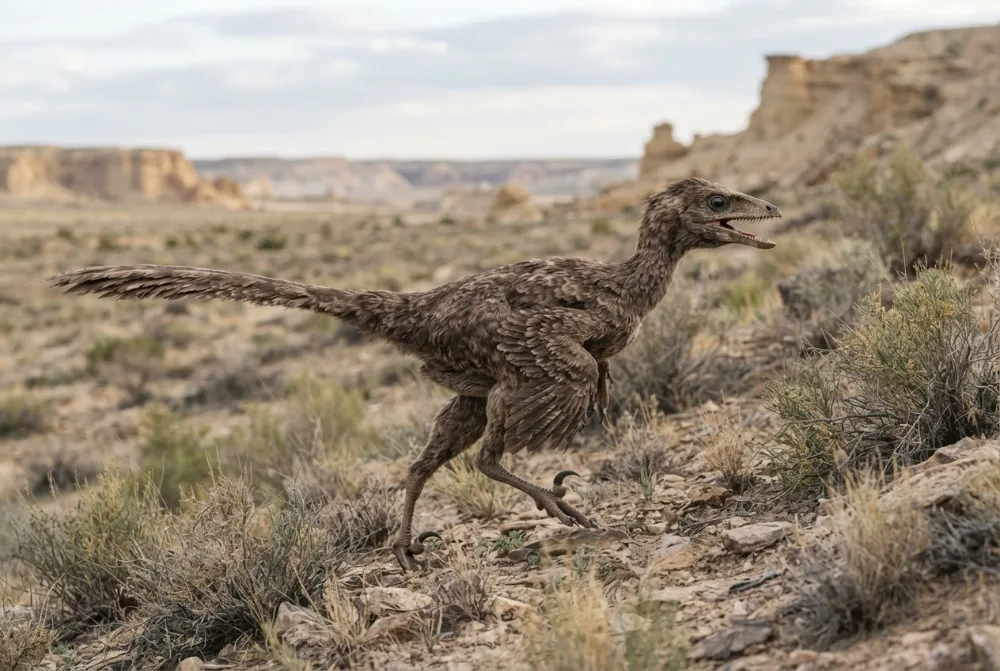
Saurornithoides was a small, fast, bird-like dinosaur that lived in the Late Cretaceous period. It had big eyes for seeing in the dark and a sharp claw on each foot to catch its prey. This smart hunter probably scoured the Gobi Desert for small mammals and reptiles.1
Berɛ bɛn na ɛtenaa ase?
Na ne kɛseɛ yɛ sɛn?
Na ne tenten yɛ sɛn?
Na ne korɔn yɛ sɛn?
nsusuiɛ
 ne tenten te sɛ fie agyinamoa 5 firi hwene kɔsi dua🍌ne tenten te sɛ kwadu 13 a wɔde abɔ toatoa so🏃anka ɔbɛtumi atu mmirika mita 100 wɔ sikɛn 8.2 mu (onipa a ɔyɛ ntɛm sen biara hia 9.6)
Saurornithoides kɛseɛ yɛ sɛn sɛ wode toto WO ho a?
Akontaa nko ara wɔ wo browser mu. Yɛnkora biribiara so, na yɛmmfa biribiara nkɔ baabiara.
Na ɛyɛ ntɛm sɛn?


Nsɛm a ɛyɛ anigye
Saurornithoides had a large brain for its size, making it one of the smartest non-bird dinosaurs.1
Its eyes were huge and gave it excellent stereoscopic vision, which helped it judge distances when hunting at night.1
The first Saurornithoides fossil was found on July 9, 1923, by a Chinese employee of an American Museum of Natural History expedition named Chih.1
A baby Saurornithoides had very strong leg bones, suggesting that troodontid babies could walk soon after hatching and needed little parental care.1
It had a retractable sickle claw on the second toe of each foot, like its cousin Troodon.1
The name was originally going to be 'Ornithoides' (bird-like), but Henry Fairfield Osborn changed it to Saurornithoides when he formally described it in 1924.1
Nsɛm a wɔbisa bebree fa Saurornithoides ho
?How big was Saurornithoides?
About 2 metres (6.6 feet) long. That is roughly the length of a large sofa.3
?What does the name Saurornithoides mean?
It means 'bird-like lizard' in Greek, because its skull looked like a bird's.3
?Was Saurornithoides related to Velociraptor?
Yes, it resembled Velociraptor. Both are theropod dinosaurs.1
?Where was Saurornithoides found?
In Mongolia, in the Gobi Desert. Its fossils come from the Djadochta Formation.1
?When did Saurornithoides live?
It lived during the Late Cretaceous period, about 85 to 80 million years ago.3
?How many species of Saurornithoides were there?
Only one valid species is known: Saurornithoides mongoliensis. Other named species have been moved to different dinosaurs or are no longer considered valid.1
Ma dino ho animdefoɔ
- Nyansahu din
- Saurornithoides
- Obi a ɔtoo din
- Osborn 19244
- Kuo
- Raptɔ
- Abusua / kuo kɛseɛ
- Troodontidae4
- Nkyekyɛmu
- Theropoda > Theropoda > Troodontidae > Compsognathidae4
- Abotan no mfeɛ
- mfeɛ ɔpepem 100 kɔsi 66 (Cenomanian / Maastrichtian)4
- Abotan nhyehyɛeɛ
- Djadokhta, Hell Creek, Bayan Mandahu4
- Aman
- Mongolia, Amerika, Kyaena, Usbekistan4
- Fɔsil nkyerɛwee
- 8 wɔ The Paleobiology Database mu4
- Nhunumu
- Saurornithoides was named by Henry Fairfield Osborn in 1924 based on a skull and other bones found in Mongolia by a Chinese collector named Chih in 1923.1
- Wɔda so gye ho akyinnye
- Scientists are not sure whether Saurornithoides is more closely related to North American troodontids like Troodon or to other Asian troodontids.2
Baabi a nsɛm no firi
- Saurornithoides (en.wikipedia.org)
- A review of the Mongolian Cretaceous dinosaur Saurornithoides (Troodontidae, Theropoda). (American Museum novitates, no. 3654) (digitallibrary.amnh.org)
- Saurornithoides | Natural History Museum (nhm.ac.uk)
- Saurornithoides in The Paleobiology Database (CC BY 4.0): mfeɛ, mmeaeɛ, abotan nhyehyɛeɛ, nkyekyɛmu.
Asɛm biara a ɛwɔ krataafa yi so wɔ nɔma a ɛkyerɛ baabi a ɛfiri. Sɛ yɛfom biribi a, kafra, yɛyɛ dino dɔfoɔ, yɛnyɛ nyansahu nsɛmma krataa. Ka kyerɛ yɛn wɔ [email protected] na yɛbɛsiesie.
 Ɔkɔm de Rex! Dino Wiki yɛ agya bi adwuma a ɔyɛɛ maa ne babarima a ɔdɔ dino. Ɛyɛ kwa, dawurubɔ biara nni mu, akyidifoɔ biara nni mu. Mpanimfoɔ bɛtumi ama Rex aduane kakra, na aboa ama Dino Wiki atena intanɛt so.Ma Rex aduane
 Velociraptor
 Microraptor
 Deinonychus
 Asiamericana
 Richardoestesia
 Saurornitholestes
 Tyrannosaurus
 Triceratops
 Spinosaurus
 Ankylosaurus
 Parasaurolophus
 Pteranodon