 Woyɛ dino bɛn? Nsɛmmisa agoro
 Dino ko
 Dino mmirikatuo
 Dino agodie nketewa
 Stika nwoma
 Dino TOP nhyehyɛeɛ
 Ma me nwanwa!
Sinocephale
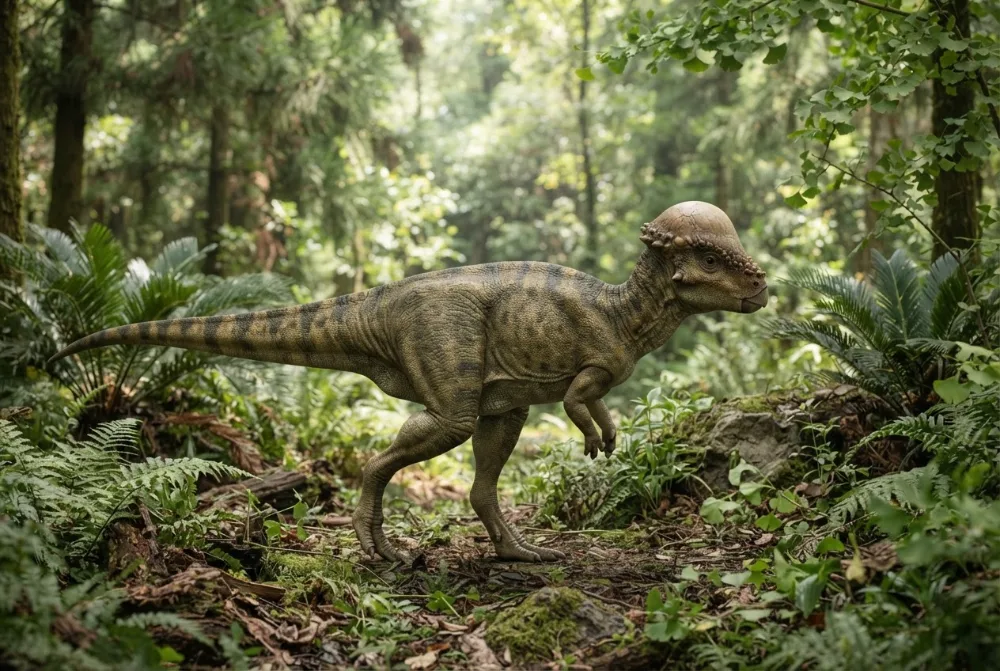
Sinocephale was a small, dome-headed dinosaur that lived in what is now China. It walked on two legs and used its thick, bony skull to head-butt rivals. Only a piece of its skull has been found, but scientists think it was a plant-eater.15
Berɛ bɛn na ɛtenaa ase?
Na ne kɛseɛ yɛ sɛn?
Na ne tenten yɛ sɛn?
Na ne mu yɛ duru sɛn?

 ne tenten te sɛ fie agyinamoa 4 firi hwene kɔsi dua🍌ne tenten te sɛ kwadu 12 a wɔde abɔ toatoa sone mu duru te sɛ fie agyinamoa 12🍉ne mu duru te sɛ watamɛlɔn 9🧸ne mu duru te sɛ nkɔkɔaa sukuu mmofra 2.5🎒ne mu duru te sɛ sukuu mmofra 1.5🏃anka ɔbɛtumi atu mmirika mita 100 wɔ sikɛn 8.2 mu (onipa a ɔyɛ ntɛm sen biara hia 9.6)
Sinocephale kɛseɛ yɛ sɛn sɛ wode toto WO ho a?
Akontaa nko ara wɔ wo browser mu. Yɛnkora biribiara so, na yɛmmfa biribiara nkɔ baabiara.
Na ɛyɛ ntɛm sɛn?


Nsɛm a ɛyɛ anigye
Sinocephale is the first pachycephalosaurid dinosaur ever found outside of North America.2
Its skull had a heart-shaped outline when viewed from above, because the back edge was deeply curved inward.1
The only known fossil is a piece of the skull roof, called a parietal bone. The original was lost, but plaster casts were found and used for study.12
Sinocephale was originally named as a species of Troodon in 1953, then moved to Stegoceras, and finally got its own genus in 2021.1
It lived during the Late Cretaceous, about 83 to 66 million years ago, in a floodplain environment with rivers.51
Sinocephale is related to famous dome-headed dinosaurs like Pachycephalosaurus and Prenocephale.1
Nsɛm a wɔbisa bebree fa Sinocephale ho
?How big was Sinocephale?
Nobody knows for sure, because only a piece of the skull roof has been found. The dome was about 7.5 centimetres (3 inches) thick, but the full body size is unknown.14
?Did Sinocephale have a heart-shaped skull?
Yes. The back edge of its skull was deeply curved inward, giving the skull a heart-shaped outline when seen from above.1
?When did Sinocephale live?
Sinocephale lived during the Late Cretaceous, about 83 to 66 million years ago, in what is now Inner Mongolia, China.1
?What did Sinocephale eat?
Scientists think it was a plant-eater, based on its dome-headed dinosaur relatives, though no teeth or jaws have been found.1
Atosɛm sɛefoɔ
Atosɛm: Some people think Sinocephale was a theropod dinosaur like Troodon.
Nokorɛ: Sinocephale is actually a pachycephalosaur, a dome-headed plant-eater, not a meat-eating theropod.1
Ma dino ho animdefoɔ
- Nyansahu din
- Sinocephale
- Obi a ɔtoo din
- Evans et al. 20215
- Kuo
- Ti kurukuruwa dino
- Abusua / kuo kɛseɛ
- Pachycephalosauridae5
- Nkyekyɛmu
- Ornithischia > Pachycephalosauria5
- Abotan no mfeɛ
- mfeɛ ɔpepem 84 kɔsi 66 (Campanian / Maastrichtian)5
- Abotan nhyehyɛeɛ
- Ulansuhai5
- Aman
- Kyaena5
- Fɔsil nkyerɛwee
- 1 wɔ The Paleobiology Database mu5
- Nhunumu
- The fossil was found in 1930 or 1931 by Swedish paleontologists in Inner Mongolia. It was named Troodon bexelli by Birger Bohlin in 1953, but later renamed Sinocephale bexelli in 2021.1
- Wɔda so gye ho akyinnye
- Scientists are not sure exactly how old the Ulansuhai Formation is, so the age of Sinocephale is still debated.1
Baabi a nsɛm no firi
- Sinocephale (en.wikipedia.org)
- Description and revised diagnosis of Asia’s first recorded pachycephalosaurid, Sinocephale bexelli gen. nov., from the Upper Cretaceous of Inner Mongolia, China (web.archive.org)
- Sinocephale bexelli | Dinosaur Database by DinoAnimals.com (dinoanimals.com)
- Description and revised diagnosis of Asia’s first recorded pachycephalosaurid, Sinocephale bexelli gen. nov., from the Upper Cretaceous of Inner Mongolia, China (cdnsciencepub.com)
- Sinocephale in The Paleobiology Database (CC BY 4.0): mfeɛ, mmeaeɛ, abotan nhyehyɛeɛ, nkyekyɛmu.
Asɛm biara a ɛwɔ krataafa yi so wɔ nɔma a ɛkyerɛ baabi a ɛfiri. Sɛ yɛfom biribi a, kafra, yɛyɛ dino dɔfoɔ, yɛnyɛ nyansahu nsɛmma krataa. Ka kyerɛ yɛn wɔ [email protected] na yɛbɛsiesie.
 Ɔkɔm de Rex! Dino Wiki yɛ agya bi adwuma a ɔyɛɛ maa ne babarima a ɔdɔ dino. Ɛyɛ kwa, dawurubɔ biara nni mu, akyidifoɔ biara nni mu. Mpanimfoɔ bɛtumi ama Rex aduane kakra, na aboa ama Dino Wiki atena intanɛt so.Ma Rex aduane
 Pachycephalosaurus
 Stegoceras
 Prenocephale
 Sphaerotholus
 Foraminacephale
 Brontotholus
 Tyrannosaurus
 Triceratops
 Velociraptor
 Spinosaurus
 Ankylosaurus
 Parasaurolophus