 Woyɛ dino bɛn? Nsɛmmisa agoro
 Dino ko
 Dino mmirikatuo
 Dino agodie nketewa
 Stika nwoma
 Dino TOP nhyehyɛeɛ
 Ma me nwanwa!
Berɛ bɛn na ɛtenaa ase?

Na ne kɛseɛ yɛ sɛn?
Na ne tenten yɛ sɛn?
Na ne korɔn yɛ sɛn?
nsusuiɛ
Na ne mu yɛ duru sɛn?
 ne tenten te sɛ nkraman 4 firi hwene kɔsi dua🍌ne tenten te sɛ kwadu 25 a wɔde abɔ toatoa so🍉ne mu duru te sɛ watamɛlɔn 260🧸ne mu duru te sɛ nkɔkɔaa sukuu mmofra 68🎒ne mu duru te sɛ sukuu mmofra 41🐻❄️ne mu duru te sɛ polar bea 3🏃anka ɔbɛtumi atu mmirika mita 100 wɔ sikɛn 9.7 mu (onipa a ɔyɛ ntɛm sen biara hia 9.6)
Spinops kɛseɛ yɛ sɛn sɛ wode toto WO ho a?
Akontaa nko ara wɔ wo browser mu. Yɛnkora biribiara so, na yɛmmfa biribiara nkɔ baabiara.
Na ɛyɛ ntɛm sɛn?


Nsɛm a ɛyɛ anigye
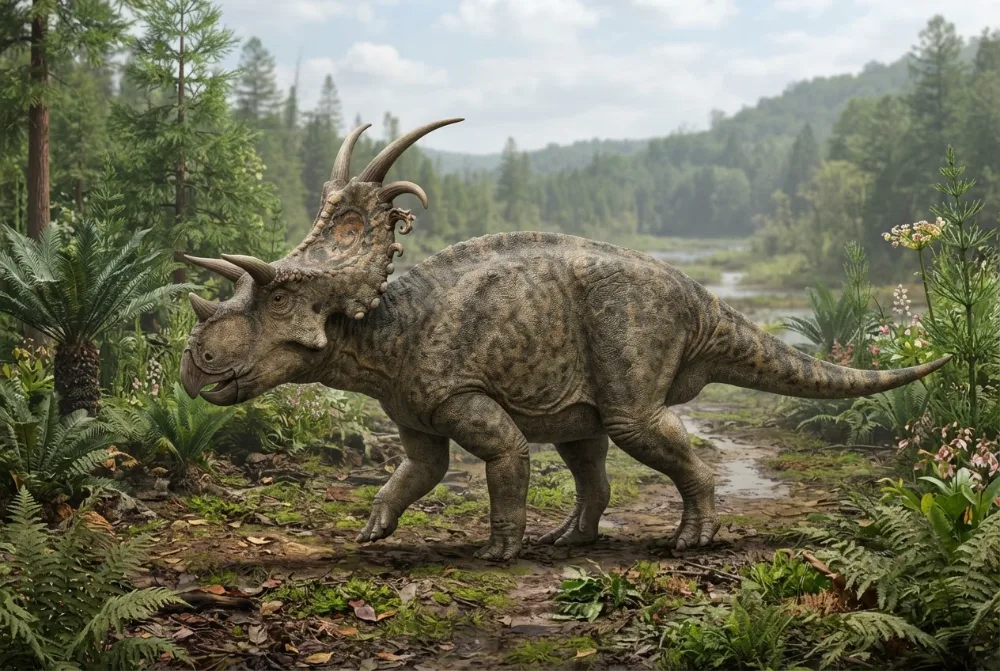
Spinops had a pair of forward-curving hooks on the middle of its frill, and just next to them were extremely long, backward-pointing spikes.1
The fossils of Spinops were first collected in 1916 by Charles H. Sternberg and his son Levi, but they sat in a museum in London for almost 100 years before scientists studied them.21
Spinops was named in 2011, making it a relatively new dinosaur even though its bones were found long ago.24
Scientists think Spinops lived about 76.5 million years ago, during the Late Cretaceous period.2
Nsɛm a wɔbisa bebree fa Spinops ho
?How big was Spinops?
Spinops was about 4.5 metres long and weighed around 1.3 metric tons. That is roughly the size of a small car.23
?What did Spinops eat?
Spinops was a plant-eater. It used its beak to clip leaves and other plants.3
?When did Spinops live?
Spinops lived about 76 million years ago, during the Late Cretaceous period. That's long before humans existed.32
?Why did Spinops have spikes on its frill?
Scientists think the spikes and hooks on Spinops's frill were for showing off, maybe to attract mates or scare rivals. The exact reason is not known for sure.1
Ma dino ho animdefoɔ
- Nyansahu din
- Spinops
- Obi a ɔtoo din
- Farke et al. 20114
- Kuo
- Dino a wɔwɔ mmɛn
- Abusua / kuo kɛseɛ
- Ceratopsidae4
- Nkyekyɛmu
- Ornithischia > Ceratopsia > Ceratopsidae4
- Abotan no mfeɛ
- mfeɛ ɔpepem 84 kɔsi 72 (Campanian)4
- Abotan nhyehyɛeɛ
- Oldman4
- Aman
- Kanada4
- Fɔsil nkyerɛwee
- 1 wɔ The Paleobiology Database mu4
- Nhunumu
- Spinops was named in 2011 by Andrew A. Farke and colleagues. The fossils were collected in 1916 by Charles H. and Levi Sternberg in Dinosaur Provincial Park, Alberta, Canada, and were later studied at the Natural History Museum in London.21
- Wɔda so gye ho akyinnye
- Scientists are not sure whether Spinops was a rare dinosaur or if more of its bones will be found in the future.1
Baabi a nsɛm no firi
- A New Centrosaurine from the Late Cretaceous of Alberta, Canada, and the Evolution of Parietal Ornamentation in Horned Dinosaurs (bioone.org)
- Spinops (en.wikipedia.org)
- New horned dinosaur announced nearly 100 years after discovery (phys.org)
- Spinops in The Paleobiology Database (CC BY 4.0): mfeɛ, mmeaeɛ, abotan nhyehyɛeɛ, nkyekyɛmu.
Asɛm biara a ɛwɔ krataafa yi so wɔ nɔma a ɛkyerɛ baabi a ɛfiri. Sɛ yɛfom biribi a, kafra, yɛyɛ dino dɔfoɔ, yɛnyɛ nyansahu nsɛmma krataa. Ka kyerɛ yɛn wɔ [email protected] na yɛbɛsiesie.
 Ɔkɔm de Rex! Dino Wiki yɛ agya bi adwuma a ɔyɛɛ maa ne babarima a ɔdɔ dino. Ɛyɛ kwa, dawurubɔ biara nni mu, akyidifoɔ biara nni mu. Mpanimfoɔ bɛtumi ama Rex aduane kakra, na aboa ama Dino Wiki atena intanɛt so.Ma Rex aduane
 Triceratops
 Protoceratops
 Ojoceratops
 Tatankaceratops
 Psittacosaurus
 Centrosaurus
 Tyrannosaurus
 Velociraptor
 Spinosaurus
 Ankylosaurus
 Parasaurolophus
 Pteranodon