 Woyɛ dino bɛn? Nsɛmmisa agoro
 Dino ko
 Dino mmirikatuo
 Dino agodie nketewa
 Stika nwoma
 Dino TOP nhyehyɛeɛ
 Ma me nwanwa!
Berɛ bɛn na ɛtenaa ase?

Na ne kɛseɛ yɛ sɛn?
Na ne tenten yɛ sɛn?
Na ne korɔn yɛ sɛn?
Na ne mu yɛ duru sɛn?
 ne tenten te sɛ nkraman 4 firi hwene kɔsi dua🍌ne tenten te sɛ kwadu 19 a wɔde abɔ toatoa so
 ne mu duru te sɛ fie agyinamoa 10🍉ne mu duru te sɛ watamɛlɔn 8🧸ne mu duru te sɛ nkɔkɔaa sukuu mmofra 2🎒ne mu duru te sɛ sukuu mmofra 1🏃anka ɔbɛtumi atu mmirika mita 100 wɔ sikɛn 7.8 mu (onipa a ɔyɛ ntɛm sen biara hia 9.6)
Suskityrannus kɛseɛ yɛ sɛn sɛ wode toto WO ho a?
Akontaa nko ara wɔ wo browser mu. Yɛnkora biribiara so, na yɛmmfa biribiara nkɔ baabiara.
Na ɛyɛ ntɛm sɛn?


Nsɛm a ɛyɛ anigye
Suskityrannus had the earliest known arctometatarsalian foot among its group, meaning its foot bones were pinched together for running fast.21
The fossils were discovered in 1998 by a geologist named Robert Denton and a teenage museum volunteer named Sterling Nesbitt.1
Suskityrannus lived during a time when sea levels were high and much of North America was underwater.2
Its name means 'coyote tyrant' in the Zuni language, because it was a small, clever predator like a coyote.1
The two known skeletons belong to young individuals that were still growing, but adults were still much smaller than later tyrannosaurs like T. rex.1
Suskityrannus filled a big gap in the fossil record, showing how small early tyrannosaurs evolved into giant ones.2
Nsɛm a wɔbisa bebree fa Suskityrannus ho
?How big was Suskityrannus?
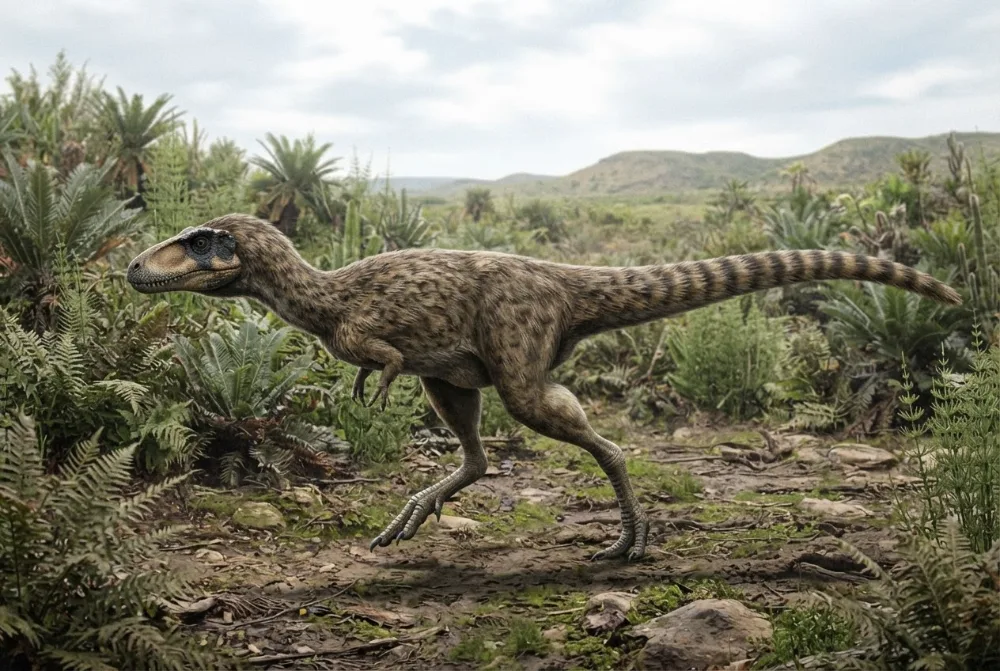
Suskityrannus was a small dinosaur. Its skull was only 25 to 32 centimetres (9.8 to 12.6 inches) long, and the known specimens were still growing, so adults were much smaller than later tyrannosaurs like T. rex.1
?What did Suskityrannus eat?
Suskityrannus was a predator, so it likely ate small animals like lizards, early mammals, and maybe baby dinosaurs. Its sharp teeth and fast legs helped it hunt.12
?When did Suskityrannus live?
Suskityrannus lived about 92 million years ago during the Turonian stage of the Late Cretaceous period.12
?Where was Suskityrannus found?
Suskityrannus fossils were found in the Moreno Hill Formation of the Zuni Basin in western New Mexico, USA.1
?Was Suskityrannus a dinosaur?
Yes, Suskityrannus was a dinosaur. It was a small tyrannosauroid theropod, which is a group of meat-eating dinosaurs that includes T. rex.1
Ma dino ho animdefoɔ
- Nyansahu din
- Suskityrannus
- Obi a ɔtoo din
- Nesbitt et al. 20193
- Kuo
- Tiranosɔɔ
- Abusua / kuo kɛseɛ
- Tyrannosauroidea3
- Nkyekyɛmu
- Theropoda > Tyrannosauroidea3
- Abotan no mfeɛ
- mfeɛ ɔpepem 94 kɔsi 90 (Turonian)3
- Abotan nhyehyɛeɛ
- Moreno Hill3
- Aman
- Amerika3
- Fɔsil nkyerɛwee
- 1 wɔ The Paleobiology Database mu3
- Nhunumu
- The first fossils were found in 1998 by geologist Robert Denton and teenager Sterling Nesbitt in New Mexico. The species was officially named Suskityrannus hazelae in 2019.1
- Wɔda so gye ho akyinnye
- Scientists are not sure exactly how big adult Suskityrannus grew, because only young skeletons have been found.1
Baabi a nsɛm no firi
- Suskityrannus (en.wikipedia.org)
- A mid-Cretaceous tyrannosauroid and the origin of North American end-Cretaceous dinosaur assemblages | Nature Ecology & Evolution (nature.com)
- Suskityrannus in The Paleobiology Database (CC BY 4.0): mfeɛ, mmeaeɛ, abotan nhyehyɛeɛ, nkyekyɛmu.
Asɛm biara a ɛwɔ krataafa yi so wɔ nɔma a ɛkyerɛ baabi a ɛfiri. Sɛ yɛfom biribi a, kafra, yɛyɛ dino dɔfoɔ, yɛnyɛ nyansahu nsɛmma krataa. Ka kyerɛ yɛn wɔ [email protected] na yɛbɛsiesie.
 Ɔkɔm de Rex! Dino Wiki yɛ agya bi adwuma a ɔyɛɛ maa ne babarima a ɔdɔ dino. Ɛyɛ kwa, dawurubɔ biara nni mu, akyidifoɔ biara nni mu. Mpanimfoɔ bɛtumi ama Rex aduane kakra, na aboa ama Dino Wiki atena intanɛt so.Ma Rex aduane
 Tyrannosaurus
 Tarbosaurus
 Albertosaurus
 Daspletosaurus
 Gorgosaurus
 Alectrosaurus
 Triceratops
 Velociraptor
 Spinosaurus
 Ankylosaurus
 Parasaurolophus
 Pteranodon