 Woyɛ dino bɛn? Nsɛmmisa agoro
 Dino ko
 Dino mmirikatuo
 Dino agodie nketewa
 Stika nwoma
 Dino TOP nhyehyɛeɛ
 Ma me nwanwa!
Taleta
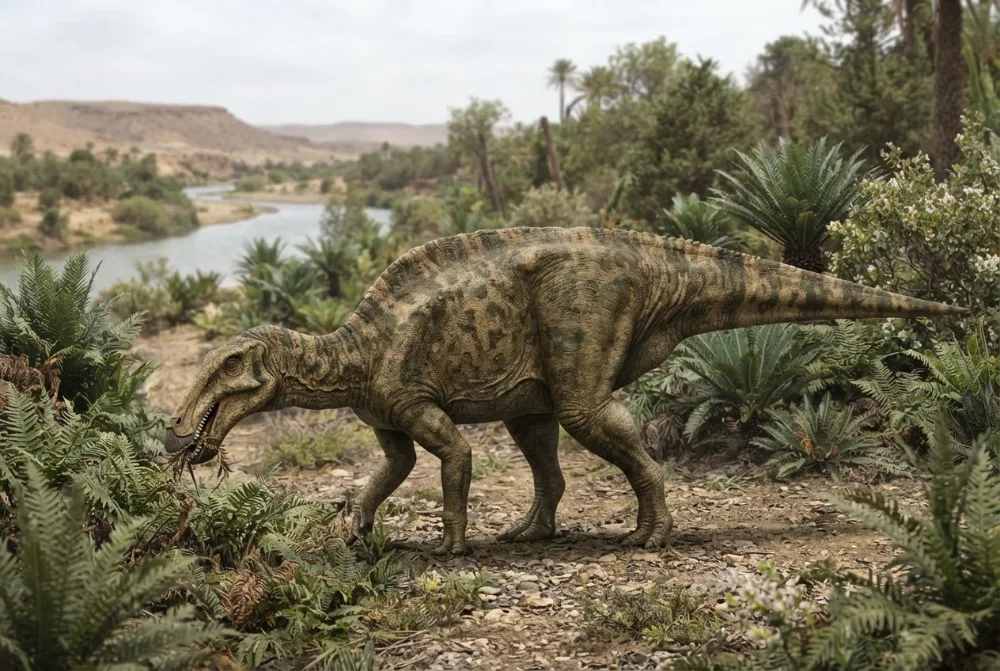
Taleta was a small duck-billed dinosaur that lived in what is now Morocco. It had huge, blade-like teeth that gave it a wicked grin. This dinosaur was one of several duckbills that crossed the ocean to reach Africa and then quickly evolved into many different species.1
Berɛ bɛn na ɛtenaa ase?
Na ne kɛseɛ yɛ sɛn?
Na ne tenten yɛ sɛn?
Na ne korɔn yɛ sɛn?
nsusuiɛ
Na ne mu yɛ duru sɛn?
 ne tenten te sɛ nkraman 6 firi hwene kɔsi dua🍌ne tenten te sɛ kwadu 31 a wɔde abɔ toatoa so🍉ne mu duru te sɛ watamɛlɔn 100🧸ne mu duru te sɛ nkɔkɔaa sukuu mmofra 26🎒ne mu duru te sɛ sukuu mmofra 16🏃anka ɔbɛtumi atu mmirika mita 100 wɔ sikɛn 9.2 mu (onipa a ɔyɛ ntɛm sen biara hia 9.6)
Taleta kɛseɛ yɛ sɛn sɛ wode toto WO ho a?
Akontaa nko ara wɔ wo browser mu. Yɛnkora biribiara so, na yɛmmfa biribiara nkɔ baabiara.
Na ɛyɛ ntɛm sɛn?


Nsɛm a ɛyɛ anigye
Taleta is known from only two upper jaw bones (maxillae).2
Its teeth were huge for such a small animal, with tall, blade-like ridges on the crown.1
Unlike most duckbills, Taleta had only one tooth per tooth socket instead of several teeth stacked together.1
Taleta belonged to a group of lambeosaurine duckbills called Arenysaurini, which spread from Europe to Africa.62
It lived about 70 to 66 million years ago, near the very end of the Age of Dinosaurs.6
Nsɛm a wɔbisa bebree fa Taleta ho
?How big was Taleta?
Taleta was a small duck-billed dinosaur, about the size of a pony. It was similar in size to Minqaria, which has been estimated at 3.5 metres long.31
?What did Taleta eat?
Taleta was a plant-eater. Like other duck-billed dinosaurs, it used its wide beak and rows of teeth to chew tough plants.3
?Did Taleta have feathers?
Nobody knows for sure. Duck-billed dinosaurs like Taleta are not usually shown with feathers in fossils, but some related dinosaurs had simple feathers, so it is possible.3
Ma dino ho animdefoɔ
- Nyansahu din
- Taleta
- Obi a ɔtoo din
- Longrich et al. 20256
- Kuo
- Dabodabo ano dino
- Abusua / kuo kɛseɛ
- Hadrosauridae6
- Nkyekyɛmu
- Ornithischia > Ornithopoda > Iguanodontia > Hadrosauridae6
- Abotan no mfeɛ
- mfeɛ ɔpepem 72 kɔsi 66 (Maastrichtian)6
- Abotan nhyehyɛeɛ
- Couche III6
- Aman
- Moroko6
- Fɔsil nkyerɛwee
- 1 wɔ The Paleobiology Database mu6
- Nhunumu
- Taleta was named in 2025 by Nick Longrich and colleagues. It was discovered in the phosphate mines of Morocco, where the bones were first mistaken for fish remains.61
- Wɔda so gye ho akyinnye
- Scientists are not sure how many species of duckbills lived in Africa. Limb bones hint at a fourth, larger species that has not yet been named.1
Baabi a nsɛm no firi
- Nick Longrich - Blog (nicklongrich.com)
- A new hadrosaurid dinosaur from the late Maastrichtian Phosphates of Morocco provides evidence for an African radiation of lambeosaurines - the University of Bath's research portal (researchportal.bath.ac.uk)
- Taleta (en.wikipedia.org)
- Taleta taleta | Dinosaur Database by DinoAnimals.com (dinoanimals.com)
- Nick Longrich - Blog (nicklongrich.com)
- Taleta in The Paleobiology Database (CC BY 4.0): mfeɛ, mmeaeɛ, abotan nhyehyɛeɛ, nkyekyɛmu.
Asɛm biara a ɛwɔ krataafa yi so wɔ nɔma a ɛkyerɛ baabi a ɛfiri. Sɛ yɛfom biribi a, kafra, yɛyɛ dino dɔfoɔ, yɛnyɛ nyansahu nsɛmma krataa. Ka kyerɛ yɛn wɔ [email protected] na yɛbɛsiesie.
 Ɔkɔm de Rex! Dino Wiki yɛ agya bi adwuma a ɔyɛɛ maa ne babarima a ɔdɔ dino. Ɛyɛ kwa, dawurubɔ biara nni mu, akyidifoɔ biara nni mu. Mpanimfoɔ bɛtumi ama Rex aduane kakra, na aboa ama Dino Wiki atena intanɛt so.Ma Rex aduane
 Parasaurolophus
 Edmontosaurus
 Saurolophus
 Hypacrosaurus
 Corythosaurus
 Kritosaurus
 Tyrannosaurus
 Triceratops
 Velociraptor
 Spinosaurus
 Ankylosaurus
 Pteranodon