 Woyɛ dino bɛn? Nsɛmmisa agoro
 Dino ko
 Dino mmirikatuo
 Dino agodie nketewa
 Stika nwoma
 Dino TOP nhyehyɛeɛ
 Ma me nwanwa!
Tarchia
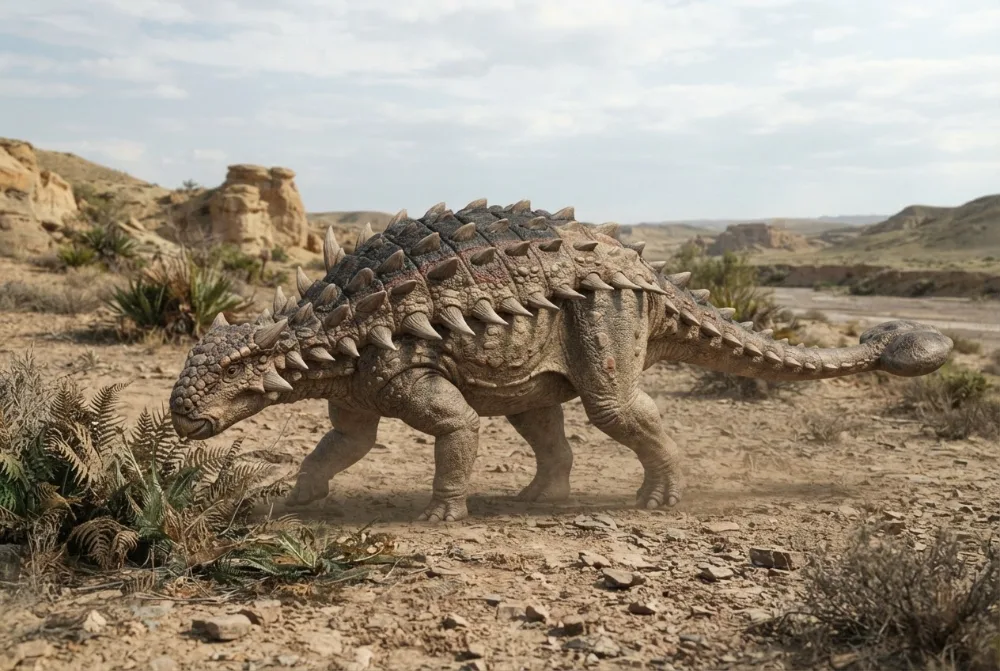
Tarchia was a tank-like dinosaur covered in bony armour and armed with a heavy club at the end of its tail. It lived in the deserts of Mongolia near the end of the Age of Dinosaurs. Despite its tough appearance, it was a gentle plant-eater.1
Berɛ bɛn na ɛtenaa ase?
Na ne kɛseɛ yɛ sɛn?
Na ne tenten yɛ sɛn?
Na ne korɔn yɛ sɛn?
nsusuiɛ
Na ne mu yɛ duru sɛn?

 ne tenten te sɛ nkraman 6 firi hwene kɔsi dua🍌ne tenten te sɛ kwadu 33 a wɔde abɔ toatoa sone mu duru te sɛ nkraman 150🍉ne mu duru te sɛ watamɛlɔn 600🎒ne mu duru te sɛ sukuu klaas mũ 4 mu mmofra🐻❄️ne mu duru te sɛ polar bea 7🏃anka ɔbɛtumi atu mmirika mita 100 wɔ sikɛn 26 mu (onipa a ɔyɛ ntɛm sen biara hia 9.6)
Tarchia kɛseɛ yɛ sɛn sɛ wode toto WO ho a?
Akontaa nko ara wɔ wo browser mu. Yɛnkora biribiara so, na yɛmmfa biribiara nkɔ baabiara.
Na ɛyɛ ntɛm sɛn?


Nsɛm a ɛyɛ anigye
Tarchia's name means 'brainy one' because its skull had a relatively large brain case compared to other ankylosaurs.1
It is the youngest known Asian ankylosaurid dinosaur, living right at the end of the Cretaceous Period.1
The tail club of Tarchia was made of fused vertebrae and could be swung as a weapon against predators.1
Fossils of Tarchia have been found in ancient desert environments with dunes and seasonal streams.1
Scientists think Tarchia may have relied on hindgut fermentation to digest tough plants, similar to modern cows.1
Three species of Tarchia are known: T. kielanae, T. teresae, and T. tumanovae.1
Nsɛm a wɔbisa bebree fa Tarchia ho
?How big was Tarchia?
About 5.5 to 6 metres long and weighed up to 2.5 to 3 metric tons. Some specimens may have been up to 6.7 metres long.12
?What did Tarchia eat?
It was a herbivore that ate low-growing plants. It had a broad muzzle and was a selective feeder, probably eating ground-level plants.12
?Did Tarchia have any predators?
Yes. Tarbosaurus, a large meat-eating dinosaur related to Tyrannosaurus, hunted Tarchia. Tooth marks from Tarbosaurus have been found on a Tarchia skull.21
?How did Tarchia defend itself?
It had a heavy bony club at the end of its tail that it could swing at attackers. Its body was also covered in bony armour called osteoderms.21
Atosɛm sɛefoɔ
Atosɛm: Tarchia was a slow, stupid dinosaur.
Nokorɛ: Tarchia had a relatively large brain for an ankylosaur, and its tail club shows it could defend itself actively.1
Ma dino ho animdefoɔ
- Nyansahu din
- Tarchia
- Obi a ɔtoo din
- Maryanska 19773
- Kuo
- Dino a wɔwɔ akyɛm
- Abusua / kuo kɛseɛ
- Ankylosauridae3
- Nkyekyɛmu
- Ornithischia > Ankylosauria > Ankylosauridae > Thyreophora3
- Abotan no mfeɛ
- mfeɛ ɔpepem 84 kɔsi 66 (Campanian / Maastrichtian)3
- Abotan nhyehyɛeɛ
- Nemegt, Baruungoyot3
- Aman
- Mongolia3
- Fɔsil nkyerɛwee
- 4 wɔ The Paleobiology Database mu3
- Nhunumu
- Tarchia was named in 1977 by Polish paleontologist Teresa Maryańska based on a skull found by a Polish-Mongolian expedition in 1970 near Khulsan, Mongolia.1
- Wɔda so gye ho akyinnye
- Scientists still debate whether some fossils belong to Tarchia or to its close relative Saichania.1
Baabi a nsɛm no firi
- Tarchia (en.wikipedia.org)
- Tarchia | Natural History Museum (nhm.ac.uk)
- Tarchia in The Paleobiology Database (CC BY 4.0): mfeɛ, mmeaeɛ, abotan nhyehyɛeɛ, nkyekyɛmu.
Asɛm biara a ɛwɔ krataafa yi so wɔ nɔma a ɛkyerɛ baabi a ɛfiri. Sɛ yɛfom biribi a, kafra, yɛyɛ dino dɔfoɔ, yɛnyɛ nyansahu nsɛmma krataa. Ka kyerɛ yɛn wɔ [email protected] na yɛbɛsiesie.
 Ɔkɔm de Rex! Dino Wiki yɛ agya bi adwuma a ɔyɛɛ maa ne babarima a ɔdɔ dino. Ɛyɛ kwa, dawurubɔ biara nni mu, akyidifoɔ biara nni mu. Mpanimfoɔ bɛtumi ama Rex aduane kakra, na aboa ama Dino Wiki atena intanɛt so.Ma Rex aduane
 Ankylosaurus
 Sauropelta
 Pinacosaurus
 Scutellosaurus
 Struthiosaurus
 Euoplocephalus
 Tyrannosaurus
 Triceratops
 Velociraptor
 Spinosaurus
 Parasaurolophus
 Pteranodon