 Woyɛ dino bɛn? Nsɛmmisa agoro
 Dino ko
 Dino mmirikatuo
 Dino agodie nketewa
 Stika nwoma
 Dino TOP nhyehyɛeɛ
 Ma me nwanwa!
Tlatolophus
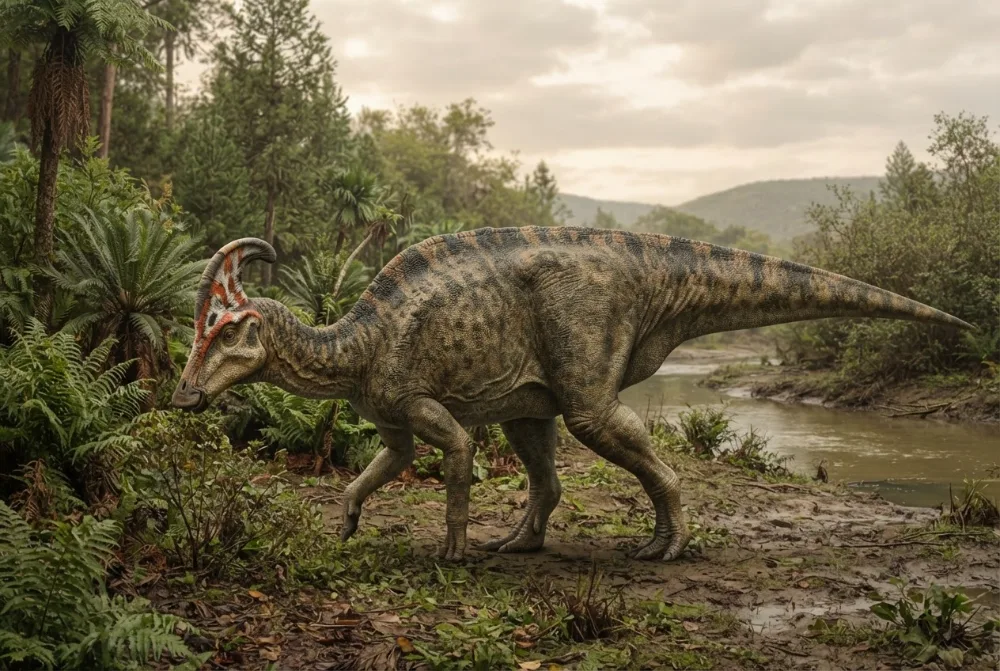
Tlatolophus was a big, plant-eating duck-billed dinosaur with a fancy crest on its head that looked like a comma or a word symbol. It lived in what is now Mexico during the Late Cretaceous, about 73 to 72.5 million years ago. This dinosaur is special because it's one of the most complete duck-billed dinosaurs ever found in Mexico!12
Berɛ bɛn na ɛtenaa ase?
Na ne kɛseɛ yɛ sɛn?
Na ne tenten yɛ sɛn?
Na ne korɔn yɛ sɛn?
Na ne mu yɛ duru sɛn?

 ne tenten te sɛ nkraman 8 firi hwene kɔsi dua🍌ne tenten te sɛ kwadu 44 a wɔde abɔ toatoa sone mu duru te sɛ nkraman 150🍉ne mu duru te sɛ watamɛlɔn 600🎒ne mu duru te sɛ sukuu klaas mũ 4 mu mmofra🐻❄️ne mu duru te sɛ polar bea 7🏃anka ɔbɛtumi atu mmirika mita 100 wɔ sikɛn 14 mu (onipa a ɔyɛ ntɛm sen biara hia 9.6)
Tlatolophus kɛseɛ yɛ sɛn sɛ wode toto WO ho a?
Akontaa nko ara wɔ wo browser mu. Yɛnkora biribiara so, na yɛmmfa biribiara nkɔ baabiara.
Na ɛyɛ ntɛm sɛn?


Nsɛm a ɛyɛ anigye
Tlatolophus's crest was hollow and shaped like an upside-down comma, which may have been used for making sounds or showing off.1
The name Tlatolophus comes from the Nahuatl word 'tlatolli' meaning 'word', because its crest looks like the Aztec symbol for 'word'.1
The first fossil was a tail found in 2005, but it took until 2013 for scientists to dig out the whole skeleton, including the skull.1
Tlatolophus is the most complete lambeosaurine (crested duck-billed dinosaur) ever found in Mexico.2
Its skull was tall, and the crest was made of bones from the nose and upper jaw, not just a separate bone.1
Scientists think Tlatolophus was about 8 meters long and weighed nearly 3 metric tons, as heavy as a small elephant.1
Nsɛm a wɔbisa bebree fa Tlatolophus ho
?What did Tlatolophus eat?
It was a plant-eater, like all duck-billed dinosaurs. It likely ate leaves, ferns, and other plants with its wide beak.1
?How big was Tlatolophus?
About 8 metres long and weighed nearly 3 metric tons, as heavy as a small elephant.1
?Did Tlatolophus have feathers?
No, duck-billed dinosaurs like Tlatolophus did not have feathers. They were covered in scaly skin.1
?When did Tlatolophus live?
It lived during the Late Cretaceous period, about 73 to 72.5 million years ago.1
Atosɛm sɛefoɔ
Atosɛm: Some people think Tlatolophus could swim in the ocean.
Nokorɛ: No, Tlatolophus was a land dinosaur that walked on four legs or two, and it ate plants on land.4
Ma dino ho animdefoɔ
- Nyansahu din
- Tlatolophus
- Obi a ɔtoo din
- Ramírez-Velasco et al. 20214
- Kuo
- Dabodabo ano dino
- Abusua / kuo kɛseɛ
- Hadrosauridae4
- Nkyekyɛmu
- Ornithischia > Ornithopoda > Iguanodontia > Hadrosauridae4
- Abotan no mfeɛ
- mfeɛ ɔpepem 84 kɔsi 72 (Campanian)4
- Abotan nhyehyɛeɛ
- Cerro del Pueblo4
- Aman
- Mɛksiko4
- Fɔsil nkyerɛwee
- 1 wɔ The Paleobiology Database mu4
- Nhunumu
- The first Tlatolophus fossil was found in 2005 in Mexico, but it wasn't until 2013 that a team from INAH and UNAM started digging it out. They named it Tlatolophus galorum in 2021.12
- Wɔda so gye ho akyinnye
- Scientists still debate what the crest was used for, whether for making sounds, attracting mates, or something else.1
Baabi a nsɛm no firi
- Tlatolophus (en.wikipedia.org)
- Tlatolophus galorum, gen. et sp. nov., a parasaurolophini dinosaur from the upper Campanian of the Cerro del Pueblo Formation, Coahuila, northern Mexico (sciencedirect.com)
- El ‘Tlatolophus galorum’, la nueva especie de dinosaurio hallada en México | EL PAÍS México (elpais.com)
- Tlatolophus in The Paleobiology Database (CC BY 4.0): mfeɛ, mmeaeɛ, abotan nhyehyɛeɛ, nkyekyɛmu.
Asɛm biara a ɛwɔ krataafa yi so wɔ nɔma a ɛkyerɛ baabi a ɛfiri. Sɛ yɛfom biribi a, kafra, yɛyɛ dino dɔfoɔ, yɛnyɛ nyansahu nsɛmma krataa. Ka kyerɛ yɛn wɔ [email protected] na yɛbɛsiesie.
 Ɔkɔm de Rex! Dino Wiki yɛ agya bi adwuma a ɔyɛɛ maa ne babarima a ɔdɔ dino. Ɛyɛ kwa, dawurubɔ biara nni mu, akyidifoɔ biara nni mu. Mpanimfoɔ bɛtumi ama Rex aduane kakra, na aboa ama Dino Wiki atena intanɛt so.Ma Rex aduane
 Parasaurolophus
 Edmontosaurus
 Saurolophus
 Hypacrosaurus
 Corythosaurus
 Kritosaurus
 Tyrannosaurus
 Triceratops
 Velociraptor
 Spinosaurus
 Ankylosaurus
 Pteranodon