 Woyɛ dino bɛn? Nsɛmmisa agoro
 Dino ko
 Dino mmirikatuo
 Dino agodie nketewa
 Stika nwoma
 Dino TOP nhyehyɛeɛ
 Ma me nwanwa!
Xenoceratops
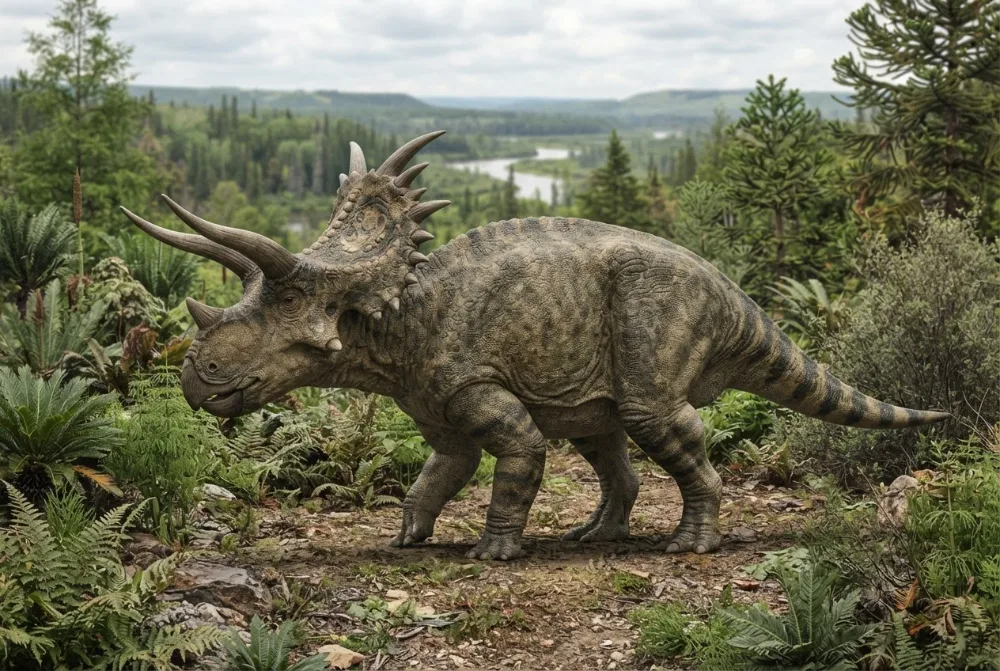
Xenoceratops was an early horned dinosaur that lived in Canada about 78 million years ago. It had a big frill on its head with spikes and two long horns above its eyes, making it look a bit like an alien. It was one of the oldest large horned dinosaurs ever found in North America.1
Berɛ bɛn na ɛtenaa ase?
Na ne kɛseɛ yɛ sɛn?
Na ne tenten yɛ sɛn?
Na ne korɔn yɛ sɛn?
nsusuiɛ
Na ne mu yɛ duru sɛn?

 ne tenten te sɛ nkraman 6 firi hwene kɔsi dua🍌ne tenten te sɛ kwadu 33 a wɔde abɔ toatoa sone mu duru te sɛ nkraman 90🍉ne mu duru te sɛ watamɛlɔn 360🧸ne mu duru te sɛ nkɔkɔaa sukuu mmofra 95🎒ne mu duru te sɛ sukuu mmofra 56🐻❄️ne mu duru te sɛ polar bea 4🏃anka ɔbɛtumi atu mmirika mita 100 wɔ sikɛn 11 mu (onipa a ɔyɛ ntɛm sen biara hia 9.6)
Xenoceratops kɛseɛ yɛ sɛn sɛ wode toto WO ho a?
Akontaa nko ara wɔ wo browser mu. Yɛnkora biribiara so, na yɛmmfa biribiara nkɔ baabiara.
Na ɛyɛ ntɛm sɛn?


Nsɛm a ɛyɛ anigye
Xenoceratops is the oldest known ceratopsid dinosaur from Canada, living about 78 million years ago.2
Its name means 'alien horned face' because it was found in rocks that had not yielded horned dinosaur fossils before.2
The fossils were collected in 1958 by paleontologist Wann Langston Jr., but they sat in a museum for decades before scientists realized they belonged to a new species.1
Unlike Triceratops, Xenoceratops had spikes on its frill in addition to the two long brow horns.1
Xenoceratops was about 6 metres long and weighed more than 2 tons, about as heavy as a large rhinoceros.1
It lived in a subtropical environment in Alberta, which at that time had no snow or frost.1
Scientists think Xenoceratops is the most primitive centrosaurine, meaning it branched off early in the evolution of this group of horned dinosaurs.2
Atosɛm sɛefoɔ
Atosɛm: Xenoceratops is just a small, unimportant dinosaur.
Nokorɛ: Xenoceratops is important because it is the oldest known large horned dinosaur from Canada, and it shows that horned dinosaurs evolved their fancy frills and horns very early.1
Ma dino ho animdefoɔ
- Nyansahu din
- Xenoceratops
- Obi a ɔtoo din
- Ryan et al. 20123
- Kuo
- Dino a wɔwɔ mmɛn
- Abusua / kuo kɛseɛ
- Ceratopsidae3
- Nkyekyɛmu
- Ornithischia > Ceratopsia > Ceratopsidae3
- Abotan no mfeɛ
- mfeɛ ɔpepem 84 kɔsi 72 (Campanian)3
- Abotan nhyehyɛeɛ
- Foremost3
- Aman
- Kanada3
- Fɔsil nkyerɛwee
- 1 wɔ The Paleobiology Database mu3
- Nhunumu
- Xenoceratops was named in 2012 by Michael Ryan and colleagues. The fossils were originally collected in 1958 by Wann Langston Jr. from a bone bed in the Foremost Formation of Alberta, Canada, and later rediscovered in the Canadian Museum of Nature.2
- Wɔda so gye ho akyinnye
- Scientists are not sure exactly what the complete skull of Xenoceratops looked like, because only parts of the frill and horns have been found.2
Baabi a nsɛm no firi
- Two-Ton "Alien" Horned Dinosaur Found, "Different From Every Other" | National Geographic (nationalgeographic.com)
- cdnsciencepub.com (cdnsciencepub.com)
- Xenoceratops in The Paleobiology Database (CC BY 4.0): mfeɛ, mmeaeɛ, abotan nhyehyɛeɛ, nkyekyɛmu.
Asɛm biara a ɛwɔ krataafa yi so wɔ nɔma a ɛkyerɛ baabi a ɛfiri. Sɛ yɛfom biribi a, kafra, yɛyɛ dino dɔfoɔ, yɛnyɛ nyansahu nsɛmma krataa. Ka kyerɛ yɛn wɔ [email protected] na yɛbɛsiesie.
 Ɔkɔm de Rex! Dino Wiki yɛ agya bi adwuma a ɔyɛɛ maa ne babarima a ɔdɔ dino. Ɛyɛ kwa, dawurubɔ biara nni mu, akyidifoɔ biara nni mu. Mpanimfoɔ bɛtumi ama Rex aduane kakra, na aboa ama Dino Wiki atena intanɛt so.Ma Rex aduane
 Triceratops
 Protoceratops
 Ojoceratops
 Tatankaceratops
 Psittacosaurus
 Centrosaurus
 Tyrannosaurus
 Velociraptor
 Spinosaurus
 Ankylosaurus
 Parasaurolophus
 Pteranodon