 Woyɛ dino bɛn? Nsɛmmisa agoro
 Dino ko
 Dino mmirikatuo
 Dino agodie nketewa
 Stika nwoma
 Dino TOP nhyehyɛeɛ
 Ma me nwanwa!
Berɛ bɛn na ɛtenaa ase?

Na ɛyɛ ntɛm sɛn?


Nsɛm a ɛyɛ anigye
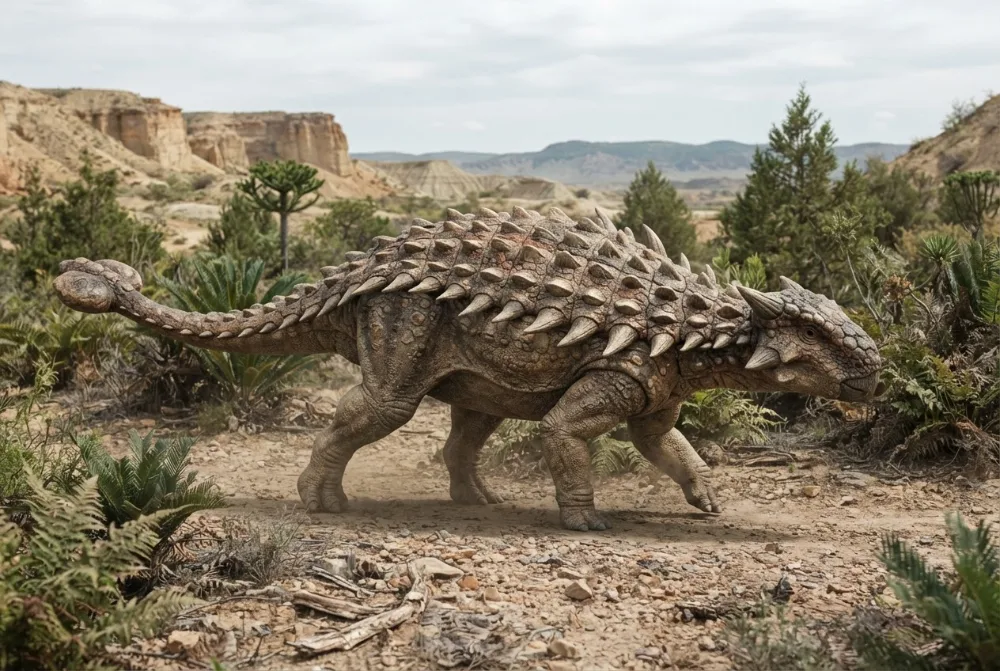
Zaraapelta's skull was covered in bumpy armour plates called osteoderms, and it had an especially fancy pattern of bumps and grooves behind its eye.12
The horns on the back of its skull had a smooth ridge on top, which is different from any other ankylosaur.13
Scientists think the fancy skull ornaments might have been used to attract mates, like a peacock's tail feathers.2
The only known fossil is a skull missing the snout tip, and it probably belonged to a young adult.1
Nsɛm a wɔbisa bebree fa Zaraapelta ho
?How big was Zaraapelta?
The only known skull is about 40 centimetres long, so Zaraapelta was a medium-sized ankylosaur.1
?What did Zaraapelta eat?
It was a herbivore, eating plants.1
?Who discovered Zaraapelta?
It was discovered in 2000 by a team led by Phil Currie, and named in 2014 by Victoria Arbour.12
?What was Zaraapelta's closest relative?
Its closest known relative is Tarchia, another ankylosaur from Mongolia.1
Atosɛm sɛefoɔ
Atosɛm: Some people think all armoured dinosaurs had tail clubs.
Nokorɛ: Zaraapelta is known only from a skull, so scientists don't know if it had a tail club. Many ankylosaurs did, but not all.1
Ma dino ho animdefoɔ
- Nyansahu din
- Zaraapelta
- Obi a ɔtoo din
- Arbour et al. 20144
- Kuo
- Dino a wɔwɔ akyɛm
- Abusua / kuo kɛseɛ
- Ankylosauridae4
- Nkyekyɛmu
- Ornithischia > Ankylosauria > Ankylosauridae > Thyreophora4
- Abotan no mfeɛ
- mfeɛ ɔpepem 100 kɔsi 84 (Cenomanian / Santonian)4
- Abotan nhyehyɛeɛ
- Baynshire4
- Aman
- Mongolia4
- Fɔsil nkyerɛwee
- 1 wɔ The Paleobiology Database mu4
- Nhunumu
- The skull was found in 2000 by a team led by Phil Currie in the Gobi Desert. In 2014, Victoria Arbour, Philip Currie, and Demchig Badamgarav named it Zaraapelta nomadis.12
- Wɔda so gye ho akyinnye
- Scientists are still debating exactly how Zaraapelta is related to other ankylosaurs, and whether its fancy head ornaments were for protection or for showing off.12
Baabi a nsɛm no firi
- Zaraapelta (en.wikipedia.org)
- UAlberta paleontologists name new armoured dinosaur (ualberta.ca)
- PBDB Taxon (paleobiodb.org)
- Zaraapelta in The Paleobiology Database (CC BY 4.0): mfeɛ, mmeaeɛ, abotan nhyehyɛeɛ, nkyekyɛmu.
Asɛm biara a ɛwɔ krataafa yi so wɔ nɔma a ɛkyerɛ baabi a ɛfiri. Sɛ yɛfom biribi a, kafra, yɛyɛ dino dɔfoɔ, yɛnyɛ nyansahu nsɛmma krataa. Ka kyerɛ yɛn wɔ [email protected] na yɛbɛsiesie.
 Ɔkɔm de Rex! Dino Wiki yɛ agya bi adwuma a ɔyɛɛ maa ne babarima a ɔdɔ dino. Ɛyɛ kwa, dawurubɔ biara nni mu, akyidifoɔ biara nni mu. Mpanimfoɔ bɛtumi ama Rex aduane kakra, na aboa ama Dino Wiki atena intanɛt so.Ma Rex aduane
 Ankylosaurus
 Sauropelta
 Pinacosaurus
 Scutellosaurus
 Struthiosaurus
 Euoplocephalus
 Tyrannosaurus
 Triceratops
 Velociraptor
 Spinosaurus
 Parasaurolophus
 Pteranodon