
Daemonosaurus
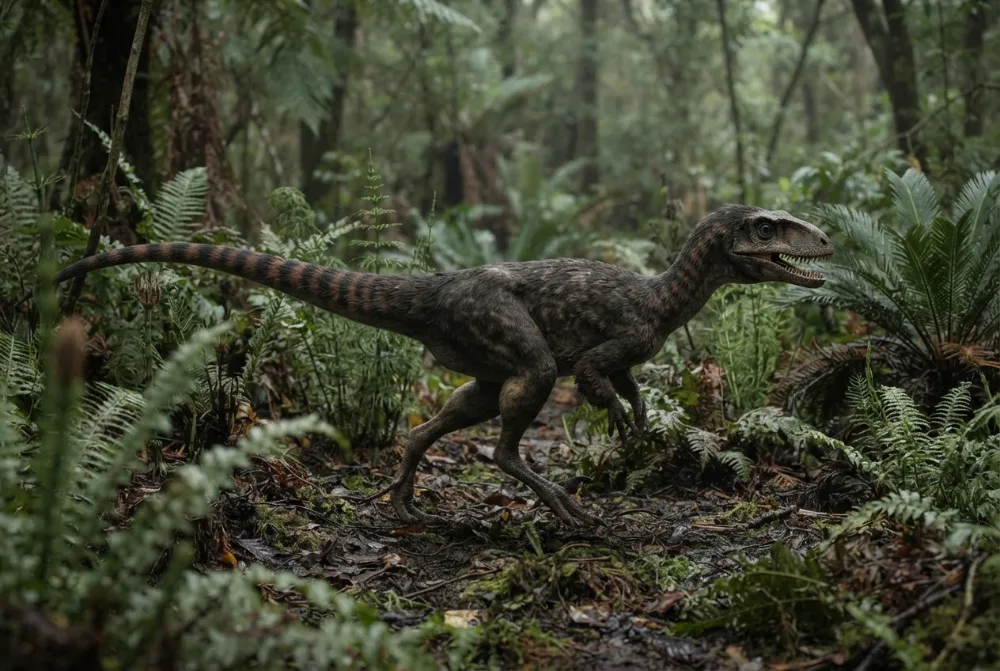
Daemonosaurus was a meat-eating dinosaur that lived near the end of the Triassic Period. It had a strange skull with big front teeth that made it look a bit scary. It was one of the last early theropods before the Triassic ended.1
When did it live?
Fun facts
Daemonosaurus had a skull with front teeth that stuck out forward, which is different from many other early theropods.1
It lived about 205 to 201 million years ago, right at the end of the Triassic Period.2
Daemonosaurus was a basal theropod, meaning it was one of the early meat-eating dinosaurs, but it survived until near the end of the Triassic.1
Its fossils were found in the Chinle Formation, a rock layer known for many Triassic animals.1
The name Daemonosaurus means 'demon lizard', which might make it sound scary, but it was probably not very big.1
Myth buster
Myth: Some people think Daemonosaurus was a big, fierce predator like T. rex.
Truth: Actually, Daemonosaurus was a small, early theropod, and scientists think it was more closely related to later theropods like Coelophysis than to giant predators.1
For dino experts
- Scientific name
- Daemonosaurus
- Named by
- Sues et al. 20112
- Group
- First dinosaurs
- Family / clade
- Saurischia2
- Age of the rocks
- 206 to 201 million years (Rhaetian)2
- Rock formations
- Chinle2
- Countries
- USA2
- Fossil records
- 1 in the Paleobiology Database2
- Discovery
- Daemonosaurus was named by Hans-Dieter Sues and colleagues in 2011, based on fossils from the Ghost Ranch Quarry in New Mexico.1
- Still debated
- Scientists are still debating exactly how Daemonosaurus is related to other early theropods, because it has a mix of features from different groups.1
Where the facts come from
- A late-surviving basal theropod dinosaur from the latest Triassic of North America | Proceedings B | The Royal Society (royalsocietypublishing.org)
- Daemonosaurus in The Paleobiology Database (CC BY 4.0): age, places, rock formations, classification.
Every fact on this page has a number that points to its source. If we got something wrong, sorry, we are dino fans, not a science journal. Tell us at [email protected] and we will fix it.
 Rex is hungry! Dino Wiki is free with no ads. Grown-ups can feed Rex a snack to keep it that way.Feed Rex
 Herrerasaurus
 Tawa
Tawa Chindesaurus
 Nyasasaurus
 Staurikosaurus
 Alwalkeria
 Nothosaurus
 Massospondylus
 Plateosaurus
 Coelophysis
 Podokesaurus
 Simosaurus