
Podokesaurus
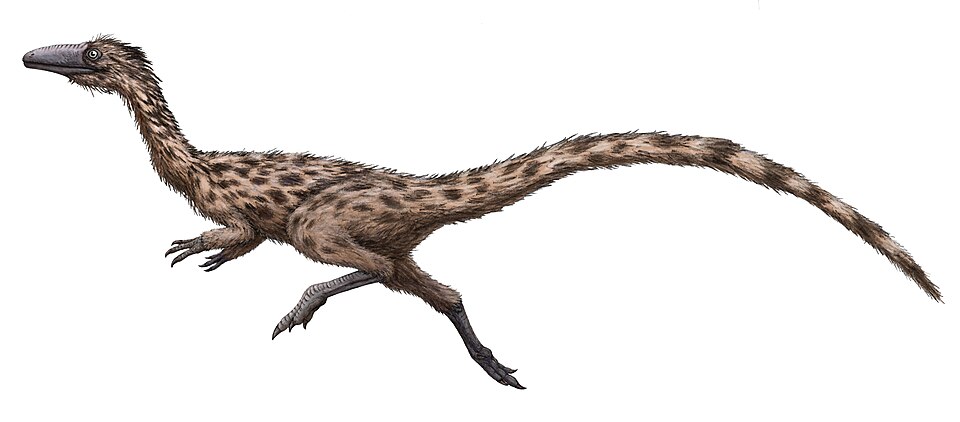
Podokesaurus was a small, speedy dinosaur that lived in what is now Massachusetts, USA, during the Early Jurassic Period. It was a meat-eater with sharp teeth and hollow bones, built for running fast after tiny prey.1
When did it live?
How big was it?
Fun facts
Podokesaurus could run at about 15 to 20 kilometers per hour (9 to 12 miles per hour).1
The only known fossil of Podokesaurus was lost in a fire in 1917, and no other definite specimens have been found since.1
Mignon Talbot, who discovered and named Podokesaurus in 1911, was the first woman to find and describe a non-bird dinosaur.1
A small piece of polished quartz was found among the ribs of Podokesaurus, and scientists think it might have been a gastrolith (stomach stone).1
Podokesaurus had hollow, lightweight bones, which helped it be a fast runner.1
Its lower leg bones were much longer than its upper leg bones, an adaptation for speed.1
Myth buster
Myth: Some people think Podokesaurus was the same as Coelophysis.
Truth: Scientists now believe Podokesaurus was a separate genus of coelophysoid dinosaur, not the same as Coelophysis.1
For dino experts
- Scientific name
- Podokesaurus
- Named by
- Talbot 19112
- Group
- Other meat-eaters
- Family / clade
- Coelophysidae2
- Classification
- Theropoda > Coelophysoidea2
- Age of the rocks
- 227 to 193 million years (Norian to Sinemurian)2
- Rock formations
- Portland2
- Countries
- USA2
- Fossil records
- 26 in the Paleobiology Database2
- Discovery
- Geologist Mignon Talbot found the fossil near Mount Holyoke, Massachusetts, in 1910. She named it Podokesaurus holyokensis in 1911.1
- Still debated
- Scientists are not sure exactly where in the Portland Formation the Podokesaurus fossil came from, so its exact age is uncertain.1
Where the facts come from
- Podokesaurus (en.wikipedia.org)
- Podokesaurus in The Paleobiology Database (CC BY 4.0): age, places, rock formations, classification.
Every fact on this page has a number that points to its source. If we got something wrong, sorry, we are dino fans, not a science journal. Tell us at [email protected] and we will fix it.
 Rex is hungry! Dino Wiki is free with no ads. Grown-ups can feed Rex a snack to keep it that way.Feed Rex
 Allosaurus
 Carnotaurus
 Dilophosaurus
 Giganotosaurus
 Compsognathus
 Paronychodon
 Nothosaurus
 Massospondylus
 Plateosaurus
 Simosaurus
 Thecodontosaurus
 Eudimorphodon