
Richardoestesia
Richardoestesia is known only from its teeth, which are long, slender, and curved. These teeth tell us it was a meat-eating dinosaur that hunted small animals like lizards and mammals.1
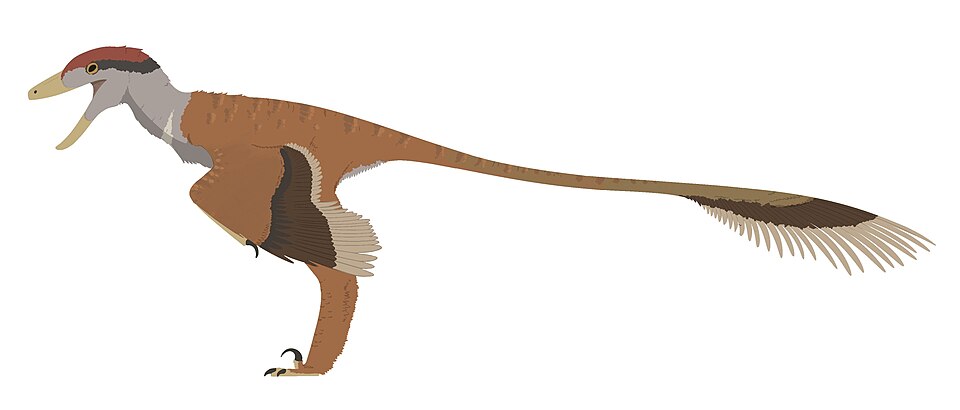
When did it live?
Fun facts
Richardoestesia is known only from its teeth, not from whole skeletons. Scientists call it a 'form taxon' because they group similar-looking teeth together.1
The teeth of Richardoestesia are very long and slender compared to other meat-eating dinosaurs. They look like thin blades.1
If all the teeth assigned to Richardoestesia really belong to the same kind of dinosaur, it would have lived for over 80 million years, from the Late Jurassic to the end of the Cretaceous.1
Richardoestesia teeth have been found all over the world, including North America, Europe, and Asia. That would make it one of the most widespread dinosaurs ever.1
The name Richardoestesia honors paleontologist Richard Estes, who studied small fossils and dinosaur teeth.1
Some scientists think Richardoestesia might have been a dromaeosaur (a raptor) or a troodontid, but nobody knows for sure because no body fossils have been found.2
Myth buster
Myth: Richardoestesia is a well-known dinosaur with a complete skeleton.
Truth: Richardoestesia is only known from isolated teeth. No complete skeleton has ever been found, so scientists are not sure what it looked like.1
For dino experts
- Scientific name
- Richardoestesia
- Named by
- Currie et al. 19902
- Group
- Raptors
- Family / clade
- Dromaeosauridae2
- Classification
- Theropoda > Dromaeosauridae2
- Age of the rocks
- 155 to 66 million years (Kimmeridgian to Maastrichtian)2
- Rock formations
- Hell Creek, Milk River, Dinosaur Park2
- Countries
- USA, Canada, Spain, Uzbekistan, Romania, Mexico2
- Fossil records
- 239 in the Paleobiology Database2
- Discovery
- The first Richardoestesia fossils were jaws found in 1917 by Charles Hazelius Sternberg and his sons in Dinosaur Provincial Park, Alberta, Canada. The name was given in 1990 by paleontologist Philip Currie and colleagues.1
- Still debated
- Scientists are not sure if all the teeth called Richardoestesia really belong to the same dinosaur. Many may come from different species that have not been named yet.1
Where the facts come from
- Richardoestesia (en.wikipedia.org)
- Richardoestesia in The Paleobiology Database (CC BY 4.0): age, places, rock formations, classification.
Every fact on this page has a number that points to its source. If we got something wrong, sorry, we are dino fans, not a science journal. Tell us at [email protected] and we will fix it.
 Rex is hungry! Dino Wiki is free with no ads. Grown-ups can feed Rex a snack to keep it that way.Feed Rex
 Velociraptor
 Microraptor
 Deinonychus
 Asiamericana
 Saurornitholestes
 Troodon
 Stegosaurus
 Iguanodon
 Archaeopteryx
 Giganotosaurus
 Baryonyx
 Paronychodon