 Zer dino zara? Galdetegia
 Dino borroka
 Dino lasterketa
 Dino minijokoak
 Pegatina-albuma
 Dino TOP zerrendak
 Harritu nazazu!
Agujaceratops
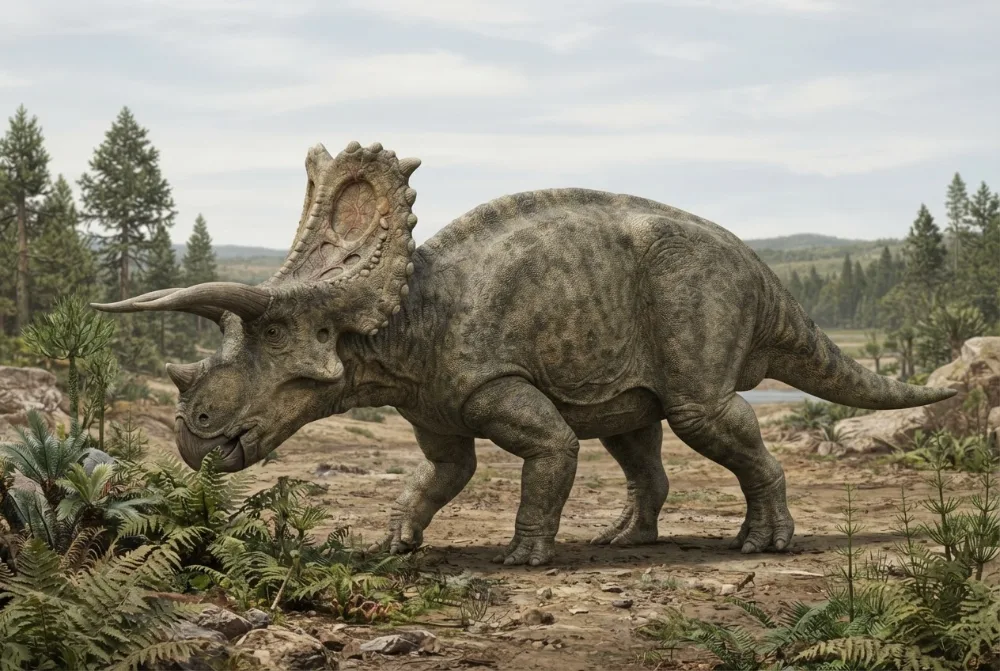
Agujaceratops was a big, four-legged plant eater with a huge frill and long horns on its face. It lived in what is now Texas and Mexico, about 77 million years ago. It looked a bit like a Triceratops, but with a longer frill and different horns.13
Noiz bizi izan zen?
Zein handia zen?
Zein luzea zen?
Zein altua zen?
kalkulua
Zein astuna zen?

 4 txakur bezain luze, sudurretik buztanera🍌bata bestearen atzean jarritako 24 banana bezain luze75 txakur bezain astun🍉300 angurria bezain astun🧸haur-eskolako 79 haur bezain astun🎒47 eskolaume bezain astun🐻❄️3 hartz zuri bezain astun🏃100 metro 10 segundotan egin zitzakeen korrika (gizakirik azkarrenak 9,6 behar ditu)
Zein handia zen Agujaceratops ZUREKIN alderatuta?
Zure nabigatzaileko kalkulu hutsak. Ez da ezer gordetzen ez inora bidaltzen.
Zein azkarra zen?


Datu dibertigarriak
Agujaceratops had a heart-shaped frill with a deep notch at the back, and the edges were covered with small, blunt hornlets that made it look scalloped.1
Its brow horns pointed up and out, then curved backwards, which is different from many other horned dinosaurs.1
There are two known species: Agujaceratops mariscalensis and Agujaceratops mavericus. The second one has longer brow horns and a longer frill.1
Many Agujaceratops fossils have been found together in one quarry, which might mean they lived in herds or were gathered by a flood.1
It lived alongside the feathered dinosaur Leptorhynchos and the small pachycephalosaur Texacephale, and was hunted by tyrannosaurs and the giant crocodilian Deinosuchus.1
The first fossils were found in 1938 in Big Bend National Park, Texas, but they were not studied until many years later.1
Agujaceratops: gehien egindako galderak
?How big was Agujaceratops?
Agujaceratops was about 4.3 metres (14 feet) long and weighed around 1.5 metric tons (1.7 short tons). That is roughly the size of a small car.1
?What did Agujaceratops eat?
It was a four-legged plant eater, like other ceratopsids. It probably ate low-growing plants with its beak and teeth.13
?When did Agujaceratops live?
It lived about 77 million years ago, during the Late Cretaceous period. Its fossils are found in Texas and Mexico.13
?Why did Agujaceratops have a frill?
The frill and horns were probably used for showing off to other members of its species, and maybe for fighting over territory or mates.1
Mito-hauslea
Mitoa: Some people think Agujaceratops is the same as Chasmosaurus.
Egia: It was first named Chasmosaurus mariscalensis, but scientists later decided it was different enough to be its own genus, Agujaceratops.1
Dino adituentzat
- Izen zientifikoa
- Agujaceratops
- Izendatzailea:
- Lucas et al. 20063
- Taldea
- Dino adardunak
- Familia / klada
- Ceratopsidae3
- Sailkapena
- Ornithischia > Ceratopsia > Ceratopsidae3
- Arroken adina
- 84 eta 72 milioi urte artean (Campanian)3
- Arroka-formazioak
- Aguja3
- Herrialdeak
- AEB, Mexiko3
- Fosil-erregistroak
- 16 The Paleobiology Database datu-basean3
- Aurkikuntza
- The first fossils were collected in 1938 from Big Bend National Park, Texas. In 1989, Lehman named them Chasmosaurus mariscalensis, and in 2006 Lucas, Sullivan, and Hunt gave them the new name Agujaceratops.1
- Oraindik eztabaidagai
- Scientists are not sure if the many Agujaceratops fossils found together represent a herd or just animals that died together in a drought or flood.1
Datuak nondik datozen
- Agujaceratops (en.wikipedia.org)
- PBDB Taxon (paleobiodb.org)
- Agujaceratops in The Paleobiology Database (CC BY 4.0): adina, tokiak, arroka-formazioak, sailkapena.
Orrialde honetako datu bakoitzak zenbaki bat du, bere iturrira eramaten zaituena. Zerbait gaizki badugu, barkatu, dino-zaleak gara, ez zientzia-aldizkari bat. Idatzi [email protected] helbidera eta konponduko dugu.
 Rex gose da! Dino Wiki aita baten proiektua da, dinosauroak maite dituen bere semearentzat, doakoa, iragarkirik eta jarraitzailerik gabe. Helduek mokadutxo bat eman diezaiokete Rexi, sarean jarraitzen laguntzeko.Eman jaten Rexi
 Triceratops
 Protoceratops
 Ojoceratops
 Tatankaceratops
 Psittacosaurus
 Centrosaurus
 Tyrannosaurus
 Velociraptor
 Spinosaurus
 Ankylosaurus
 Parasaurolophus
 Pteranodon