 Zer dino zara? Galdetegia
 Dino borroka
 Dino lasterketa
 Dino minijokoak
 Pegatina-albuma
 Dino TOP zerrendak
 Harritu nazazu!
Psittacosaurus
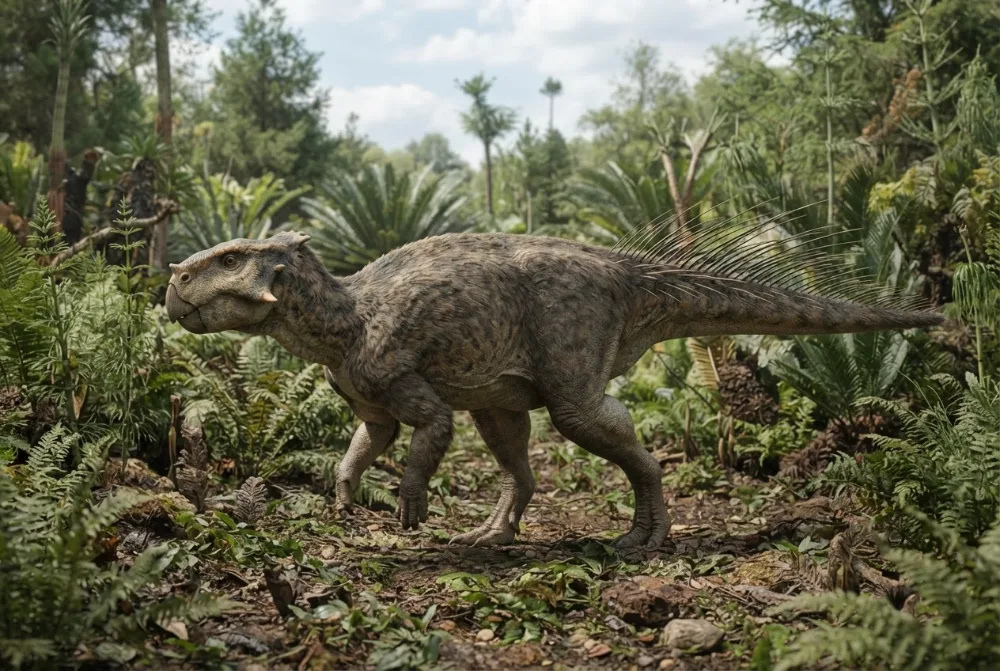
Psittacosaurus was a small, fast dinosaur that looked a bit like a parrot. It had a strong beak for snipping plants and lived in Asia during the Early Cretaceous. Some fossils even show long bristles on its tail!1
Noiz bizi izan zen?
Zein handia zen?
Zein luzea zen?
Zein altua zen?
Zein astuna zen?
 2,5 txakur bezain luze, sudurretik buztanera🍌bata bestearen atzean jarritako 14 banana bezain luze
 12 etxeko katu bezain astun🍉10 angurria bezain astun🧸haur-eskolako 2,5 haur bezain astun🎒1,5 eskolaume bezain astun🏃100 metro 10 segundotan egin zitzakeen korrika (gizakirik azkarrenak 9,6 behar ditu)
Zein handia zen Psittacosaurus ZUREKIN alderatuta?
Zure nabigatzaileko kalkulu hutsak. Ez da ezer gordetzen ez inora bidaltzen.
Zein azkarra zen?


Datu dibertigarriak
Psittacosaurus is the non-avian dinosaur genus with the most known species, up to 13 different ones.1
One fossil of Psittacosaurus was found with long, bristle-like filaments on its tail, similar to those of the dinosaur Tianyulong.1
Psittacosaurus had a brain that was fairly large for its size, suggesting it may have had complex behaviors and good senses of smell and sight.1
Unlike later horned dinosaurs like Triceratops, Psittacosaurus walked on two legs as an adult and did not have a frill or large horns.1
Psittacosaurus swallowed gastroliths (stomach stones) to help break down tough plant material, sometimes more than 50 stones in one animal.1
The first Psittacosaurus fossil was discovered in Mongolia in 1922 by a chauffeur named Wong during an expedition led by Henry Fairfield Osborn.1
Psittacosaurus could slide its lower jaw forward and backward, which may have helped it crack nuts or seeds.1
Psittacosaurus: gehien egindako galderak
?How big was Psittacosaurus?
About 2 metres (6.5 feet) long and weighed around 50 kilograms (110 pounds). That is about as long as a large bicycle.34
?What did Psittacosaurus eat?
It was a herbivore that ate tough plants. It used its strong beak to snip leaves and swallowed gastroliths (stomach stones) to help grind the food.13
?Did Psittacosaurus have feathers?
No, it did not have feathers. But one fossil shows long, bristle-like structures on its tail, which may have been modified scales, not feathers.1
?How fast could Psittacosaurus run?
Maybe up to about 35 km/h (22 mph), about as fast as a fast human runner. This is an estimate from its size. It was small and agile and ran on two legs as an adult.13
Mito-hauslea
Mitoa: Some people think Psittacosaurus was a type of parrot dinosaur that could fly.
Egia: Psittacosaurus was a dinosaur that walked on two legs and could not fly. Its name means 'parrot lizard' because of its beak, not because it had wings.1
Dino adituentzat
- Izen zientifikoa
- Psittacosaurus
- Izendatzailea:
- Osborn 19235
- Taldea
- Dino adardunak
- Familia / klada
- Ceratopsia5
- Sailkapena
- Ornithischia > Ceratopsia5
- Arroken adina
- 137 eta 100 milioi urte artean (Valanginian / Albian)5
- Arroka-formazioak
- Yixian, Ilek, Öösh5
- Herrialdeak
- Txina, Mongolia, Errusia, Thailandia5
- Fosil-erregistroak
- 70 The Paleobiology Database datu-basean5
- Honela ere ezaguna
- Hongshanosaurus, Protiguanodon (orain animalia bertzat hartzen diren izen zaharragoak)5
- Aurkikuntza
- Psittacosaurus was named in 1923 by American paleontologist Henry Fairfield Osborn after a nearly complete skull and skeleton were found in Mongolia by a chauffeur named Wong. Osborn gave it the name because its beak looked like a parrot's.1
- Oraindik eztabaidagai
- Scientists still debate whether the species Psittacosaurus lujiatunensis and Psittacosaurus houi are actually the same dinosaur or two different species.1
Datuak nondik datozen
- Psittacosaurus (en.wikipedia.org)
- Psittacosaurus - Dinosaurs.wiki (dinosaurs.wiki)
- Psittacosaurus | Natural History Museum (nhm.ac.uk)
- Psittacosaurus (britannica.com)
- Psittacosaurus in The Paleobiology Database (CC BY 4.0): adina, tokiak, arroka-formazioak, sailkapena.
Orrialde honetako datu bakoitzak zenbaki bat du, bere iturrira eramaten zaituena. Zerbait gaizki badugu, barkatu, dino-zaleak gara, ez zientzia-aldizkari bat. Idatzi [email protected] helbidera eta konponduko dugu.
 Rex gose da! Dino Wiki aita baten proiektua da, dinosauroak maite dituen bere semearentzat, doakoa, iragarkirik eta jarraitzailerik gabe. Helduek mokadutxo bat eman diezaiokete Rexi, sarean jarraitzen laguntzeko.Eman jaten Rexi
 Triceratops
 Protoceratops
 Ojoceratops
 Tatankaceratops
 Centrosaurus
 Chasmosaurus
 Stegosaurus
 Iguanodon
 Archaeopteryx
 Giganotosaurus
 Microraptor
 Deinonychus