 Zer dino zara? Galdetegia
 Dino borroka
 Dino lasterketa
 Dino minijokoak
 Pegatina-albuma
 Dino TOP zerrendak
 Harritu nazazu!
Amargasaurus
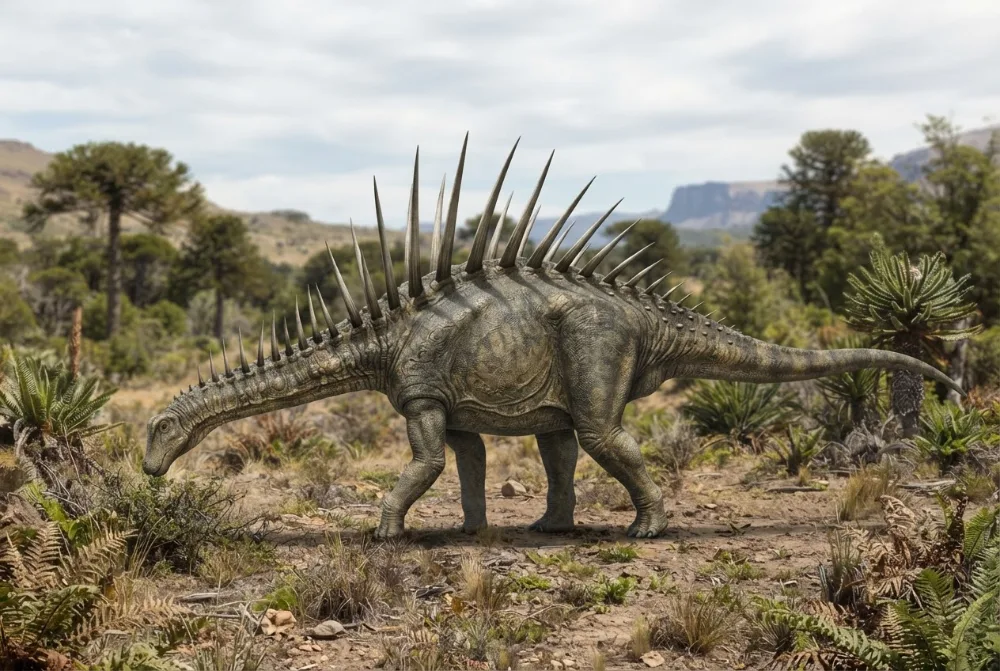
Amargasaurus was a sauropod with a very unusual back. It had long, sharp spines sticking up from its neck and back, like a row of spikes. Scientists think these spikes might have been used for defense or to impress other Amargasaurus.1
Noiz bizi izan zen?
Zein handia zen?
Zein luzea zen?
Zein altua zen?
Zein astuna zen?
 ilaran aparkatutako 3 auto bezain luze🍌bata bestearen atzean jarritako 72 banana bezain luze
 200 txakur bezain astun🍉800 angurria bezain astun🎒haurrez betetako 5 ikasgela oso bezain astun🐻❄️9 hartz zuri bezain astun🏃100 metro 17 segundotan egin zitzakeen korrika (gizakirik azkarrenak 9,6 behar ditu)
Zein handia zen Amargasaurus ZUREKIN alderatuta?
Zure nabigatzaileko kalkulu hutsak. Ez da ezer gordetzen ez inora bidaltzen.
Zein azkarra zen?


Datu dibertigarriak
Amargasaurus had very long, sharp spines on its neck and back vertebrae. These spines were much longer than those of its relative Dicraeosaurus.1
The spines on its neck were so long that they probably stuck out like a sail or a row of spikes. Scientists think they could have been used for defense or to show off to other Amargasaurus.1
Amargasaurus was a dicraeosaurid, a family of sauropods with shorter necks than other long-necked dinosaurs. Its closest relatives include Dicraeosaurus and Bajadasaurus.6
The only known skeleton of Amargasaurus is mostly complete. It includes the back of the skull, most of the backbone, and parts of the legs and hips.1
Amargasaurus lived about 125 to 121 million years ago, during the Early Cretaceous period. That is about 15 to 20 million years after its African relative Dicraeosaurus.61
Scientists think Amargasaurus could not rear up on its hind legs like some other sauropods. Its legs were built for slow, steady walking, not speed.1
Amargasaurus: gehien egindako galderak
?How big was Amargasaurus?
Amargasaurus was about 9 to 13 metres long and weighed around 2.5 to 4 metric tons. That is small for a sauropod.25
?What did Amargasaurus eat?
Amargasaurus was a herbivore that ate tough plants. It had pencil-like teeth for grinding and chewing.52
?When did Amargasaurus live?
Amargasaurus lived during the Early Cretaceous period, about 130 to 120 million years ago.25
?Where was Amargasaurus found?
Amargasaurus was found in Argentina, in the La Amarga Formation of Neuquén Province. The only known skeleton was discovered in 1984.25
?Why did Amargasaurus have spines?
Scientists think the spines might have been used for display, combat, or defense. They could have supported a sail or been covered in horn.23
?Was Amargasaurus a dinosaur?
Yes, Amargasaurus was a dinosaur. It was a sauropod, a type of long-necked plant-eating dinosaur.25
?How fast could Amargasaurus run?
Scientists think Amargasaurus could not run fast. Its legs were built for slow, steady walking, not speed.2
?Is Amargasaurus bigger than T. rex?
Amargasaurus was longer than T. rex, reaching 9 to 13 metres, but it was much lighter, weighing only 2.5 to 4 metric tons.2
Dino adituentzat
- Izen zientifikoa
- Amargasaurus
- Izendatzailea:
- Bonaparte 19846
- Taldea
- Lepo-luzeak
- Familia / klada
- Dicraeosauridae6
- Sailkapena
- Sauropodomorpha > Sauropoda > Diplodocoidea6
- Arroken adina
- 126 eta 121 milioi urte artean (Barremian)6
- Arroka-formazioak
- La Amarga6
- Herrialdeak
- Argentina6
- Fosil-erregistroak
- 2 The Paleobiology Database datu-basean6
- Aurkikuntza
- Amargasaurus was named by Argentine paleontologist José Bonaparte in 1984. The skeleton was found in the La Amarga Formation in Neuquén Province, Argentina.61
- Oraindik eztabaidagai
- Scientists are not sure exactly what the long spines on Amargasaurus's neck were used for. They might have been for defense, to attract mates, or to help control body temperature.1
Datuak nondik datozen
- p (naturalhistory.si.edu)
- Amargasaurus (en.wikipedia.org)
- Amargasaurus | Western Australian Museum (museum.wa.gov.au)
- Giants and Bizarres: Body Size of Some Southern South American Cretaceous Dinosaurs (miketaylor.org.uk)
- Amargasaurus | Natural History Museum (nhm.ac.uk)
- Amargasaurus in The Paleobiology Database (CC BY 4.0): adina, tokiak, arroka-formazioak, sailkapena.
Orrialde honetako datu bakoitzak zenbaki bat du, bere iturrira eramaten zaituena. Zerbait gaizki badugu, barkatu, dino-zaleak gara, ez zientzia-aldizkari bat. Idatzi [email protected] helbidera eta konponduko dugu.
 Rex gose da! Dino Wiki aita baten proiektua da, dinosauroak maite dituen bere semearentzat, doakoa, iragarkirik eta jarraitzailerik gabe. Helduek mokadutxo bat eman diezaiokete Rexi, sarean jarraitzen laguntzeko.Eman jaten Rexi
 Brachiosaurus
 Diplodocus
 Brontosaurus
 Argentinosaurus
 Camarasaurus
 Morosaurus
 Stegosaurus
 Iguanodon
 Archaeopteryx
 Giganotosaurus
 Microraptor
 Deinonychus