 Zer dino zara? Galdetegia
 Dino borroka
 Dino lasterketa
 Dino minijokoak
 Pegatina-albuma
 Dino TOP zerrendak
 Harritu nazazu!
Amargatitanis
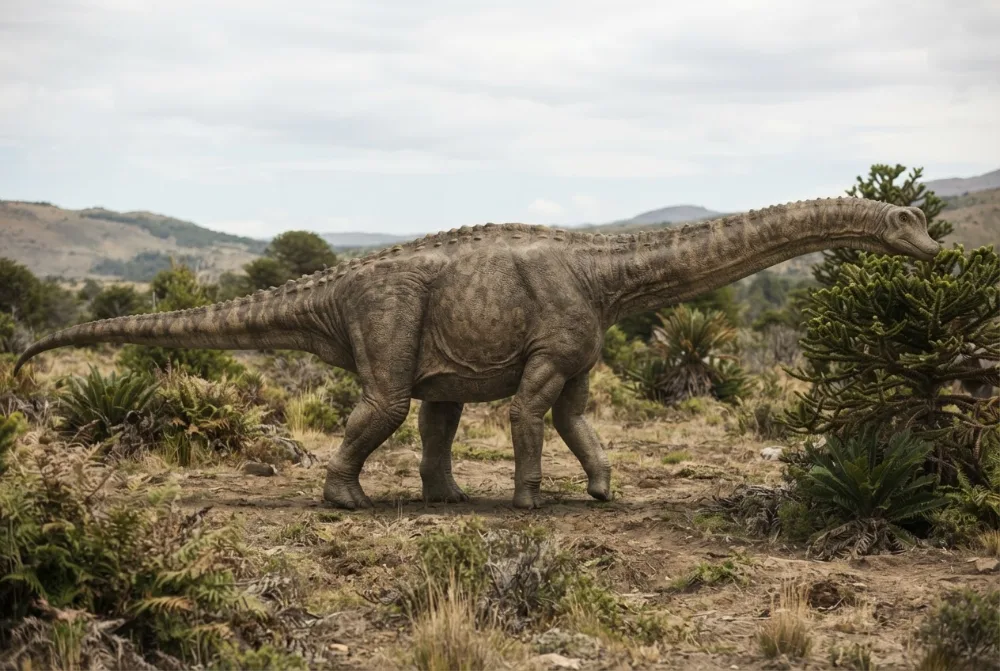
Amargatitanis was a long-necked plant-eater that lived in what is now Argentina. It was a sauropod, but not one of the biggest, it was about as long as a school bus. Its fossils were found near a place called La Amarga, which means 'the bitter one' in Spanish.1
Noiz bizi izan zen?
Zein handia zen?
Zein luzea zen?
Zein altua zen?
kalkulua
Zein astuna zen?
 ilaran aparkatutako 2,5 auto bezain luze🍌bata bestearen atzean jarritako 67 banana bezain luze
 180 txakur bezain astun🍉700 angurria bezain astun🎒haurrez betetako 4 ikasgela oso bezain astun🐻❄️8 hartz zuri bezain astun🏃100 metro 17 segundotan egin zitzakeen korrika (gizakirik azkarrenak 9,6 behar ditu)
Zein handia zen Amargatitanis ZUREKIN alderatuta?
Zure nabigatzaileko kalkulu hutsak. Ez da ezer gordetzen ez inora bidaltzen.
Zein azkarra zen?


Datu dibertigarriak
Amargatitanis was first thought to be a titanosaur, but later scientists realized it was a dicraeosaurid, a group of sauropods with short necks and tall spines on their vertebrae.1
The only known skeleton of Amargatitanis is incomplete: just a partial hind leg, a hip bone, and two vertebrae. That makes it hard for scientists to know exactly what it looked like.1
Amargatitanis lived about 129 to 123 million years ago, during the Early Cretaceous period.1
The fossils were collected by famous paleontologist José Bonaparte in 1983, but the dinosaur wasn't named until 2007 by Sebastián Apesteguía.1
Amargatitanis shared its home with other sauropods like Amargasaurus and Zapalasaurus. They probably ate different plants to avoid competing for food.1
Like other dicraeosaurids, Amargatitanis had a long tail and strong legs. Its neck was shorter than many other sauropods, so it probably fed at heights up to about 2.7 metres (8.9 feet).1
Amargatitanis: gehien egindako galderak
?How big was Amargatitanis?
About 12 metres (39.7 feet) long and weighed around 3.5 metric tons (3.9 short tons), according to one estimate. Another study gave a higher weight of about 11.4 metric tons (12.6 short tons).1
?What did Amargatitanis eat?
It was a plant-eater, or herbivore. It probably ate low-growing plants because its neck was shorter than many other sauropods.13
?When did Amargatitanis live?
It lived about 129 to 123 million years ago, during the Early Cretaceous period.1
Dino adituentzat
- Izen zientifikoa
- Amargatitanis
- Izendatzailea:
- Apesteguía 20073
- Taldea
- Lepo-luzeak
- Familia / klada
- Dicraeosauridae3
- Sailkapena
- Sauropodomorpha > Sauropoda > Diplodocoidea3
- Arroken adina
- 126 eta 121 milioi urte artean (Barremian)3
- Arroka-formazioak
- La Amarga3
- Herrialdeak
- Argentina3
- Fosil-erregistroak
- 1 The Paleobiology Database datu-basean3
- Aurkikuntza
- Amargatitanis was named by Argentine paleontologist Sebastián Apesteguía in 2007. The fossils were found in 1983 by a team led by José Bonaparte in the La Amarga Formation of Argentina.1
- Oraindik eztabaidagai
- Scientists are not sure whether Amargatitanis is a valid genus or a nomen dubium (doubtful name), because the fossils are so few and fragmentary.2
Datuak nondik datozen
- Amargatitanis (en.wikipedia.org)
- PBDB Taxon (paleobiodb.org)
- Amargatitanis in The Paleobiology Database (CC BY 4.0): adina, tokiak, arroka-formazioak, sailkapena.
Orrialde honetako datu bakoitzak zenbaki bat du, bere iturrira eramaten zaituena. Zerbait gaizki badugu, barkatu, dino-zaleak gara, ez zientzia-aldizkari bat. Idatzi [email protected] helbidera eta konponduko dugu.
 Rex gose da! Dino Wiki aita baten proiektua da, dinosauroak maite dituen bere semearentzat, doakoa, iragarkirik eta jarraitzailerik gabe. Helduek mokadutxo bat eman diezaiokete Rexi, sarean jarraitzen laguntzeko.Eman jaten Rexi
 Brachiosaurus
 Diplodocus
 Brontosaurus
 Argentinosaurus
 Camarasaurus
 Morosaurus
 Stegosaurus
 Iguanodon
 Archaeopteryx
 Giganotosaurus
 Microraptor
 Deinonychus