 Zer dino zara? Galdetegia
 Dino borroka
 Dino lasterketa
 Dino minijokoak
 Pegatina-albuma
 Dino TOP zerrendak
 Harritu nazazu!
Caenagnathasia
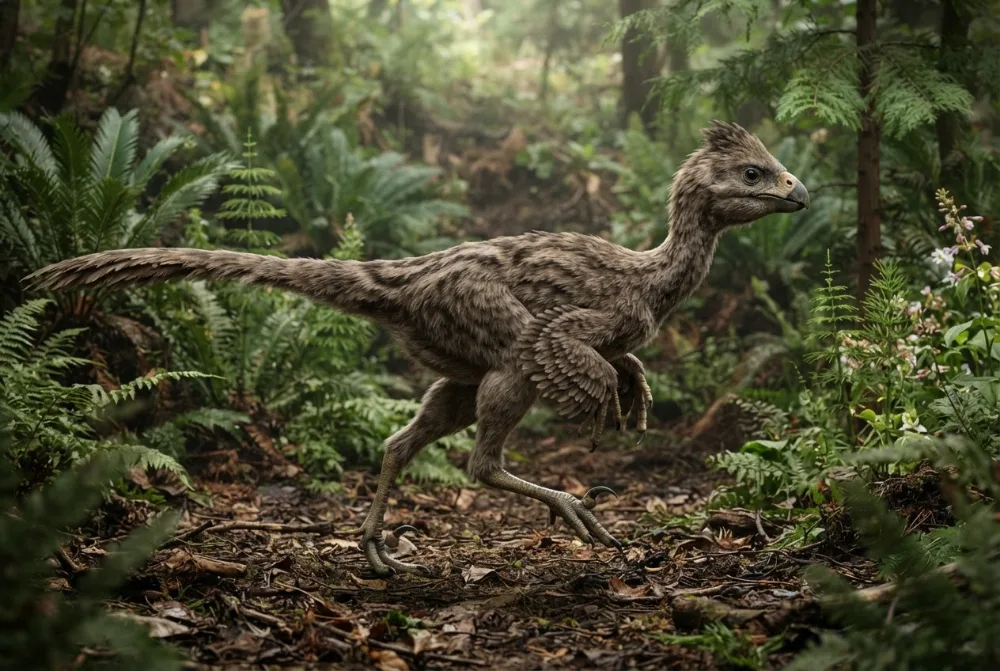
Caenagnathasia was a tiny, feathered dinosaur that looked a bit like a bird. It had a beak and long legs, and it was one of the smallest dinosaurs ever found. It lived in Asia during the Late Cretaceous period.1
Noiz bizi izan zen?
Zein handia zen?
Zein luzea zen?
Zein altua zen?
kalkulua
Zein astuna zen?
Zein handia zen Caenagnathasia ZUREKIN alderatuta?
Zure nabigatzaileko kalkulu hutsak. Ez da ezer gordetzen ez inora bidaltzen.
Zein azkarra zen?


Datu dibertigarriak
Caenagnathasia is the smallest known oviraptorosaur and one of the smallest non-avian dinosaurs. Its skull was only about 7.6 centimetres (3 inches) long.1
It lived about 90 million years ago, making it the oldest known caenagnathoid.1
The first fossils were just two fused lower jaw bones, found in Uzbekistan.1
Scientists think it was feathered, like other oviraptorosaurs, and looked bird-like with a beak and long neck.1
In 2015, new bones were found, including vertebrae, a dentary, and a femur, which helped confirm it belonged to the Caenagnathidae family.1
The name honors Gerbert Genrikhovich Martinson, a scientist, in the species name martinsoni.1
Caenagnathasia: gehien egindako galderak
?How big was Caenagnathasia?
It was tiny. About 0.6 metres (2 feet) long and weighed around 1.4 kilograms (3 pounds). Its skull was only about 7.6 centimetres (3 inches) long.1
?What did Caenagnathasia eat?
Scientists think it ate plants or small animals, because it had a beak and a special shelf in its mouth for grinding food, like other oviraptorosaurs.12
?Did Caenagnathasia have feathers?
Yes. It was a feathered dinosaur, like other oviraptorosaurs, and looked bird-like with a beak and long neck.1
?When did Caenagnathasia live?
It lived about 90 million years ago, during the Late Cretaceous period. It is the oldest known caenagnathoid.1
Mito-hauslea
Mitoa: Some people think Caenagnathasia was a bird because it had a beak and feathers.
Egia: It was a dinosaur, not a bird. It belonged to a group of feathered theropods called oviraptorosaurs, which are closely related to birds but not birds themselves.1
Dino adituentzat
- Izen zientifikoa
- Caenagnathasia
- Izendatzailea:
- Currie et al. 19943
- Taldea
- Dino lumadun bitxiak
- Familia / klada
- Caenagnathidae3
- Sailkapena
- Theropoda > Oviraptorosauria3
- Arroken adina
- 94 eta 72 milioi urte artean (Turonian / Campanian)3
- Arroka-formazioak
- Bissekty, Iren Dabasu3
- Herrialdeak
- Uzbekistan, Txina3
- Fosil-erregistroak
- 7 The Paleobiology Database datu-basean3
- Aurkikuntza
- Caenagnathasia was named in 1994 by Philip J. Currie, Stephen Godfrey, and Lev Nessov. The first fossils were found near Dzharakuduk in Uzbekistan, in the Bissekty Formation.1
- Oraindik eztabaidagai
- Scientists are still debating exactly where Caenagnathasia sits in the dinosaur family tree. Some think it was a primitive member of the Caenagnathidae, while others suggest it might be more basal within Oviraptorosauria.1
Datuak nondik datozen
- Caenagnathasia (en.wikipedia.org)
- New material of Caenagnathasia martinsoni (Dinosauria: Theropoda: Oviraptorosauria) from the Bissekty Formation (Upper Cretaceous: Turonian) of Uzbekistan › SPbU Researchers Portal (pureportal.spbu.ru)
- Caenagnathasia in The Paleobiology Database (CC BY 4.0): adina, tokiak, arroka-formazioak, sailkapena.
Orrialde honetako datu bakoitzak zenbaki bat du, bere iturrira eramaten zaituena. Zerbait gaizki badugu, barkatu, dino-zaleak gara, ez zientzia-aldizkari bat. Idatzi [email protected] helbidera eta konponduko dugu.
 Rex gose da! Dino Wiki aita baten proiektua da, dinosauroak maite dituen bere semearentzat, doakoa, iragarkirik eta jarraitzailerik gabe. Helduek mokadutxo bat eman diezaiokete Rexi, sarean jarraitzen laguntzeko.Eman jaten Rexi
 Therizinosaurus
 Oviraptor
 Chirostenotes
 Citipes
 Leptorhynchos
 Avimimus
 Tyrannosaurus
 Triceratops
 Velociraptor
 Spinosaurus
 Ankylosaurus
 Parasaurolophus