 Zer dino zara? Galdetegia
 Dino borroka
 Dino lasterketa
 Dino minijokoak
 Pegatina-albuma
 Dino TOP zerrendak
 Harritu nazazu!
Cuspicephalus
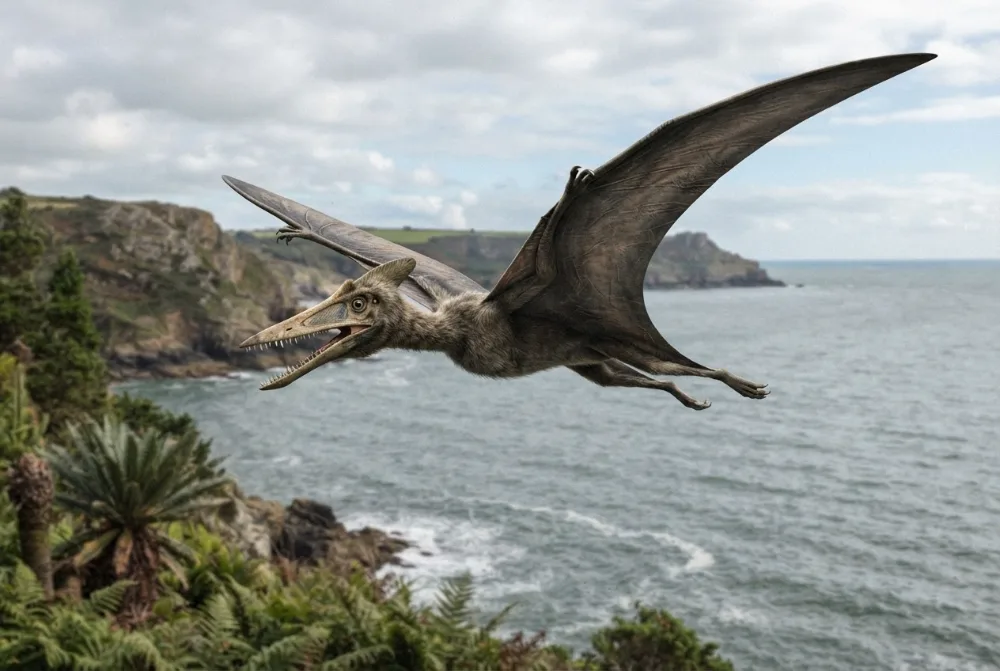
Cuspicephalus was a flying reptile that lived near the sea in what is now England. It had a very long, pointy skull and caught fish with its many teeth.23
Noiz bizi izan zen?
Zein handia zen?
Zein zabalak ziren bere hegoak?
 4 etxeko katu bezain luze, sudurretik buztanera⚽futbol zelai oso bat zeharkatu zezakeen hegan 8,4 segundotan
Zein handia zen Cuspicephalus ZUREKIN alderatuta?
Zure nabigatzaileko kalkulu hutsak. Ez da ezer gordetzen ez inora bidaltzen.
Zein azkarra zen?


Datu dibertigarriak
Cuspicephalus had a skull that was almost five and a half times longer than it was tall. That is the most extreme ratio of any pterosaur.2
Its name means 'pointed head' and it was named after the cartoonist Gerald Scarfe, whose drawings often have very pointy noses.1
Cuspicephalus is one of the first non-pterodactyloid monofenestratan pterosaurs found outside China.1
The only known fossil is a flattened skull found on a beach at Kimmeridge Bay, part of the Jurassic Coast World Heritage Site.21
Cuspicephalus had at least 12 or 13 pairs of teeth in front of a large hole in its skull called the nasoantorbital fenestra.1
Cuspicephalus: gehien egindako galderak
Dino adituentzat
- Izen zientifikoa
- Cuspicephalus
- Izendatzailea:
- Martill and Etches 20133
- Taldea
- Narrasti hegalariak
- Familia / klada
- Monofenestrata3
- Sailkapena
- Pterosauria3
- Arroken adina
- 155 eta 152 milioi urte artean (Kimmeridgian)3
- Arroka-formazioak
- Kimmeridge Clay3
- Herrialdeak
- Erresuma Batua3
- Fosil-erregistroak
- 1 The Paleobiology Database datu-basean3
- Aurkikuntza
- Fossil collector Steve Etches found the partial skull in December 2009 at Kimmeridge Bay, Dorset, England. Scientists David Martill and Steve Etches named it Cuspicephalus scarfi in 2013.21
- Oraindik eztabaidagai
- Scientists are not sure whether Cuspicephalus was more closely related to Darwinopterus or to pterodactyloids like Germanodactylus.1
Datuak nondik datozen
- A new monofenestratan pterosaur from the Kimmeridge (app.pan.pl)
- Cuspicephalus (en.wikipedia.org)
- Cuspicephalus in The Paleobiology Database (CC BY 4.0): adina, tokiak, arroka-formazioak, sailkapena.
Orrialde honetako datu bakoitzak zenbaki bat du, bere iturrira eramaten zaituena. Zerbait gaizki badugu, barkatu, dino-zaleak gara, ez zientzia-aldizkari bat. Idatzi [email protected] helbidera eta konponduko dugu.
 Rex gose da! Dino Wiki aita baten proiektua da, dinosauroak maite dituen bere semearentzat, doakoa, iragarkirik eta jarraitzailerik gabe. Helduek mokadutxo bat eman diezaiokete Rexi, sarean jarraitzen laguntzeko.Eman jaten Rexi
 Pteranodon
 Quetzalcoatlus
 Dorygnathus
 Rhamphorhynchus
 Anhanguera
 Pterodactylus
 Brachiosaurus
 Diplodocus
 Allosaurus
 Brontosaurus
 Compsognathus
 Camarasaurus