 Zer dino zara? Galdetegia
 Dino borroka
 Dino lasterketa
 Dino minijokoak
 Pegatina-albuma
 Dino TOP zerrendak
 Harritu nazazu!
Dimorphodon
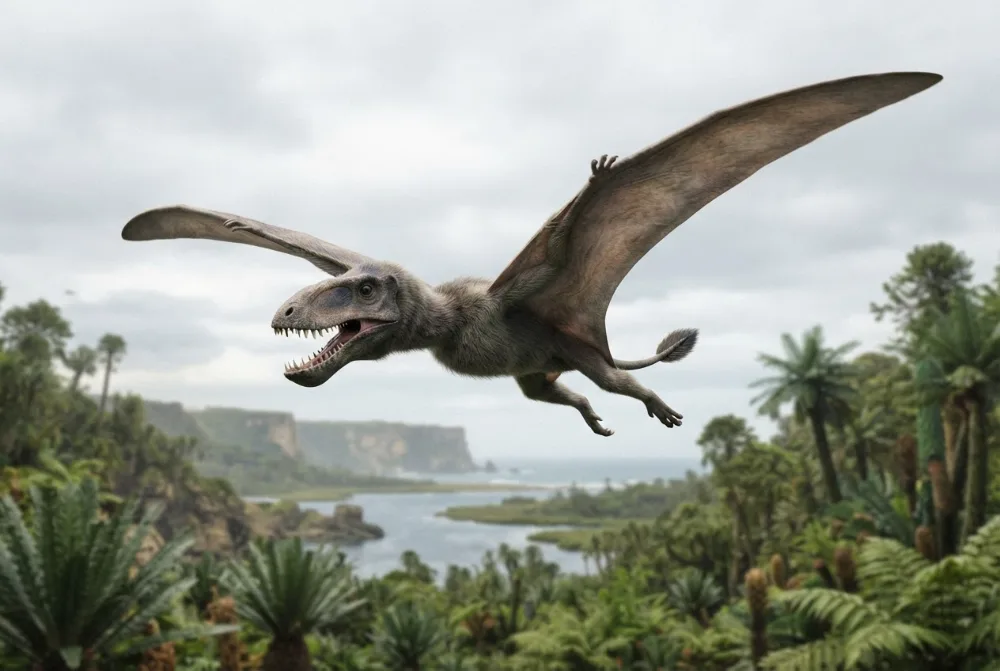
Dimorphodon was a flying reptile that lived during the Early Jurassic, about 201 to 191 million years ago. It had two different kinds of teeth in its jaws, which is rare for reptiles. It probably hunted small animals and insects.1
Noiz bizi izan zen?
Zein handia zen?
Zein luzea zen?
 2 etxeko katu bezain luze, sudurretik buztanera🍌bata bestearen atzean jarritako 6 banana bezain luze⚽futbol zelai oso bat zeharkatu zezakeen hegan 8,4 segundotan
Zein handia zen Dimorphodon ZUREKIN alderatuta?
Zure nabigatzaileko kalkulu hutsak. Ez da ezer gordetzen ez inora bidaltzen.
Zein azkarra zen?


Datu dibertigarriak
Dimorphodon was named by famous paleontologist Richard Owen in 1859.1
The first fossils of Dimorphodon were found by fossil collector Mary Anning in Lyme Regis, England, in 1828.1
Dimorphodon had a large, light skull with big openings and large eyes.3
Its wings were made of skin stretched from an extra-long fourth finger to its hip or hind legs.3
Dimorphodon was not a strong flier; it probably made short, frantic flights like modern chickens or woodpeckers.1
On the ground, Dimorphodon likely walked on two legs and folded its wings like birds and bats do.3
A second species, Dimorphodon weintraubi, was named in 1998 from fossils found in Mexico.1
Dimorphodon: gehien egindako galderak
?How big was Dimorphodon?
About 1 metre long, with a wingspan of about 1.45 metres.1
?What did Dimorphodon eat?
It probably hunted small vertebrates and also ate insects. Some scientists think it was an insectivore, but recent studies suggest it was a vertebrate predator.1
?Could Dimorphodon fly well?
No, it was not a strong flier. It likely made short, frantic flights like modern chickens or woodpeckers, and could not fly for long distances.1
?When did Dimorphodon live?
It lived during the Early Jurassic Period, about 201 to 191 million years ago.1
?Where was Dimorphodon found?
The first fossils were found in Lyme Regis, England, by Mary Anning in 1828. A second species was later found in Mexico.1
?Why is it called Dimorphodon?
Its name means 'two-form tooth' because it had two different types of teeth in its jaws: long fangs at the front and smaller pointed teeth behind.1
?Is Dimorphodon a dinosaur?
No, it is a pterosaur, a flying reptile that is not a dinosaur.1
?How did Dimorphodon walk on the ground?
It likely walked on all fours, using its wings as front limbs, rather than walking on two legs.1
Mito-hauslea
Mitoa: Dimorphodon was a seabird-like glider that soared over the ocean.
Egia: Recent studies show it had short, robust wings and was a poor glider, relying on short, flapping flights.1
Dino adituentzat
- Izen zientifikoa
- Dimorphodon
- Izendatzailea:
- Owen 18594
- Taldea
- Narrasti hegalariak
- Familia / klada
- Dimorphodontidae4
- Sailkapena
- Pterosauria4
- Arroken adina
- 201 eta 184 milioi urte artean (Hettangian / Pliensbachian)4
- Arroka-formazioak
- Blue Lias, La Boca4
- Herrialdeak
- Erresuma Batua, Mexiko4
- Fosil-erregistroak
- 3 The Paleobiology Database datu-basean4
- Aurkikuntza
- The first fossils were found by Mary Anning in 1828 in England. Richard Owen named the genus Dimorphodon in 1859 after studying skulls that showed two types of teeth.1
- Oraindik eztabaidagai
- Scientists still debate whether Dimorphodon mainly ate insects or small vertebrates, though recent studies lean toward a vertebrate diet.1
Datuak nondik datozen
- Dimorphodon (en.wikipedia.org)
- PBDB Taxon (paleobiodb.org)
- Dimorphodon | Pterosaur, Jurassic, Flying Reptile (britannica.com)
- Dimorphodon in The Paleobiology Database (CC BY 4.0): adina, tokiak, arroka-formazioak, sailkapena.
Orrialde honetako datu bakoitzak zenbaki bat du, bere iturrira eramaten zaituena. Zerbait gaizki badugu, barkatu, dino-zaleak gara, ez zientzia-aldizkari bat. Idatzi [email protected] helbidera eta konponduko dugu.
 Rex gose da! Dino Wiki aita baten proiektua da, dinosauroak maite dituen bere semearentzat, doakoa, iragarkirik eta jarraitzailerik gabe. Helduek mokadutxo bat eman diezaiokete Rexi, sarean jarraitzen laguntzeko.Eman jaten Rexi
 Pteranodon
 Quetzalcoatlus
 Dorygnathus
 Rhamphorhynchus
 Anhanguera
 Pterodactylus
 Dilophosaurus
 Stenopterygius
 Lufengosaurus
 Scutellosaurus
 Yunnanosaurus
 Sinosaurus