 Zer dino zara? Galdetegia
 Dino borroka
 Dino lasterketa
 Dino minijokoak
 Pegatina-albuma
 Dino TOP zerrendak
 Harritu nazazu!
Eurazhdarcho
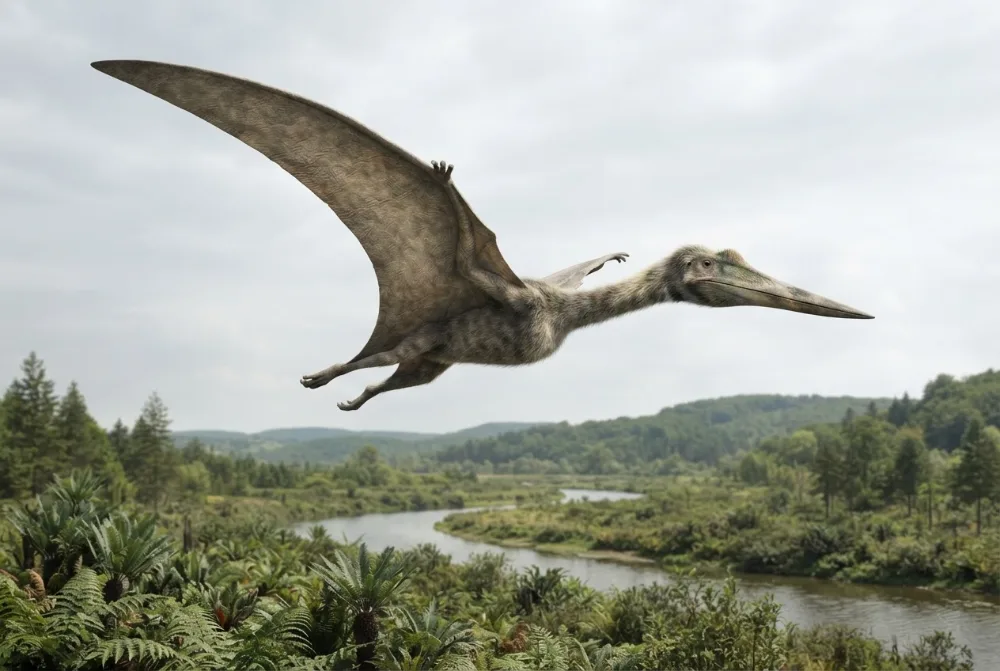
Eurazhdarcho was a medium-sized flying reptile that lived in what is now Romania. It had a wingspan of about 3 meters (10 feet) and likely stalked prey on the ground like a modern stork. It lived alongside giant pterosaurs like Hatzegopteryx.2
Noiz bizi izan zen?
Zein handia zen?
Zein zabalak ziren bere hegoak?
 ilaran jarritako 1,5 bizikleta bezain zabalak diren hegoak⚽futbol zelai oso bat zeharkatu zezakeen hegan 6,8 segundotan
Zein handia zen Eurazhdarcho ZUREKIN alderatuta?
Zure nabigatzaileko kalkulu hutsak. Ez da ezer gordetzen ez inora bidaltzen.
Zein azkarra zen?


Datu dibertigarriak
Eurazhdarcho is one of the most complete azhdarchid pterosaurs ever found in Europe. Its skeleton includes a partial spine and wing bones.2
It lived about 72 to 66 million years ago, during the Late Cretaceous period.4
Eurazhdarcho was a medium-sized pterosaur with a wingspan of about 3 meters (10 feet). That is similar to a large eagle today.2
It shared its home with the gigantic pterosaur Hatzegopteryx, which had a wingspan over 10 meters (33 feet). Scientists think they avoided competition by eating different foods.2
Eurazhdarcho lived in a land of rivers and forests, not near the sea. This shows that azhdarchid pterosaurs were comfortable in inland environments.2
Its name combines 'Europe' and 'Azhdarcho', a mythical dragon from Uzbekistan. The name honors both its discovery place and its relatives.1
Eurazhdarcho: gehien egindako galderak
?What did Eurazhdarcho eat?
It likely snatched small land animals while walking on all fours, like a modern stork. It probably did not eat fish from the coast.3
?How big was Eurazhdarcho?
Its wingspan was about 3 metres (10 feet), similar to a large eagle today. It was a medium sized pterosaur.3
?Was Eurazhdarcho a dinosaur?
No, it was a pterosaur, a flying reptile that lived during the time of dinosaurs. Pterosaurs are not dinosaurs.3
?When did Eurazhdarcho live?
It lived about 69 million years ago, during the Late Cretaceous period. That was near the end of the age of dinosaurs.3
Dino adituentzat
- Izen zientifikoa
- Eurazhdarcho
- Izendatzailea:
- Vremir et al. 20134
- Taldea
- Narrasti hegalariak
- Familia / klada
- Azhdarchidae4
- Sailkapena
- Pterosauria > Pterodactyloidea > Azhdarchidae4
- Arroken adina
- 72 eta 66 milioi urte artean (Maastrichtian)4
- Arroka-formazioak
- Sebeş4
- Herrialdeak
- Errumania4
- Fosil-erregistroak
- 1 The Paleobiology Database datu-basean4
- Aurkikuntza
- Eurazhdarcho was named in 2013 by a team of scientists including M. Vremir, A. W. A. Kellner, D. Naish, and G. J. Dyke. The fossils were found at the Sebeş Glod B site in Romania.42
- Oraindik eztabaidagai
- Scientists are not sure if Eurazhdarcho lived at exactly the same time as the giant pterosaur Hatzegopteryx, or if they shared the same habitats.2
Datuak nondik datozen
- pone.0054268 1..15 (journals.plos.org)
- A New Azhdarchid Pterosaur from the Late Cretaceous of the Transylvanian Basin, Romania: Implications for Azhdarchid Diversity and Distribution (pmc.ncbi.nlm.nih.gov)
- Eurazhdarcho (en.wikipedia.org)
- Eurazhdarcho in The Paleobiology Database (CC BY 4.0): adina, tokiak, arroka-formazioak, sailkapena.
Orrialde honetako datu bakoitzak zenbaki bat du, bere iturrira eramaten zaituena. Zerbait gaizki badugu, barkatu, dino-zaleak gara, ez zientzia-aldizkari bat. Idatzi [email protected] helbidera eta konponduko dugu.
 Rex gose da! Dino Wiki aita baten proiektua da, dinosauroak maite dituen bere semearentzat, doakoa, iragarkirik eta jarraitzailerik gabe. Helduek mokadutxo bat eman diezaiokete Rexi, sarean jarraitzen laguntzeko.Eman jaten Rexi
 Pteranodon
 Quetzalcoatlus
 Dorygnathus
 Rhamphorhynchus
 Anhanguera
 Pterodactylus
 Tyrannosaurus
 Triceratops
 Velociraptor
 Spinosaurus
 Ankylosaurus
 Parasaurolophus