 Zer dino zara? Galdetegia
 Dino borroka
 Dino lasterketa
 Dino minijokoak
 Pegatina-albuma
 Dino TOP zerrendak
 Harritu nazazu!
Noiz bizi izan zen?

Zein azkarra zen?


Datu dibertigarriak
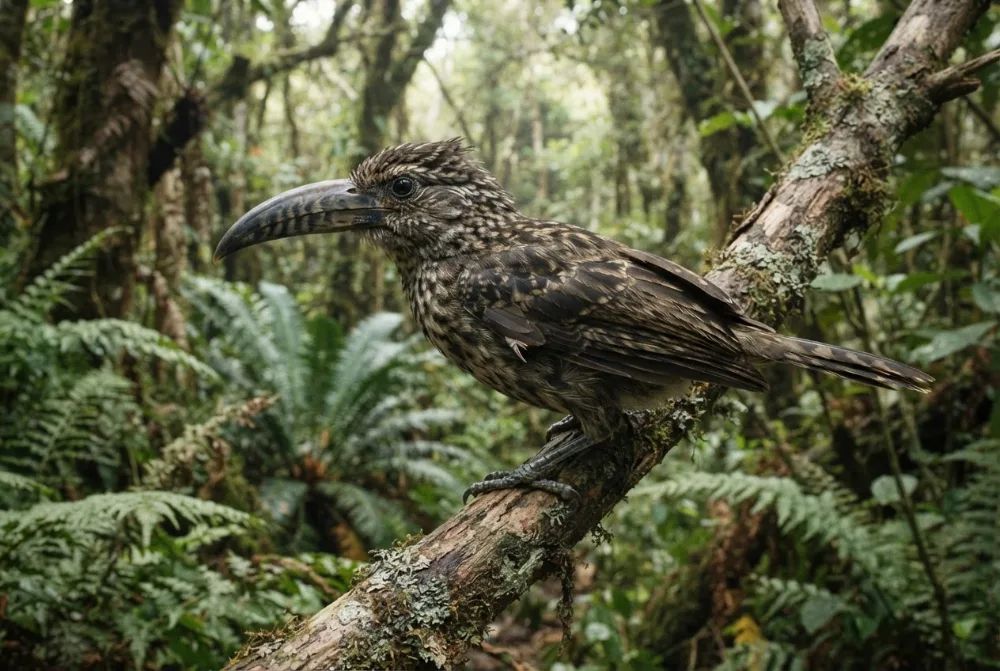
Falcatakely had a beak that looked like a toucan's, but it was not a close relative of toucans. Its beak shape evolved separately.1
The upper jaw of Falcatakely was made mostly of a large, toothless maxilla bone, with a small premaxilla that held teeth.1
Falcatakely is one of the few Mesozoic birds known to have a deep, long beak. Most early birds had simple, short snouts.1
This bird belonged to a group called Enantiornithes, which were the most common birds during the Cretaceous period.3
The only known fossil of Falcatakely was found in the Maevarano Formation in Madagascar, a site famous for other unusual animals like the giant frog Beelzebufo.3
Falcatakely shows that some ancient birds evolved large beaks before modern birds appeared, challenging old ideas about beak evolution.1
Falcatakely: gehien egindako galderak
?How big was Falcatakely?
About the size of a crow. Its beak was about 9 centimetres (3.5 inches) long.2
?Did Falcatakely have teeth?
Yes, it had teeth in the tip of its upper jaw, which is unusual for a bird.2
?Is Falcatakely a dinosaur?
Yes, it is a bird, and birds are a type of dinosaur called avialan dinosaurs.2
?When did Falcatakely live?
It lived about 68 to 70 million years ago, during the Late Cretaceous period.2
Dino adituentzat
- Izen zientifikoa
- Falcatakely
- Izendatzailea:
- O'Connor et al. 20203
- Taldea
- Lehen hegaztiak
- Familia / klada
- Enantiornithes3
- Sailkapena
- Theropoda > Avialae3
- Arroken adina
- 72 eta 66 milioi urte artean (Maastrichtian)3
- Arroka-formazioak
- Maevarano3
- Herrialdeak
- Madagaskar3
- Fosil-erregistroak
- 1 The Paleobiology Database datu-basean3
- Aurkikuntza
- Falcatakely was named in 2020 by Patrick O'Connor and colleagues based on a fossil skull found in Madagascar.31
- Oraindik eztabaidagai
- Scientists are still debating exactly how Falcatakely used its unusual beak, since it had teeth in the front but a large toothless beak behind.1
Datuak nondik datozen
- Late Cretaceous bird from Madagascar reveals unique development of beaks | Nature (nature.com)
- Falcatakely (en.wikipedia.org)
- Falcatakely in The Paleobiology Database (CC BY 4.0): adina, tokiak, arroka-formazioak, sailkapena.
Orrialde honetako datu bakoitzak zenbaki bat du, bere iturrira eramaten zaituena. Zerbait gaizki badugu, barkatu, dino-zaleak gara, ez zientzia-aldizkari bat. Idatzi [email protected] helbidera eta konponduko dugu.
 Rex gose da! Dino Wiki aita baten proiektua da, dinosauroak maite dituen bere semearentzat, doakoa, iragarkirik eta jarraitzailerik gabe. Helduek mokadutxo bat eman diezaiokete Rexi, sarean jarraitzen laguntzeko.Eman jaten Rexi
 Archaeopteryx
 Hesperornis
 Ichthyornis
 Baptornis
 Jurapteryx
 Gobipteryx
 Tyrannosaurus
 Triceratops
 Velociraptor
 Spinosaurus
 Ankylosaurus
 Parasaurolophus