 Zer dino zara? Galdetegia
 Dino borroka
 Dino lasterketa
 Dino minijokoak
 Pegatina-albuma
 Dino TOP zerrendak
 Harritu nazazu!
Kank
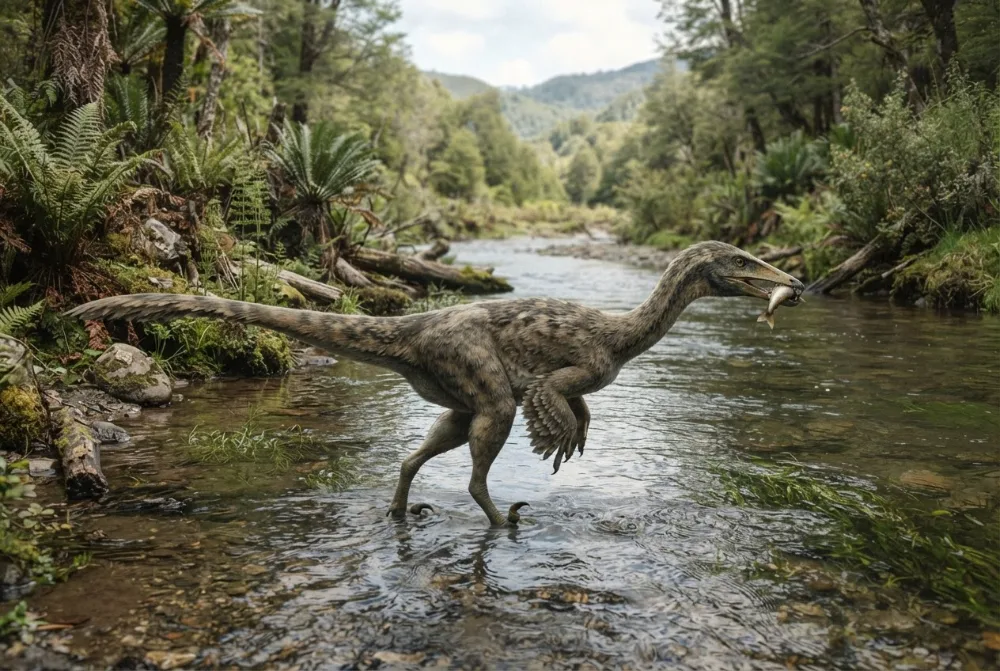
Kank was a fish-eating dinosaur that lived like a modern heron. It waded in rivers and streams in southern Patagonia, using its long neck to snatch fish. This raptor-like dinosaur was about the size of a small car.1
Noiz bizi izan zen?
Zein handia zen?
Zein luzea zen?
Zein altua zen?
kalkulua
 3 txakur bezain luze, sudurretik buztanera🍌bata bestearen atzean jarritako 17 banana bezain luze🏃100 metro 7,2 segundotan egin zitzakeen korrika (gizakirik azkarrenak 9,6 behar ditu)
Zein handia zen Kank ZUREKIN alderatuta?
Zure nabigatzaileko kalkulu hutsak. Ez da ezer gordetzen ez inora bidaltzen.
Zein azkarra zen?


Datu dibertigarriak
Kank lived about 70 million years ago in a warm, wet place with rivers and ponds.1
Its neck bones had air chambers inside, making them light and strong.1
Kank had a big claw on its second toe, like other raptors, but it probably used it for fishing, not hunting on land.1
The first Kank fossils were found in 2018, but scientists needed more bones to know it was a new species.1
Kank shared its home with giant predators like Maip macrothorax, a megaraptorid over 10 metres long.1
Kank is part of a group called unenlagiids, which are found in South America, Antarctica, Australia and Madagascar.1
Kank: gehien egindako galderak
?What did Kank eat?
Kank mostly ate fish, like a modern heron. It may have also eaten frogs, lizards, turtles and small mammals that lived in its wetland home.12
?Did Kank have feathers?
Scientists think Kank probably had feathers, because it belongs to a group of dinosaurs called unenlagiids that are closely related to birds. No direct feather fossils of Kank have been found yet.2
?When did Kank live?
Kank lived about 70 million years ago, during the Late Cretaceous period. That was near the very end of the age of dinosaurs.12
?Where was Kank found?
Kank was discovered at La Anita farm near El Calafate in Santa Cruz, Argentina. The fossils come from the Chorrillo Formation in southern Patagonia.12
?Was Kank bigger than Velociraptor?
Yes, Kank was a bit bigger. Velociraptor was about 2 metres long, while Kank grew up to 3 metres long.1
Mito-hauslea
Mitoa: All raptor-like dinosaurs were fast land hunters like Velociraptor.
Egia: Kank was a fish-eater that behaved like a heron, not a speedy land predator.1
Dino adituentzat
- Izen zientifikoa
- Kank
- Izendatzailea:
- Motta et al. 20263
- Taldea
- Dino haragijaleak
- Familia / klada
- Unenlagiidae3
- Sailkapena
- Theropoda3
- Arroken adina
- 72 eta 66 milioi urte artean (Maastrichtian)3
- Arroka-formazioak
- Chorrillo3
- Herrialdeak
- Argentina3
- Fosil-erregistroak
- 2 The Paleobiology Database datu-basean3
- Aurkikuntza
- Kank was named by Matías Motta and his team in 2026, based on fossils found at La Anita farm in Argentina from 2018 to 2024.1
- Oraindik eztabaidagai
- Scientists are not sure if Kank also ate other animals like frogs or mammals, or only fish.1
Datuak nondik datozen
- Heron-like, fish-eating dinosaur from 70 million years ago discovered in Argentina | EurekAlert! (eurekalert.org)
- Kank (Wikipedia) (Wikipedia)
- Kank in The Paleobiology Database (CC BY 4.0): adina, tokiak, arroka-formazioak, sailkapena.
Orrialde honetako datu bakoitzak zenbaki bat du, bere iturrira eramaten zaituena. Zerbait gaizki badugu, barkatu, dino-zaleak gara, ez zientzia-aldizkari bat. Idatzi [email protected] helbidera eta konponduko dugu.
 Rex gose da! Dino Wiki aita baten proiektua da, dinosauroak maite dituen bere semearentzat, doakoa, iragarkirik eta jarraitzailerik gabe. Helduek mokadutxo bat eman diezaiokete Rexi, sarean jarraitzen laguntzeko.Eman jaten Rexi
 Allosaurus
 Carnotaurus
 Dilophosaurus
 Giganotosaurus
 Compsognathus
 Paronychodon
 Tyrannosaurus
 Triceratops
 Velociraptor
 Spinosaurus
 Ankylosaurus
 Parasaurolophus