 Zer dino zara? Galdetegia
 Dino borroka
 Dino lasterketa
 Dino minijokoak
 Pegatina-albuma
 Dino TOP zerrendak
 Harritu nazazu!
Livyatan
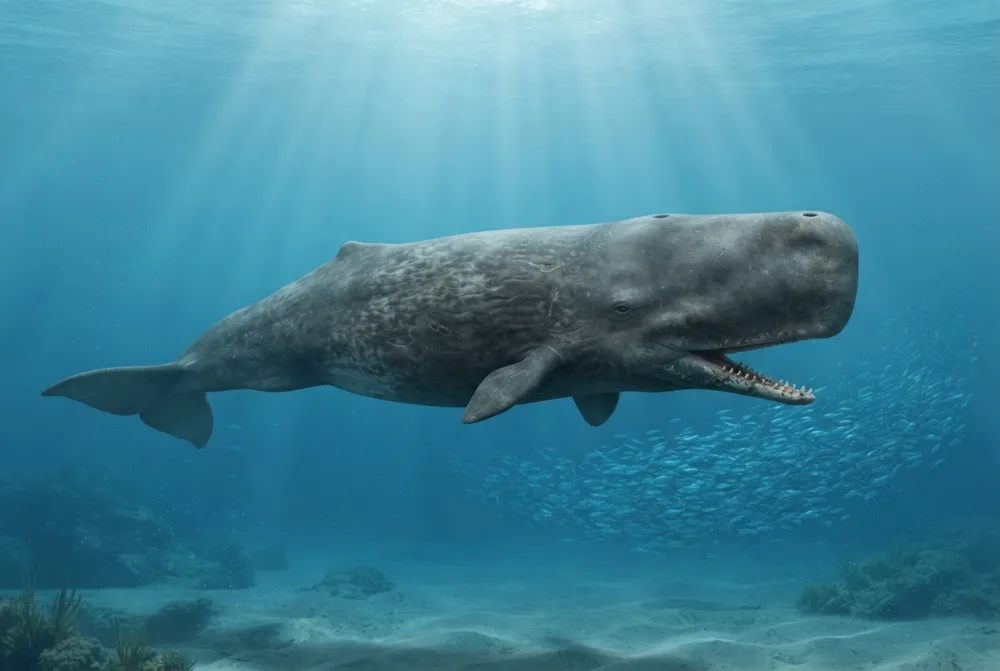
Livyatan was a giant sperm whale that lived in the ocean millions of years ago. It had huge teeth and was one of the biggest hunters in the sea. It was not a dinosaur, but a mammal like whales today.1
Noiz bizi izan zen?
Zein handia zen?
Zein luzea zen?
Zein astuna zen?

 ilaran aparkatutako 4 auto bezain luze🍌bata bestearen atzean jarritako 97 banana bezain luze🍉11000 angurria bezain astun🎒haurrez betetako 71 ikasgela oso bezain astun🐻❄️130 hartz zuri bezain astun🏊igerileku handi baten luzera (50 m) 5,1 segundotan egin zezakeen igerian
Zein handia zen Livyatan ZUREKIN alderatuta?
Zure nabigatzaileko kalkulu hutsak. Ez da ezer gordetzen ez inora bidaltzen.
Zein azkarra zen?


Datu dibertigarriak
Livyatan had teeth up to 36 centimeters (over 14 inches) long, bigger than any other sperm whale.1
Its skull was about 3 meters (10 feet) long, making it the largest fossil sperm whale skull known.1
Livyatan lived at the same time as the giant shark Carcharocles megalodon, and both were top predators.1
Scientists think Livyatan could bite harder than any other four-legged animal ever found.1
Unlike modern sperm whales that suck in food, Livyatan used its teeth to hunt and tear large prey.1
The name Livyatan comes from a Hebrew word for a sea monster, and the species name melvillei honors the author of Moby-Dick.1
Livyatan: gehien egindako galderak
?How big was Livyatan?
About 13.5 to 17.5 meters (44 to 57 feet) long, similar to a modern sperm whale.2
?What did Livyatan eat?
It hunted large prey like medium-sized baleen whales, using its huge teeth to bite and tear flesh.12
?Did Livyatan live at the same time as megalodon?
Yes, Livyatan and the giant shark megalodon lived in the same oceans and may have competed for food.23
?Why did Livyatan go extinct?
It probably died out because of a cooling event at the end of the Miocene that reduced its food supply.2
?Is Livyatan a dinosaur?
No, Livyatan was a mammal, a giant sperm whale, not a dinosaur.2
?How long were Livyatan's teeth?
Its teeth were up to 36.2 centimeters (14.3 inches) long, the largest biting teeth of any known animal.21
?Where was Livyatan discovered?
Its fossil skull was found in the Pisco Formation of Peru, in a coastal desert near Ica.21
Mito-hauslea
Mitoa: Some people think Livyatan was a dinosaur.
Egia: Livyatan was a whale, a mammal, not a dinosaur.1
Dino adituentzat
- Izen zientifikoa
- Livyatan
- Izendatzailea:
- Lambert et al. 20104
- Taldea
- Historiaurreko kondairak
- Familia / klada
- Physeteroidea4
- Sailkapena
- Mammalia > Cetacea > Physeteroidea4
- Arroken adina
- 23 eta 3,6 milioi urte artean (Aquitanian / Zanclean)4
- Arroka-formazioak
- Pisco4
- Herrialdeak
- Hegoafrika, Peru, Argentina, Txile, AEB4
- Fosil-erregistroak
- 6 The Paleobiology Database datu-basean4
- Aurkikuntza
- Scientists found a skull with teeth in the Pisco desert of Peru, and they named it Livyatan melvillei in 2010.1
- Oraindik eztabaidagai
- Scientists are still debating what the big basin on its head was for, like echolocation or display.1
Datuak nondik datozen
- The giant bite of a new raptorial sperm whale from the Miocene epoch of Peru (nature.com)
- Livyatan (en.wikipedia.org)
- Behold Livyatan: the sperm whale that killed other whales | National Geographic (nationalgeographic.com)
- Livyatan in The Paleobiology Database (CC BY 4.0): adina, tokiak, arroka-formazioak, sailkapena.
Orrialde honetako datu bakoitzak zenbaki bat du, bere iturrira eramaten zaituena. Zerbait gaizki badugu, barkatu, dino-zaleak gara, ez zientzia-aldizkari bat. Idatzi [email protected] helbidera eta konponduko dugu.
 Rex gose da! Dino Wiki aita baten proiektua da, dinosauroak maite dituen bere semearentzat, doakoa, iragarkirik eta jarraitzailerik gabe. Helduek mokadutxo bat eman diezaiokete Rexi, sarean jarraitzen laguntzeko.Eman jaten Rexi
 Megalodon
 Sabre-toothed cat
 Dimetrodon
 Woolly mammoth
 Arthropleura
 Helicoprion