 Zer dino zara? Galdetegia
 Dino borroka
 Dino lasterketa
 Dino minijokoak
 Pegatina-albuma
 Dino TOP zerrendak
 Harritu nazazu!
Melkamter
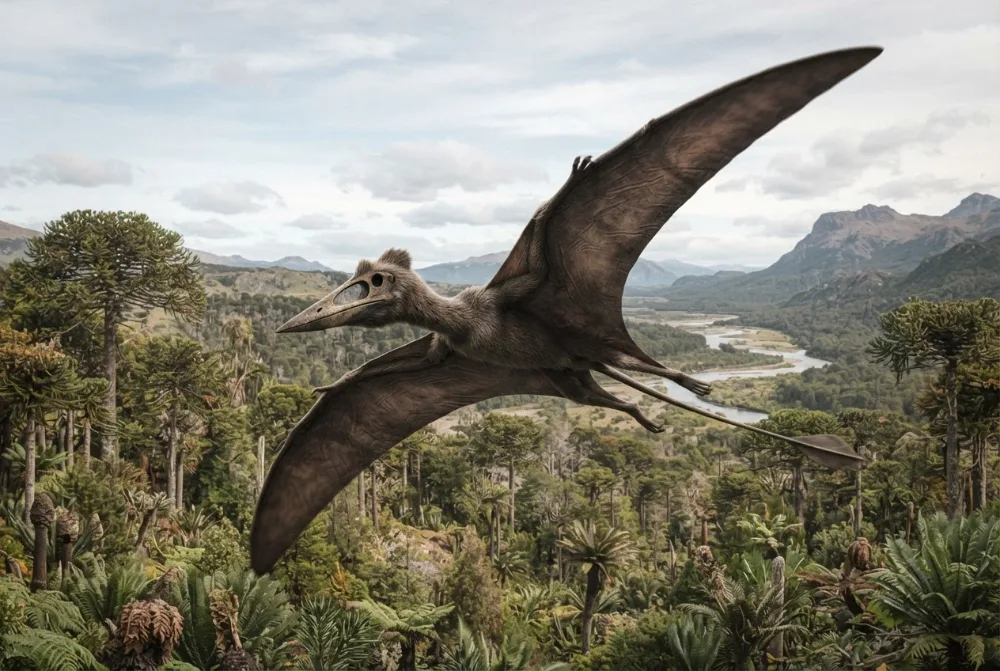
Melkamter was a flying reptile that lived in what is now Argentina during the Early Jurassic. It had a single big opening in the side of its skull, which is a clue that it was an early relative of the later pterodactyls.2
Noiz bizi izan zen?
Zein handia zen?
Zein zabalak ziren bere hegoak?
 ilaran jarritako 2 bizikleta bezain zabalak diren hegoak⚽futbol zelai oso bat zeharkatu zezakeen hegan 6,3 segundotan
Zein handia zen Melkamter ZUREKIN alderatuta?
Zure nabigatzaileko kalkulu hutsak. Ez da ezer gordetzen ez inora bidaltzen.
Zein azkarra zen?


Datu dibertigarriak
Melkamter is the oldest known monofenestratan pterosaur, meaning it lived earlier than any other member of that group.2
Its name comes from the Tehuelche language: 'mel' means wing and 'kamter' means big lizard.2
The species name 'pateko' honors the Queso Rallado fossil site and the broken condition of the bones.2
Melkamter had a skull with a single opening in front of the eye, a feature that links it to later pterodactyloids.2
Its teeth were short, stout and cone-shaped, with gaps between them bigger than the tooth length, which is typical for insect-eaters.2
The fossil was found in the Cañadón Asfalto Formation, which has also yielded other pterosaurs, showing that Gondwana had a rich pterosaur fauna in the Early Jurassic.2
Melkamter: gehien egindako galderak
?How big was Melkamter?
Its preserved skull is 131.3 millimetres (5.17 inches) long, so it was a small pterosaur, about the size of a crow.1
?What did Melkamter eat?
It probably ate insects. Its teeth were short, stout and cone-shaped, with gaps between them bigger than the tooth length, which is typical for insect-eaters.2
Dino adituentzat
- Izen zientifikoa
- Melkamter
- Izendatzailea:
- Fernandes et al. 20244
- Taldea
- Narrasti hegalariak
- Familia / klada
- Monofenestrata4
- Sailkapena
- Pterosauria4
- Arroken adina
- 183 eta 175 milioi urte artean (Toarcian)4
- Arroka-formazioak
- Cañadón Asfalto4
- Herrialdeak
- Argentina4
- Fosil-erregistroak
- 1 The Paleobiology Database datu-basean4
- Aurkikuntza
- Melkamter was named in 2024 by Fernandes, Pol and Rauhut based on a partial skull and other bones found at the Queso Rallado site in Argentina.24
- Oraindik eztabaidagai
- Scientists are not sure whether Melkamter was fully a pterodactyloid or a more primitive monofenestratan, because it has a mix of old and new features.2
Datuak nondik datozen
- Melkamter (en.wikipedia.org)
- The oldest monofenestratan pterosaur from the Queso Rallado locality (Cañadón Asfalto Formation, Toarcian) of Chubut Province, Patagonia, Argentina (pmc.ncbi.nlm.nih.gov)
- Melkamter pateko | Pterosaur Database by DinoAnimals.com (dinoanimals.com)
- Melkamter in The Paleobiology Database (CC BY 4.0): adina, tokiak, arroka-formazioak, sailkapena.
Orrialde honetako datu bakoitzak zenbaki bat du, bere iturrira eramaten zaituena. Zerbait gaizki badugu, barkatu, dino-zaleak gara, ez zientzia-aldizkari bat. Idatzi [email protected] helbidera eta konponduko dugu.
 Rex gose da! Dino Wiki aita baten proiektua da, dinosauroak maite dituen bere semearentzat, doakoa, iragarkirik eta jarraitzailerik gabe. Helduek mokadutxo bat eman diezaiokete Rexi, sarean jarraitzen laguntzeko.Eman jaten Rexi
 Pteranodon
 Quetzalcoatlus
 Dorygnathus
 Rhamphorhynchus
 Anhanguera
 Pterodactylus
 Dilophosaurus
 Stenopterygius
 Lufengosaurus
 Scutellosaurus
 Yunnanosaurus
 Sinosaurus