 Zer dino zara? Galdetegia
 Dino borroka
 Dino lasterketa
 Dino minijokoak
 Pegatina-albuma
 Dino TOP zerrendak
 Harritu nazazu!
Nasutoceratops
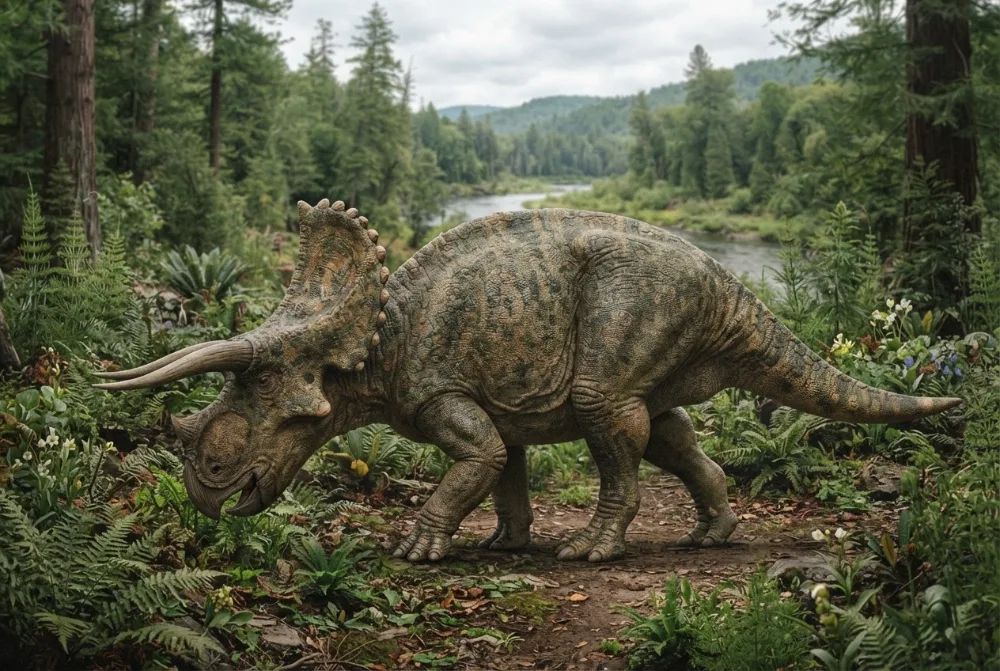
Nasutoceratops was a horned dinosaur with a huge nose and long, curved horns above its eyes. It lived in what is now Utah, USA, about 75 million years ago. This plant-eater had a short snout and a big frill at the back of its head.1
Noiz bizi izan zen?
Zein handia zen?
Zein luzea zen?
Zein altua zen?
Zein astuna zen?

 5 txakur bezain luze, sudurretik buztanera🍌bata bestearen atzean jarritako 28 banana bezain luze100 txakur bezain astun🍉400 angurria bezain astun🎒haurrez betetako 2,5 ikasgela oso bezain astun🐻❄️4 hartz zuri bezain astun🏃100 metro 10 segundotan egin zitzakeen korrika (gizakirik azkarrenak 9,6 behar ditu)
Zein handia zen Nasutoceratops ZUREKIN alderatuta?
Zure nabigatzaileko kalkulu hutsak. Ez da ezer gordetzen ez inora bidaltzen.
Zein azkarra zen?


Datu dibertigarriak
Nasutoceratops had an enormous nose area that made up about 75% of the length of its skull in front of its eyes.1
Its horns pointed outward and forward, then curved and twisted at the tips, unlike most other horned dinosaurs.1
The frill on its head was simple and wide in the middle, without the big holes or spikes seen in many relatives.1
It lived alongside other dinosaurs like the tyrannosaur Teratophoneus and the duck-billed Gryposaurus.1
Nasutoceratops is one of the few horned dinosaurs from the southern part of the ancient continent Laramidia.1
Its name honors Alan Titus, a paleontologist who helped with fossil discoveries in the monument.1
Nasutoceratops: gehien egindako galderak
?How big was Nasutoceratops?
About 4.5 metres (14.8 feet) long and weighed around 1.5 tonnes (1.7 short tons). Its skull was about 1.5 metres (4.9 feet) long.2
?What did Nasutoceratops eat?
It was a plant-eater, like all ceratopsian dinosaurs. It used its beak to bite off leaves and other plants.2
?Why did Nasutoceratops have such long horns?
Scientists think the long, forward-curving horns may have been used for fighting or showing off, like modern cattle. They could have locked with an opponent's horns.2
?Where did Nasutoceratops live?
It lived in what is now southern Utah, USA, about 75 to 76 million years ago. That area was then part of an island continent called Laramidia.2
?When did Nasutoceratops live?
It lived during the Late Cretaceous period, about 76 to 75.5 million years ago.2
?Did Nasutoceratops have feathers?
No, the sources do not mention feathers. Skin impressions were found on its arm, but they have not been described as having feathers.2
Mito-hauslea
Mitoa: Nasutoceratops had a horn on its nose like Triceratops.
Egia: Nasutoceratops had a low, ridge-like bump on its nose, not a tall horn.1
Dino adituentzat
- Izen zientifikoa
- Nasutoceratops
- Izendatzailea:
- Sampson et al. 20133
- Taldea
- Dino adardunak
- Familia / klada
- Ceratopsidae3
- Sailkapena
- Ornithischia > Ceratopsia > Ceratopsidae3
- Arroken adina
- 84 eta 72 milioi urte artean (Campanian)3
- Arroka-formazioak
- Kaiparowits3
- Herrialdeak
- AEB3
- Fosil-erregistroak
- 1 The Paleobiology Database datu-basean3
- Aurkikuntza
- Nasutoceratops was named in 2013 by Scott Sampson and colleagues. The first fossil, a nearly complete skull and partial skeleton, was found in 2006 in southern Utah.1
- Oraindik eztabaidagai
- Scientists are not sure why Nasutoceratops had such a big nose. It might have been for smelling, making sounds, or attracting mates.1
Datuak nondik datozen
- A remarkable short-snouted horned dinosaur from the Late Cretaceous (late Campanian) of southern Laramidia (pmc.ncbi.nlm.nih.gov)
- Nasutoceratops (en.wikipedia.org)
- Nasutoceratops in The Paleobiology Database (CC BY 4.0): adina, tokiak, arroka-formazioak, sailkapena.
Orrialde honetako datu bakoitzak zenbaki bat du, bere iturrira eramaten zaituena. Zerbait gaizki badugu, barkatu, dino-zaleak gara, ez zientzia-aldizkari bat. Idatzi [email protected] helbidera eta konponduko dugu.
 Rex gose da! Dino Wiki aita baten proiektua da, dinosauroak maite dituen bere semearentzat, doakoa, iragarkirik eta jarraitzailerik gabe. Helduek mokadutxo bat eman diezaiokete Rexi, sarean jarraitzen laguntzeko.Eman jaten Rexi
 Triceratops
 Protoceratops
 Ojoceratops
 Tatankaceratops
 Psittacosaurus
 Centrosaurus
 Tyrannosaurus
 Velociraptor
 Spinosaurus
 Ankylosaurus
 Parasaurolophus
 Pteranodon