 Zer dino zara? Galdetegia
 Dino borroka
 Dino lasterketa
 Dino minijokoak
 Pegatina-albuma
 Dino TOP zerrendak
 Harritu nazazu!
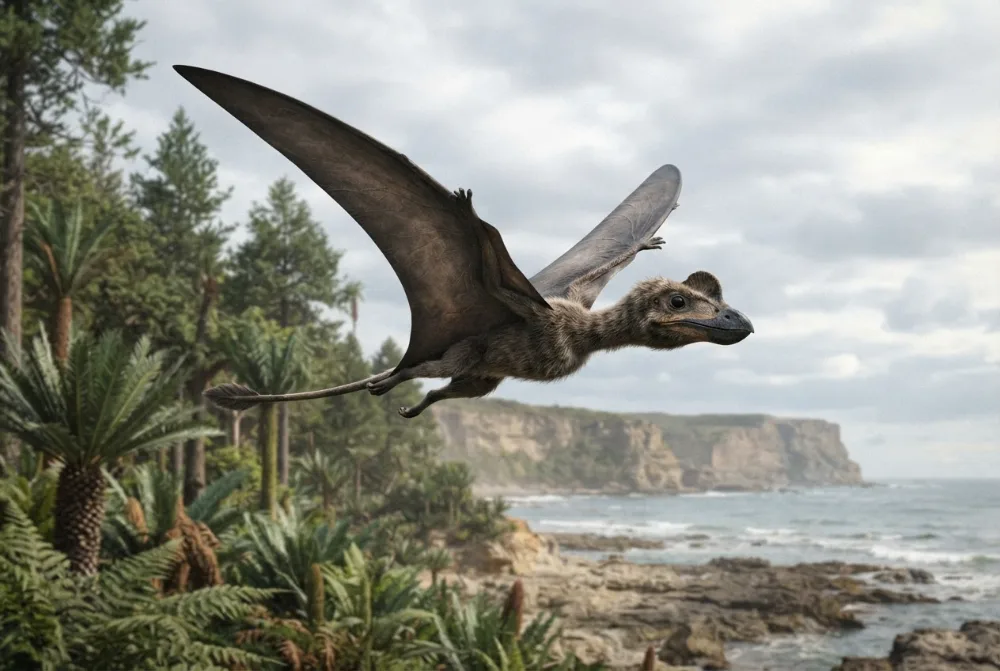
Normannognathus
Normannognathus was a flying reptile that lived about 150 million years ago. It had a tall crest on its head and a slightly upturned snout, making it look a bit like a dragon.12
Noiz bizi izan zen?
Zein handia zen?
Zein zabalak ziren bere hegoak?
 2 etxeko katu bezain luze, sudurretik buztanera⚽futbol zelai oso bat zeharkatu zezakeen hegan 10 segundotan
Zein handia zen Normannognathus ZUREKIN alderatuta?
Zure nabigatzaileko kalkulu hutsak. Ez da ezer gordetzen ez inora bidaltzen.
Zein azkarra zen?


Datu dibertigarriak
Normannognathus had teeth all the way to the tip of its jaws, which is unusual for some pterosaurs.2
Its tall crest started right in front of the nostril opening and had a concave front edge, making it look like a wave.2
The crest was flat and ran along the midline of the upper jaw, and it may have been covered by a horny sheath.1
The fossil is only about 10 centimetres long, and it includes the front part of the skull and lower jaws.1
Scientists have changed their minds about where Normannognathus belongs in the pterosaur family tree, placing it in different groups over the years.1
It lived during the Kimmeridgian age, about 152 to 149 million years ago, in a marine environment.4
Mito-hauslea
Mitoa: Normannognathus was a dinosaur.
Egia: It was a pterosaur, a flying reptile that is not a dinosaur.1
Dino adituentzat
- Izen zientifikoa
- Normannognathus
- Izendatzailea:
- Buffetaut et al. 19984
- Taldea
- Narrasti hegalariak
- Familia / klada
- Lophocratia4
- Sailkapena
- Pterosauria > Pterodactyloidea4
- Arroken adina
- 152 eta 149 milioi urte artean (Kimmeridgian)4
- Arroka-formazioak
- Argiles d'Octeville4
- Herrialdeak
- Frantzia4
- Fosil-erregistroak
- 1 The Paleobiology Database datu-basean4
- Aurkikuntza
- Jean-Jacques Lepage found the fossil in 1993 on the Normandy coast at Cap de la Hève, near Ecqueville. In 1998, Eric Buffetaut and colleagues named it Normannognathus wellnhoferi.1
- Oraindik eztabaidagai
- Scientists still debate exactly which group of pterosaurs Normannognathus belongs to, with different studies placing it in different families.1
Datuak nondik datozen
- Normannognathus (en.wikipedia.org)
- A new pterodactyloid pterosaur from the Kimmeridgian of the Cap de la Hève (Normandy, France) | Geological Magazine | Cambridge Core (cambridge.org)
- Normannognathus wellnhoferi | Pterosaur Database by DinoAnimals.com (dinoanimals.com)
- Normannognathus in The Paleobiology Database (CC BY 4.0): adina, tokiak, arroka-formazioak, sailkapena.
Orrialde honetako datu bakoitzak zenbaki bat du, bere iturrira eramaten zaituena. Zerbait gaizki badugu, barkatu, dino-zaleak gara, ez zientzia-aldizkari bat. Idatzi [email protected] helbidera eta konponduko dugu.
 Rex gose da! Dino Wiki aita baten proiektua da, dinosauroak maite dituen bere semearentzat, doakoa, iragarkirik eta jarraitzailerik gabe. Helduek mokadutxo bat eman diezaiokete Rexi, sarean jarraitzen laguntzeko.Eman jaten Rexi
 Pteranodon
 Quetzalcoatlus
 Dorygnathus
 Rhamphorhynchus
 Anhanguera
 Pterodactylus
 Brachiosaurus
 Diplodocus
 Allosaurus
 Brontosaurus
 Compsognathus
 Camarasaurus