 Zer dino zara? Galdetegia
 Dino borroka
 Dino lasterketa
 Dino minijokoak
 Pegatina-albuma
 Dino TOP zerrendak
 Harritu nazazu!
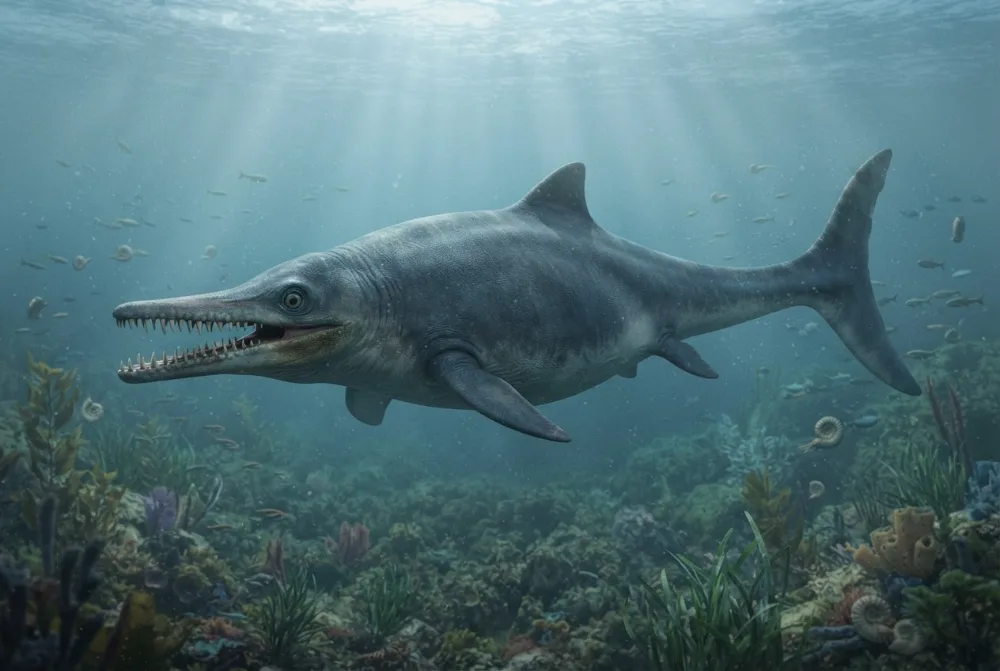
Platypterygius
Platypterygius was a giant marine reptile that swam in the seas during the time of the dinosaurs. It looked a bit like a dolphin but had a long snout full of sharp teeth. It was a fast hunter that ate fish, sea turtles, and even baby birds.1
Noiz bizi izan zen?
Zein handia zen?
Zein luzea zen?
 7 txakur bezain luze, sudurretik buztanera🍌bata bestearen atzean jarritako 39 banana bezain luze🏊igerileku handi baten luzera (50 m) 4,4 segundotan egin zezakeen igerian
Zein handia zen Platypterygius ZUREKIN alderatuta?
Zure nabigatzaileko kalkulu hutsak. Ez da ezer gordetzen ez inora bidaltzen.
Zein azkarra zen?


Datu dibertigarriak
Platypterygius means 'flat fin' because its flippers were wide and flat, like paddles.1
It lived from about 161 to 94 million years ago, during the Jurassic and Cretaceous periods.3
Fossils of Platypterygius have been found on every continent except Antarctica.3
Some Platypterygius fossils have baby sea turtles and bird bones in their stomachs, showing what it ate.1
Scientists think Platypterygius was a fast swimmer that chased prey in the open ocean.3
The name Platypterygius has been used for many different ichthyosaurs, and some scientists think it might include several different species.1
Platypterygius: gehien egindako galderak
?How big was Platypterygius?
Different species reached different sizes. Platypterygius platydactylus was about 5 metres (16 ft) long, while Platypterygius australis was about 7 metres (23 ft) long.1
?What did Platypterygius eat?
It was a large predator that ate fish, squid, and other marine animals. One fossil even had baby sea turtles and bird bones in its stomach.12
?Is Platypterygius a dinosaur?
No, it is not a dinosaur. It is an ichthyosaur, a marine reptile that lived in the sea at the same time as dinosaurs.12
?When did Platypterygius live?
Platypterygius lived during the Cretaceous period, from about 141 million years ago to 65 million years ago.2
Dino adituentzat
- Izen zientifikoa
- Platypterygius
- Izendatzailea:
- von Huene 19223
- Taldea
- Iktiosauroak
- Familia / klada
- Ophthalmosauridae3
- Sailkapena
- Ichthyosauria > Ichthyosauromorpha3
- Arroken adina
- 162 eta 94 milioi urte artean (Oxfordian / Cenomanian)3
- Arroka-formazioak
- Toolebuc, Zapata, Marnes bleues3
- Herrialdeak
- Australia, Frantzia, AEB, Txile, Errusia, Alemania3
- Fosil-erregistroak
- 62 The Paleobiology Database datu-basean3
- Honela ere ezaguna
- Longirostria, Myobradypterygius, Myopterygius, Plutoniosaurus, Tenuirostria (orain animalia bertzat hartzen diren izen zaharragoak)3
- Aurkikuntza
- Platypterygius was named by German paleontologist Friedrich von Huene in 1922. The first fossils were found in Germany.3
- Oraindik eztabaidagai
- Scientists are not sure which species really belong to Platypterygius, because many different ichthyosaurs have been lumped into this group.1
Datuak nondik datozen
- Platypterygius (en.wikipedia.org)
- Dinosaurs - Platypterygius longmani - The Australian Museum (australian.museum)
- Platypterygius in The Paleobiology Database (CC BY 4.0): adina, tokiak, arroka-formazioak, sailkapena.
Orrialde honetako datu bakoitzak zenbaki bat du, bere iturrira eramaten zaituena. Zerbait gaizki badugu, barkatu, dino-zaleak gara, ez zientzia-aldizkari bat. Idatzi [email protected] helbidera eta konponduko dugu.
 Rex gose da! Dino Wiki aita baten proiektua da, dinosauroak maite dituen bere semearentzat, doakoa, iragarkirik eta jarraitzailerik gabe. Helduek mokadutxo bat eman diezaiokete Rexi, sarean jarraitzen laguntzeko.Eman jaten Rexi
 Ichthyosaurus
 Stenopterygius
 Khudiakovia
 Ophthalmosaurus
 Chonespondylus
 Cymbospondylus
 Stegosaurus
 Iguanodon
 Archaeopteryx
 Giganotosaurus
 Microraptor
 Deinonychus