 Zer dino zara? Galdetegia
 Dino borroka
 Dino lasterketa
 Dino minijokoak
 Pegatina-albuma
 Dino TOP zerrendak
 Harritu nazazu!
Noiz bizi izan zen?

Zein handia zen?
Zein luzea zen?
Zein altua zen?
kalkulua
Zein astuna zen?

 5 txakur bezain luze, sudurretik buztanera🍌bata bestearen atzean jarritako 28 banana bezain luze100 txakur bezain astun🍉400 angurria bezain astun🎒haurrez betetako 2,5 ikasgela oso bezain astun🐻❄️4 hartz zuri bezain astun🏃100 metro 18 segundotan egin zitzakeen korrika (gizakirik azkarrenak 9,6 behar ditu)
Zein handia zen Polacanthus ZUREKIN alderatuta?
Zure nabigatzaileko kalkulu hutsak. Ez da ezer gordetzen ez inora bidaltzen.
Zein azkarra zen?


Datu dibertigarriak
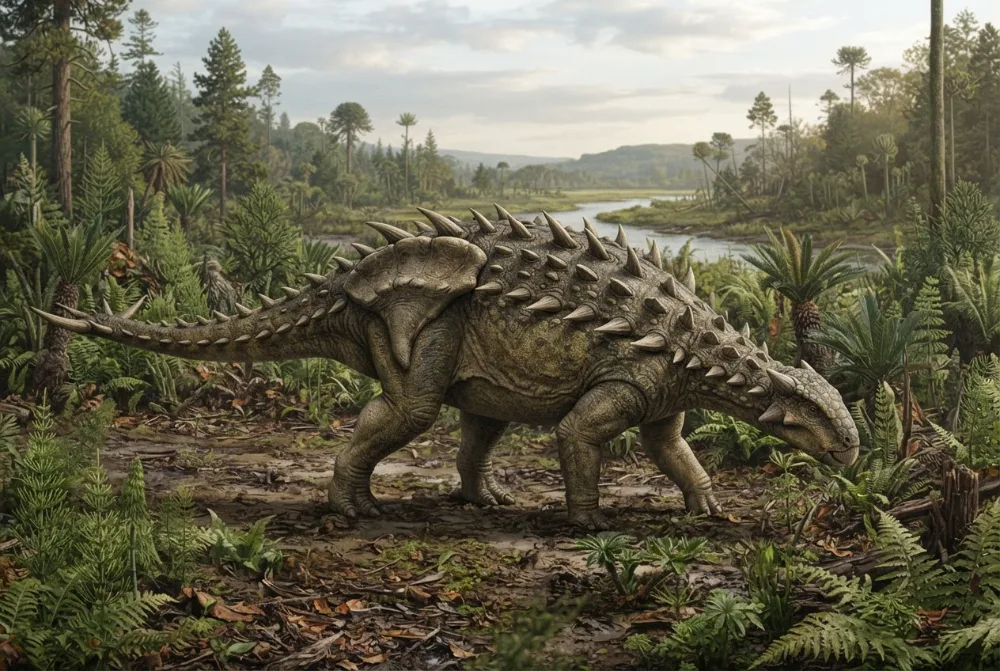
Polacanthus had a large fused plate of bone over its hips called a 'pelvic shield', which was about 108 centimetres wide and 90 centimetres long.1
Its body was covered with many spikes and small bony studs called ossicles.1
The first fossil of Polacanthus was discovered by the Reverend William Fox on the Isle of Wight in 1865.1
Polacanthus lived about 130 to 125 million years ago during the Early Cretaceous.1
Scientists are not sure if Polacanthus belongs to the Nodosauridae family or its own family, the Polacanthidae.1
A second species, Polacanthus rudgwickensis, was named in 1996 but later moved to its own genus Horshamosaurus in 2015.1
Polacanthus: gehien egindako galderak
?How big was Polacanthus?
Polacanthus grew to about 4 to 5 metres (13 to 16 feet) long. Estimates of its weight vary significantly, with some scientists suggesting it weighed around 2 tonnes (4,400 pounds), while others estimate it was much lighter.1
?What did Polacanthus eat?
Polacanthus was a herbivore, meaning it ate plants. Its teeth and body were built for eating vegetation.1
?Did Polacanthus have a tail club?
No, Polacanthus did not have a tail club like Ankylosaurus. Instead, its tail had spikes and bony plates for protection.1
?Where was Polacanthus found?
Polacanthus fossils have been found in England, especially on the Isle of Wight. The first fossil was discovered there in 1865 by the Reverend William Fox.13
?When did Polacanthus live?
Polacanthus lived during the Early Cretaceous Period, about 130 to 125 million years ago.1
?How fast could Polacanthus run?
Nobody knows for sure how fast Polacanthus could run, but it walked on all fours and had relatively long hindlimbs for an ankylosaur, which might have allowed it to move fairly quickly.1
Mito-hauslea
Mitoa: Polacanthus could swing its tail like a club.
Egia: Polacanthus did not have a tail club; its tail was covered in spikes but lacked the heavy bony club seen in some other ankylosaurs.1
Dino adituentzat
- Izen zientifikoa
- Polacanthus
- Izendatzailea:
- Fox 18664
- Taldea
- Dino kuirasdunak
- Familia / klada
- Nodosauridae4
- Sailkapena
- Ornithischia > Ankylosauria > Nodosauridae > Thyreophora4
- Arroken adina
- 139 eta 100 milioi urte artean (Berriasian / Albian)4
- Arroka-formazioak
- Wessex, Vectis, Pinilla de los Moros4
- Herrialdeak
- Erresuma Batua, Espainia4
- Fosil-erregistroak
- 16 The Paleobiology Database datu-basean4
- Honela ere ezaguna
- Euacanthus, Vectensia (orain animalia bertzat hartzen diren izen zaharragoak)4
- Aurkikuntza
- Polacanthus was discovered by Reverend William Fox on the Isle of Wight in 1865. The name was first used by Richard Owen in a lecture later that year, and the full description was published by Fox in 1866.1
- Oraindik eztabaidagai
- Scientists still debate whether Polacanthus was a nodosaurid or belonged to a separate family called Polacanthidae.1
Datuak nondik datozen
- Polacanthus (en.wikipedia.org)
- Polacanthus | Natural History Museum (nhm.ac.uk)
- Spotlight on Polacanthus - Horniman Museum and Gardens (horniman.ac.uk)
- Polacanthus in The Paleobiology Database (CC BY 4.0): adina, tokiak, arroka-formazioak, sailkapena.
Orrialde honetako datu bakoitzak zenbaki bat du, bere iturrira eramaten zaituena. Zerbait gaizki badugu, barkatu, dino-zaleak gara, ez zientzia-aldizkari bat. Idatzi [email protected] helbidera eta konponduko dugu.
 Rex gose da! Dino Wiki aita baten proiektua da, dinosauroak maite dituen bere semearentzat, doakoa, iragarkirik eta jarraitzailerik gabe. Helduek mokadutxo bat eman diezaiokete Rexi, sarean jarraitzen laguntzeko.Eman jaten Rexi
 Ankylosaurus
 Sauropelta
 Pinacosaurus
 Scutellosaurus
 Struthiosaurus
 Euoplocephalus
 Stegosaurus
 Iguanodon
 Archaeopteryx
 Giganotosaurus
 Microraptor
 Deinonychus