 Zer dino zara? Galdetegia
 Dino borroka
 Dino lasterketa
 Dino minijokoak
 Pegatina-albuma
 Dino TOP zerrendak
 Harritu nazazu!
Pycnonemosaurus
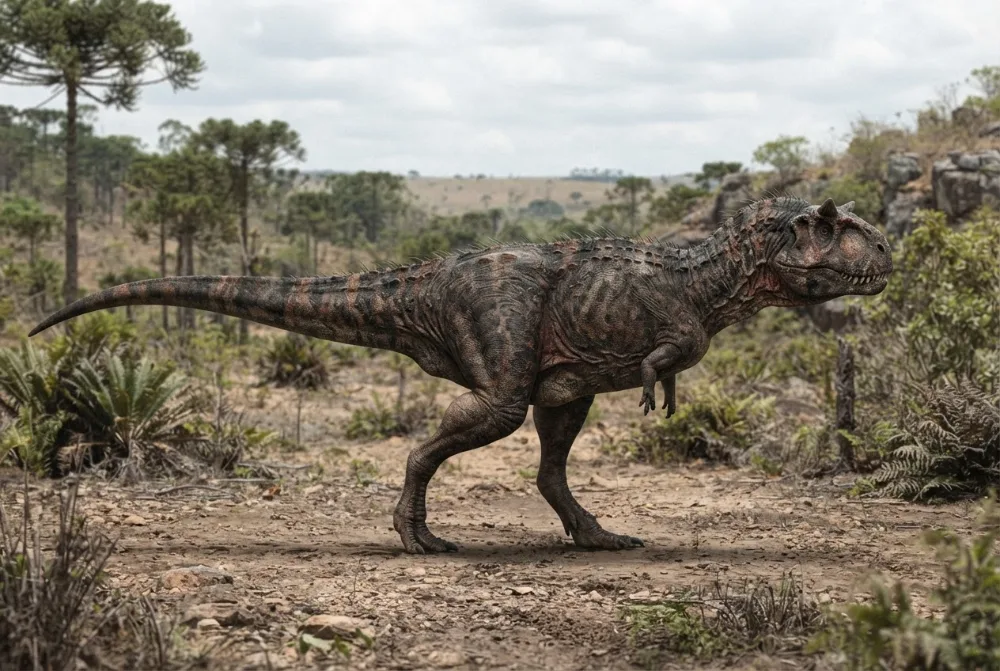
Pycnonemosaurus was a big meat-eating dinosaur with sharp teeth and strong legs. It lived in what is now Brazil, about 72 million years ago. It was one of the largest abelisaurids, a group of short-snouted predators.1
Noiz bizi izan zen?
Zein handia zen?
Zein luzea zen?
Zein altua zen?
kalkulua
Zein astuna zen?
 ilaran aparkatutako 2 auto bezain luze🍌bata bestearen atzean jarritako 50 banana bezain luze
 180 txakur bezain astun🍉720 angurria bezain astun🎒haurrez betetako 4 ikasgela oso bezain astun🐻❄️8 hartz zuri bezain astun🏃100 metro 12 segundotan egin zitzakeen korrika (gizakirik azkarrenak 9,6 behar ditu)
Zein handia zen Pycnonemosaurus ZUREKIN alderatuta?
Zure nabigatzaileko kalkulu hutsak. Ez da ezer gordetzen ez inora bidaltzen.
Zein azkarra zen?


Datu dibertigarriak
Pycnonemosaurus is the largest formally described abelisaurid, with later estimates reaching about 8.9 metres (29.2 ft) long.1
Its bones were found in red conglomeratic sandstone, and the surface was abraded, meaning the bones were partly exposed before being collected.1
The only known skeleton is incomplete, including five teeth, parts of seven tail vertebrae, a right pubis, a right tibia, and part of a right fibula.12
It had a small pubic foot and a hatchet-shaped cnemial crest on its tibia, which are unique features among abelisaurs.12
The specimen is thought to be from an immature individual, probably a subadult, so adults might have been even larger.1
Its tail vertebrae have fan-shaped transverse processes and forward projections, typical of abelisaurids, but these projections become smaller towards the end of the tail.1
Pycnonemosaurus: gehien egindako galderak
?How big was Pycnonemosaurus?
It was about 8.9 metres long and weighed around 3.6 tonnes. That makes it the largest formally described abelisaurid.1
?What did Pycnonemosaurus eat?
It was a predator that probably ate titanosaurs, which were huge long-necked dinosaurs found in the same area. Its small, sharp teeth helped it grip struggling prey.1
?Where was Pycnonemosaurus found?
Its bones were found in Brazil, in the state of Mato Grosso, in red conglomeratic sandstone of the Cachoeira do Bom Jardim Formation.1
?When did Pycnonemosaurus live?
It lived during the Late Cretaceous, about 72 million years ago, in the late Campanian to early Maastrichtian stages.1
?Was Pycnonemosaurus a dinosaur?
Yes, it was a carnivorous theropod dinosaur, part of the group Abelisauridae.1
?Is Pycnonemosaurus bigger than Carnotaurus?
Yes, Pycnonemosaurus was larger. It reached about 8.9 metres long, while Carnotaurus was about 7.8 metres long.3
Mito-hauslea
Mitoa: Pycnonemosaurus was a small dinosaur.
Egia: It was actually one of the largest abelisaurids, with length estimates up to 9 metres (29.5 ft) and weight up to 3.6 tonnes (4.0 short tons).1
Dino adituentzat
- Izen zientifikoa
- Pycnonemosaurus
- Izendatzailea:
- Kellner and Campos 20024
- Taldea
- Dino haragijaleak
- Familia / klada
- Abelisauridae4
- Sailkapena
- Theropoda > Ceratosauria > Abelisauridae4
- Arroken adina
- 100 eta 66 milioi urte artean (Cenomanian / Maastrichtian)4
- Herrialdeak
- Brasil4
- Fosil-erregistroak
- 1 The Paleobiology Database datu-basean4
- Aurkikuntza
- The fossils were collected in 1952 to 1953 by Llewellyn Ivor Price at a farm called Roncador in Mato Grosso, Brazil. The species was named by Kellner and Campos in 2002.14
- Oraindik eztabaidagai
- Scientists are not sure about its exact size because the only skeleton is incomplete and from a young individual, so estimates range from 6 to 9 metres long.1
Datuak nondik datozen
- Pycnonemosaurus (en.wikipedia.org)
- On a theropod dinosaur (Abelisauria) from the continental Cretaceous of Brazil (eurekamag.com)
- Allometry and body length of abelisauroid theropods: Pycnonemosaurus nevesi is the new king (sciencedirect.com)
- Pycnonemosaurus in The Paleobiology Database (CC BY 4.0): adina, tokiak, arroka-formazioak, sailkapena.
Orrialde honetako datu bakoitzak zenbaki bat du, bere iturrira eramaten zaituena. Zerbait gaizki badugu, barkatu, dino-zaleak gara, ez zientzia-aldizkari bat. Idatzi [email protected] helbidera eta konponduko dugu.
 Rex gose da! Dino Wiki aita baten proiektua da, dinosauroak maite dituen bere semearentzat, doakoa, iragarkirik eta jarraitzailerik gabe. Helduek mokadutxo bat eman diezaiokete Rexi, sarean jarraitzen laguntzeko.Eman jaten Rexi
 Allosaurus
 Carnotaurus
 Dilophosaurus
 Giganotosaurus
 Compsognathus
 Paronychodon
 Tyrannosaurus
 Triceratops
 Velociraptor
 Spinosaurus
 Ankylosaurus
 Parasaurolophus