 Zer dino zara? Galdetegia
 Dino borroka
 Dino lasterketa
 Dino minijokoak
 Pegatina-albuma
 Dino TOP zerrendak
 Harritu nazazu!
Scaphognathus
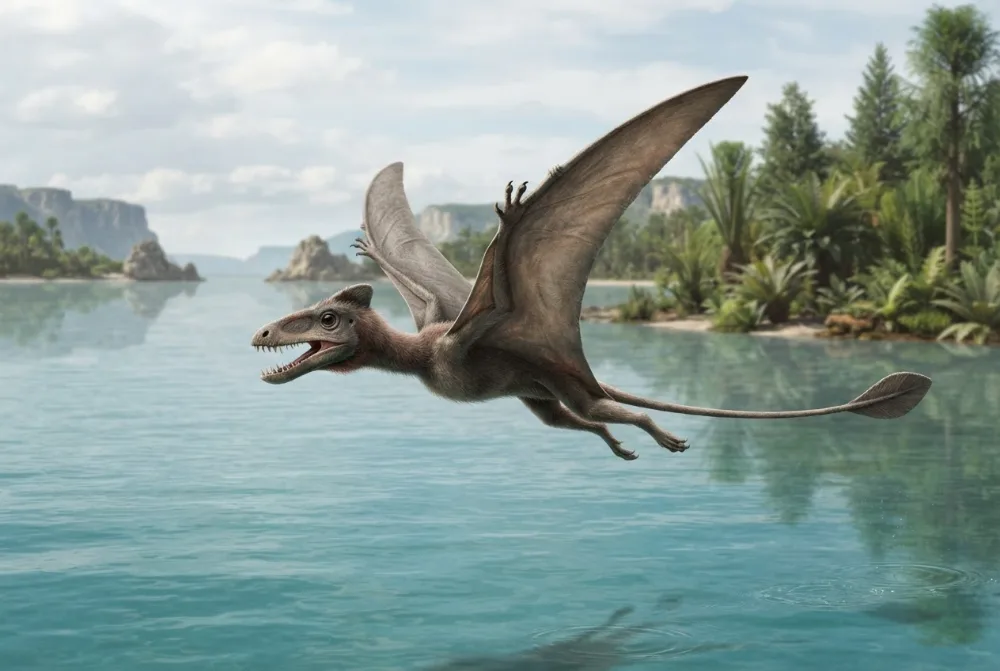
Scaphognathus was a small pterosaur with a blunt snout and a long tail. It flew over warm Jurassic lagoons and snatched fish from the water. Unlike many pterosaurs, it was probably awake during the day.1
Noiz bizi izan zen?
Zein handia zen?
Zein zabalak ziren bere hegoak?
 2 etxeko katu bezain luze, sudurretik buztanera⚽futbol zelai oso bat zeharkatu zezakeen hegan 11 segundotan
Zein handia zen Scaphognathus ZUREKIN alderatuta?
Zure nabigatzaileko kalkulu hutsak. Ez da ezer gordetzen ez inora bidaltzen.
Zein azkarra zen?


Datu dibertigarriak
Scaphognathus had a short, blunt skull only about 11 centimetres (4.5 inches) long.1
It had 16 teeth in the upper jaw and 10 in the lower jaw, and they pointed straight up and down, not forward.1
A second specimen found was much smaller, with a wingspan of only 50 centimetres (20 inches), and scientists think it was a juvenile.1
Scaphognathus lived during the Late Jurassic, about 155 to 150 million years ago.1
Its eye bones (scleral rings) suggest it was diurnal, or active during the day, unlike some other pterosaurs that were nocturnal.1
The first fossil was described in 1831 by August Goldfuss, who thought it was a species of Pterodactylus.1
Scaphognathus: gehien egindako galderak
?How big was Scaphognathus?
Scaphognathus had a wingspan of about 0.9 metres (3 feet). A second, smaller specimen had a wingspan of only about 50 centimetres (20 inches) and was probably a juvenile.12
?What did Scaphognathus eat?
Scaphognathus was a carnivore, meaning it ate meat. Its main food was a type of ancient fish called Pholidophorus.2
?Was Scaphognathus a dinosaur?
No, Scaphognathus was a pterosaur, a flying reptile, not a dinosaur. It lived during the Late Jurassic, about 155 to 150 million years ago.12
?Why did Scaphognathus have a long tail?
Scaphognathus had a long tail that ended in a leaf-shaped flap. This probably helped it steer and balance while flying, like a rudder on a boat.2
Mito-hauslea
Mitoa: Scaphognathus is sometimes confused with Rhamphorhynchus because both have long tails.
Egia: Scaphognathus had a shorter, blunter skull and vertical teeth, while Rhamphorhynchus had a longer, thinner skull with forward-pointing teeth.1
Dino adituentzat
- Izen zientifikoa
- Scaphognathus
- Izendatzailea:
- Wagner 18613
- Taldea
- Narrasti hegalariak
- Familia / klada
- Rhamphorhynchidae3
- Sailkapena
- Pterosauria > Rhamphorhynchidae3
- Arroken adina
- 168 eta 143 milioi urte artean (Bathonian / Tithonian)3
- Arroka-formazioak
- Solnhofener Plattenkalk, Tiaojishan3
- Herrialdeak
- Alemania, Txina3
- Fosil-erregistroak
- 3 The Paleobiology Database datu-basean3
- Honela ere ezaguna
- Brachytrachelus, Pachyrhamphus (orain animalia bertzat hartzen diren izen zaharragoak)3
- Aurkikuntza
- The first Scaphognathus fossil was described by August Goldfuss in 1831 from the Solnhofen Limestone near Eichstätt, Germany. He originally named it a new species of Pterodactylus. In 1861, Johann Wagner gave it its own genus name Scaphognathus.1
- Oraindik eztabaidagai
- Scientists are not sure whether some fossils from China belong to Scaphognathus or to a related pterosaur.3
Datuak nondik datozen
- Scaphognathus (en.wikipedia.org)
- Scaphognathus Facts for Kids (kids.kiddle.co)
- Scaphognathus in The Paleobiology Database (CC BY 4.0): adina, tokiak, arroka-formazioak, sailkapena.
Orrialde honetako datu bakoitzak zenbaki bat du, bere iturrira eramaten zaituena. Zerbait gaizki badugu, barkatu, dino-zaleak gara, ez zientzia-aldizkari bat. Idatzi [email protected] helbidera eta konponduko dugu.
 Rex gose da! Dino Wiki aita baten proiektua da, dinosauroak maite dituen bere semearentzat, doakoa, iragarkirik eta jarraitzailerik gabe. Helduek mokadutxo bat eman diezaiokete Rexi, sarean jarraitzen laguntzeko.Eman jaten Rexi
 Pteranodon
 Quetzalcoatlus
 Dorygnathus
 Rhamphorhynchus
 Anhanguera
 Pterodactylus
 Brachiosaurus
 Diplodocus
 Allosaurus
 Brontosaurus
 Compsognathus
 Camarasaurus