 Zer dino zara? Galdetegia
 Dino borroka
 Dino lasterketa
 Dino minijokoak
 Pegatina-albuma
 Dino TOP zerrendak
 Harritu nazazu!
Sericipterus
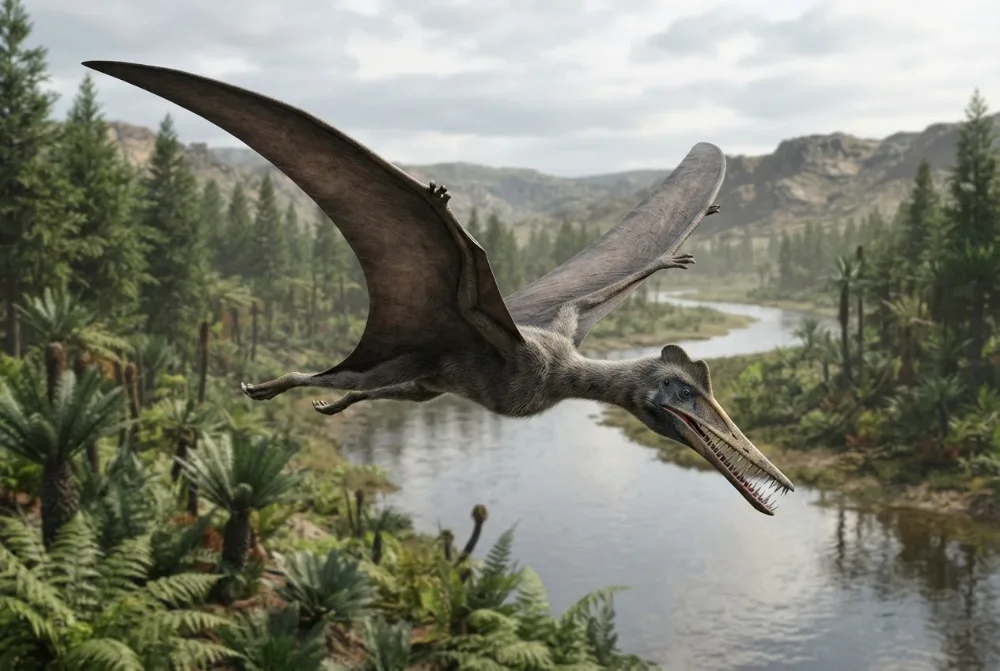
Sericipterus was a flying reptile that lived about 160 million years ago in what is now China. It had a wingspan of at least 1.73 meters (5.7 feet), making it one of the largest pterosaurs of its time. It probably soared over lakes and rivers, catching fish with its long, sharp teeth.12
Noiz bizi izan zen?
Zein handia zen?
Zein zabalak ziren bere hegoak?
 3 etxeko katu bezain luze, sudurretik buztanera⚽futbol zelai oso bat zeharkatu zezakeen hegan 8,4 segundotan
Zein handia zen Sericipterus ZUREKIN alderatuta?
Zure nabigatzaileko kalkulu hutsak. Ez da ezer gordetzen ez inora bidaltzen.
Zein azkarra zen?


Datu dibertigarriak
Sericipterus had three bony crests on its head: one on the snout, one on top of the skull, and a short crest at the front of the skull.1
It was one of the largest non-pterodactyloid pterosaurs, meaning it belonged to an early group of pterosaurs that did not have the short tails and long heads of later forms.2
The name Sericipterus comes from the Silk Road, the ancient trade route that passed through the region where it was found.1
Its teeth were curved, sharply pointed, and had two keels (sharp edges) for cutting, like steak knives.1
The holotype specimen (IVPP V14725) includes a disarticulated skull, partial lower jaw, many teeth, parts of the spine, wing bones, and other fragments.2
Sericipterus lived in a terrestrial (land) environment, unlike many pterosaurs that lived near the sea.2
Sericipterus: gehien egindako galderak
?How big was Sericipterus?
Sericipterus had a wingspan of at least 1.73 meters, making it one of the largest non pterodactyloid pterosaurs.12
?What did Sericipterus eat?
It likely ate small tetrapods, as it lived inland and had sharp, curved teeth with cutting edges, similar to other rhamphorhynchids.12
?When did Sericipterus live?
Sericipterus lived during the Late Jurassic, about 160 million years ago, in what is now China.12
?Was Sericipterus a dinosaur?
No, Sericipterus was a pterosaur, a flying reptile, not a dinosaur.1
Dino adituentzat
- Izen zientifikoa
- Sericipterus
- Izendatzailea:
- Andres et al. 20103
- Taldea
- Narrasti hegalariak
- Familia / klada
- Rhamphorhynchidae3
- Sailkapena
- Pterosauria > Rhamphorhynchidae3
- Arroken adina
- 162 eta 155 milioi urte artean (Oxfordian)3
- Arroka-formazioak
- Shishugou3
- Herrialdeak
- Txina3
- Fosil-erregistroak
- 1 The Paleobiology Database datu-basean3
- Aurkikuntza
- Sericipterus was named and described in 2010 by Brian Andres, James Clark, and Xu Xing. The fossils were found during joint expeditions from 2001 to 2006 in the Wucaiwan area of the Junggar Basin in China.12
- Oraindik eztabaidagai
- Scientists are not sure how many teeth Sericipterus had in its lower jaw, because the lower jaw bones were not fully preserved.1
Datuak nondik datozen
- Sericipterus (en.wikipedia.org)
- Full article: A new rhamphorhynchid pterosaur from the Upper Jurassic of Xinjiang, China, and the phylogenetic relationships of basal pterosaurs (tandfonline.com)
- Sericipterus in The Paleobiology Database (CC BY 4.0): adina, tokiak, arroka-formazioak, sailkapena.
Orrialde honetako datu bakoitzak zenbaki bat du, bere iturrira eramaten zaituena. Zerbait gaizki badugu, barkatu, dino-zaleak gara, ez zientzia-aldizkari bat. Idatzi [email protected] helbidera eta konponduko dugu.
 Rex gose da! Dino Wiki aita baten proiektua da, dinosauroak maite dituen bere semearentzat, doakoa, iragarkirik eta jarraitzailerik gabe. Helduek mokadutxo bat eman diezaiokete Rexi, sarean jarraitzen laguntzeko.Eman jaten Rexi
 Pteranodon
 Quetzalcoatlus
 Dorygnathus
 Rhamphorhynchus
 Anhanguera
 Pterodactylus
 Brachiosaurus
 Diplodocus
 Allosaurus
 Brontosaurus
 Compsognathus
 Camarasaurus