 Zer dino zara? Galdetegia
 Dino borroka
 Dino lasterketa
 Dino minijokoak
 Pegatina-albuma
 Dino TOP zerrendak
 Harritu nazazu!
Simurghia
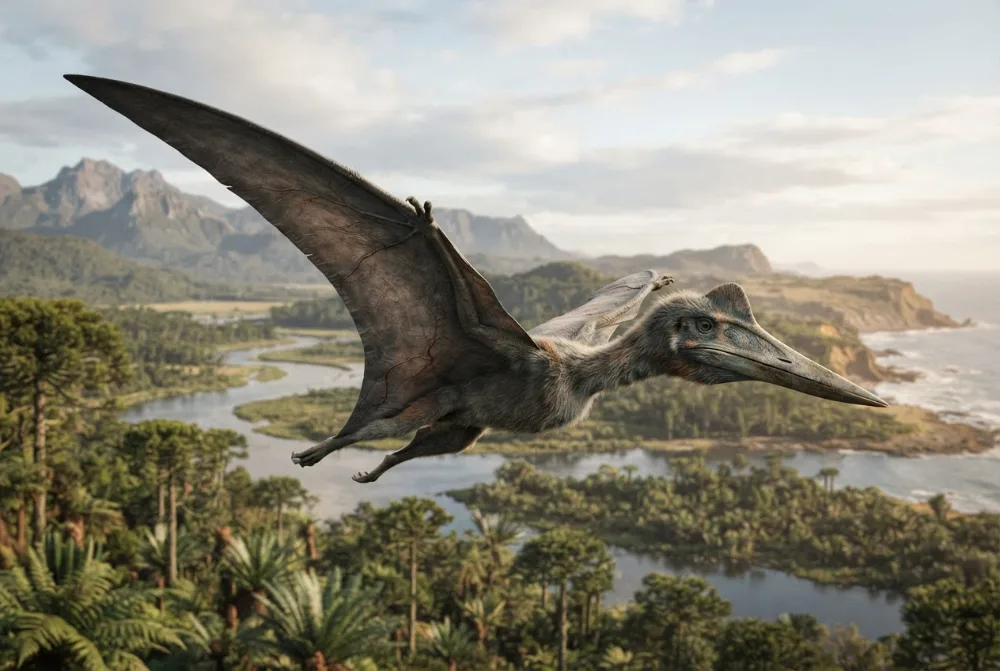
Simurghia was a big flying reptile that lived near the end of the age of dinosaurs. It had a wingspan as wide as a small car and probably soared over the ocean hunting for fish.1
Noiz bizi izan zen?
Zein handia zen?
Zein zabalak ziren bere hegoak?
 ilaran jarritako 3 bizikleta bezain zabalak diren hegoak⚽futbol zelai oso bat zeharkatu zezakeen hegan 5,5 segundotan
Zein handia zen Simurghia ZUREKIN alderatuta?
Zure nabigatzaileko kalkulu hutsak. Ez da ezer gordetzen ez inora bidaltzen.
Zein azkarra zen?


Datu dibertigarriak
Simurghia was named in 2018 along with two other pterosaurs from the same area: Alcione and Barbaridactylus.1
Its name comes from the Simurgh, a giant bird-like creature in Persian myths.1
Simurghia lived about 66 million years ago, just before the big extinction that killed the dinosaurs.1
All known fossils of Simurghia were found during a three-year dig that uncovered about 200 pterosaur specimens.1
Simurghia was much bigger than its close relative Alcione, weighing about 560 percent more.1
The type specimen is just a single upper arm bone (humerus), but it is enough to tell this was a distinct species.1
Simurghia: gehien egindako galderak
?How big was Simurghia?
Simurghia had a wingspan of about 5 metres (16 feet), as wide as a small car. It weighed about 6.6 times as much as its relative Alcione.1
?What did Simurghia eat?
Simurghia was a fish-eater. It likely soared over the ocean and hunted for fish.12
?When did Simurghia live?
Simurghia lived about 66 million years ago, during the Late Cretaceous period, just before the big extinction that killed the dinosaurs.1
Dino adituentzat
- Izen zientifikoa
- Simurghia
- Izendatzailea:
- Longrich et al. 20183
- Taldea
- Narrasti hegalariak
- Familia / klada
- Aponyctosauria3
- Sailkapena
- Pterosauria > Pterodactyloidea3
- Arroken adina
- 72 eta 66 milioi urte artean (Maastrichtian)3
- Arroka-formazioak
- Couche III3
- Herrialdeak
- Maroko3
- Fosil-erregistroak
- 1 The Paleobiology Database datu-basean3
- Aurkikuntza
- Simurghia was named in 2018 by paleontologists Nicholas Longrich, David Martill, and Brian Andres. The fossils were found in phosphate mines in Morocco.1
- Oraindik eztabaidagai
- Scientists are not sure if a pterosaur from Brazil called 'Nyctosaurus' lamegoi is also a species of Simurghia.1
Datuak nondik datozen
- Simurghia (en.wikipedia.org)
- A Dinosaur A Day: Simurghia (a-dinosaur-a-day.com)
- Simurghia in The Paleobiology Database (CC BY 4.0): adina, tokiak, arroka-formazioak, sailkapena.
Orrialde honetako datu bakoitzak zenbaki bat du, bere iturrira eramaten zaituena. Zerbait gaizki badugu, barkatu, dino-zaleak gara, ez zientzia-aldizkari bat. Idatzi [email protected] helbidera eta konponduko dugu.
 Rex gose da! Dino Wiki aita baten proiektua da, dinosauroak maite dituen bere semearentzat, doakoa, iragarkirik eta jarraitzailerik gabe. Helduek mokadutxo bat eman diezaiokete Rexi, sarean jarraitzen laguntzeko.Eman jaten Rexi
 Pteranodon
 Quetzalcoatlus
 Dorygnathus
 Rhamphorhynchus
 Anhanguera
 Pterodactylus
 Tyrannosaurus
 Triceratops
 Velociraptor
 Spinosaurus
 Ankylosaurus
 Parasaurolophus