 Zer dino zara? Galdetegia
 Dino borroka
 Dino lasterketa
 Dino minijokoak
 Pegatina-albuma
 Dino TOP zerrendak
 Harritu nazazu!
Sordes
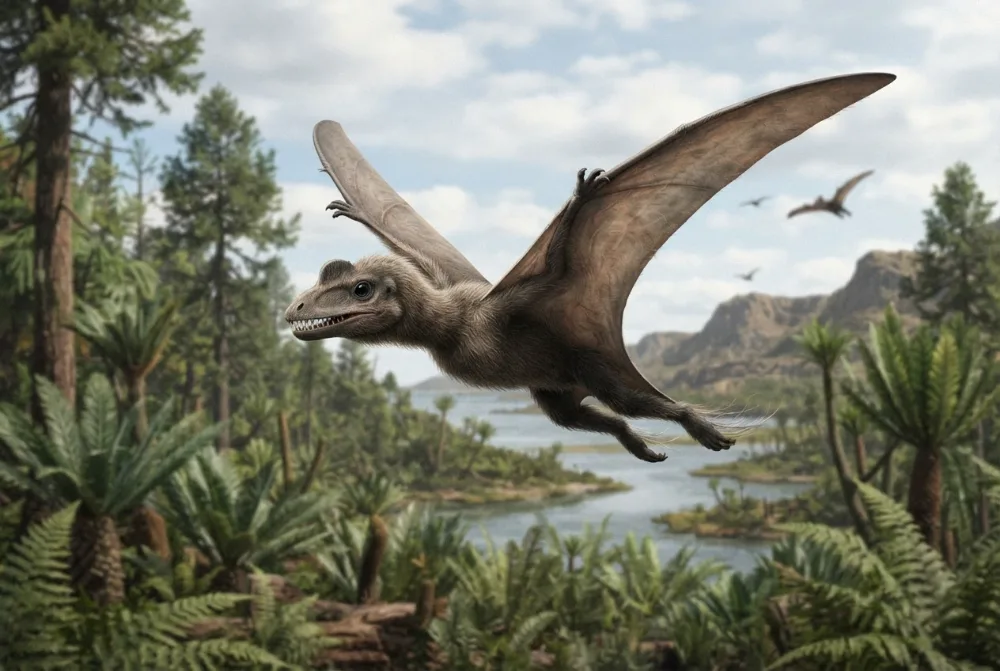
Sordes was a small flying reptile that lived about 155 million years ago. It had furry, hair-like coverings on its body and wings, making it look a bit like a tiny dragon. It was not a dinosaur, but a pterosaur, a close cousin of dinosaurs.13
Noiz bizi izan zen?
Zein handia zen?
Zein zabalak ziren bere hegoak?
Zein handia zen Sordes ZUREKIN alderatuta?
Zure nabigatzaileko kalkulu hutsak. Ez da ezer gordetzen ez inora bidaltzen.
Zein azkarra zen?


Datu dibertigarriak
Sordes was the first pterosaur to show clear evidence of hair-like filaments, called pycnofibres, covering its body. This was a big clue that pterosaurs were warm-blooded.1
Its wings were relatively short, and it had a long tail that made up more than half its total length. The tail ended in a diamond-shaped vane.1
The skull of Sordes was about 8 cm (3.2 inches) long, and it had no head crest, unlike many other pterosaurs.1
The wing membrane of Sordes was attached to its legs, and there was also a membrane between its legs, which helped with flying and gliding.1
Sordes: gehien egindako galderak
?What did Sordes eat?
It likely ate insects or amphibians. Its front teeth were good for catching slippery prey, and its back teeth were for crushing.1
?How big was Sordes?
About 0.63 metres across the wings, and its skull was only 8 cm long.1
?Why is it called Sordes?
Its name means 'hairy devil' in Latin. 'Sordes' means 'filth' or 'scum', but the scientist who named it intended 'evil spirit'.1
?Did Sordes have feathers?
No, it had hair-like filaments called pycnofibres covering its body and wings, not feathers. These helped keep it warm.1
?Where was Sordes discovered?
In Kazakhstan, in the Karabastau Formation from the Late Jurassic period.1
Mito-hauslea
Mitoa: Some people think Sordes was a dinosaur because it lived long ago and had a long tail.
Egia: Sordes was a pterosaur, a flying reptile, not a dinosaur. Pterosaurs are a separate group of reptiles that lived at the same time as dinosaurs.1
Dino adituentzat
- Izen zientifikoa
- Sordes
- Izendatzailea:
- Sharov 19713
- Taldea
- Narrasti hegalariak
- Familia / klada
- Rhamphorhynchidae3
- Sailkapena
- Pterosauria > Rhamphorhynchidae3
- Arroken adina
- 162 eta 155 milioi urte artean (Oxfordian)3
- Arroka-formazioak
- Karabastau3
- Herrialdeak
- Kazakhstan3
- Fosil-erregistroak
- 1 The Paleobiology Database datu-basean3
- Aurkikuntza
- Sordes was named in 1971 by Aleksandr Grigorevich Sharov. The first fossil was found in the 1960s in the Karatau mountains of Kazakhstan.13
- Oraindik eztabaidagai
- Scientists still debate whether the hair-like structures on Sordes were true hairs or just fibres from the wing membrane. Also, its exact place in the pterosaur family tree is not settled.12
Datuak nondik datozen
- Sordes (en.wikipedia.org)
- Pterosaur Database - Making Pterosaurs Fly (pterosaur.org.uk)
- Sordes in The Paleobiology Database (CC BY 4.0): adina, tokiak, arroka-formazioak, sailkapena.
Orrialde honetako datu bakoitzak zenbaki bat du, bere iturrira eramaten zaituena. Zerbait gaizki badugu, barkatu, dino-zaleak gara, ez zientzia-aldizkari bat. Idatzi [email protected] helbidera eta konponduko dugu.
 Rex gose da! Dino Wiki aita baten proiektua da, dinosauroak maite dituen bere semearentzat, doakoa, iragarkirik eta jarraitzailerik gabe. Helduek mokadutxo bat eman diezaiokete Rexi, sarean jarraitzen laguntzeko.Eman jaten Rexi
 Pteranodon
 Quetzalcoatlus
 Dorygnathus
 Rhamphorhynchus
 Anhanguera
 Pterodactylus
 Brachiosaurus
 Diplodocus
 Allosaurus
 Brontosaurus
 Compsognathus
 Camarasaurus