 Zer dino zara? Galdetegia
 Dino borroka
 Dino lasterketa
 Dino minijokoak
 Pegatina-albuma
 Dino TOP zerrendak
 Harritu nazazu!
Wendiceratops
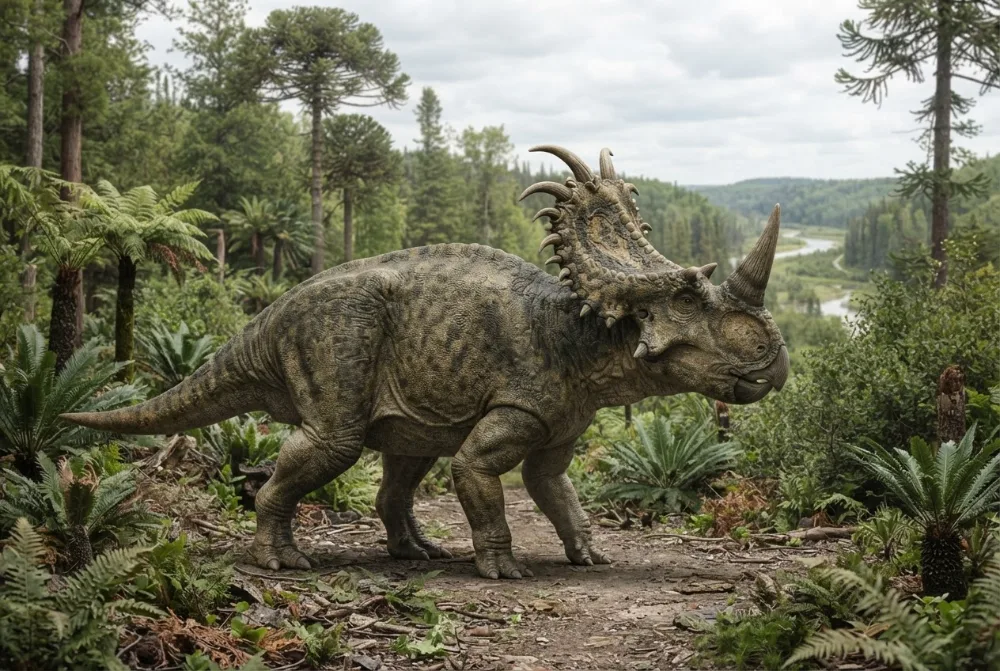
Wendiceratops was a plant-eating dinosaur with a huge bony frill on its head and a big upright horn above its nose. It lived about 78 to 79 million years ago in what is now Alberta, Canada. This dinosaur is one of the oldest horned dinosaurs with a tall nose horn ever found.1
Noiz bizi izan zen?
Zein handia zen?
Zein luzea zen?
Zein altua zen?
Zein astuna zen?

 6 txakur bezain luze, sudurretik buztanera🍌bata bestearen atzean jarritako 33 banana bezain luze75 txakur bezain astun🍉300 angurria bezain astun🧸haur-eskolako 79 haur bezain astun🎒47 eskolaume bezain astun🐻❄️3 hartz zuri bezain astun🏃100 metro 9,5 segundotan egin zitzakeen korrika (gizakirik azkarrenak 9,6 behar ditu)
Zein handia zen Wendiceratops ZUREKIN alderatuta?
Zure nabigatzaileko kalkulu hutsak. Ez da ezer gordetzen ez inora bidaltzen.
Zein azkarra zen?


Datu dibertigarriak
Wendiceratops had a frill decorated with many curved, forward-pointing spikes that made it look very fancy.1
Its name honors Canadian fossil hunter Wendy Sloboda, who discovered the bonebed where this dinosaur was found.1
Over 200 bones from many different Wendiceratops individuals were found together in one bonebed, making it one of the best-known early horned dinosaurs.1
Wendiceratops lived about 78 to 79 million years ago, during the Campanian stage of the Late Cretaceous.1
Scientists think the tall nose horn of Wendiceratops evolved separately from the nose horns of later horned dinosaurs like Triceratops.1
The ischium, a hip bone, of Wendiceratops had a wide, rectangular end, which is a unique feature not seen in other horned dinosaurs.1
Wendiceratops: gehien egindako galderak
?How big was Wendiceratops?
Wendiceratops reached about 6 metres (20 feet) in length and weighed about 1.5 metric tons (1.7 short tons).2
?What did Wendiceratops eat?
Wendiceratops was a herbivore, eating low-lying plants. It cropped them with a parrot-like beak and sliced them with leaf-shaped teeth.3
?Why did Wendiceratops have a nose horn?
The tall nose horn was likely used for display or defense, but scientists aren't sure exactly. It evolved separately from the nose horns of later horned dinosaurs like Triceratops.3
?When did Wendiceratops live?
Wendiceratops lived about 78 to 79 million years ago, during the Campanian stage of the Late Cretaceous.3
Mito-hauslea
Mitoa: Wendiceratops had a long nose horn like a rhino.
Egia: Wendiceratops had an upright nasal horn, but its exact shape is unknown because the nasal bone is incomplete.1
Dino adituentzat
- Izen zientifikoa
- Wendiceratops
- Izendatzailea:
- Evans and Ryan 20154
- Taldea
- Dino adardunak
- Familia / klada
- Ceratopsidae4
- Sailkapena
- Ornithischia > Ceratopsia > Ceratopsidae4
- Arroken adina
- 84 eta 72 milioi urte artean (Campanian)4
- Arroka-formazioak
- Oldman4
- Herrialdeak
- Kanada4
- Fosil-erregistroak
- 1 The Paleobiology Database datu-basean4
- Aurkikuntza
- Wendiceratops was named by paleontologists David Evans and Michael Ryan in 2015 based on fossils from a bonebed in Alberta, Canada. The bonebed was discovered by fossil hunter Wendy Sloboda, and the dinosaur was named in her honor.1
- Oraindik eztabaidagai
- Scientists are not sure exactly how tall or curved the nose horn of Wendiceratops was, because the nasal bone is not completely preserved.1
Datuak nondik datozen
- Cranial Anatomy of Wendiceratops pinhornensis gen. et sp ... (journals.plos.org)
- Wendiceratops (Wikipedia) (Wikipedia)
- Introducing Wendiceratops: A remarkable new horned dinosaur | Royal Ontario Museum (rom.on.ca)
- Wendiceratops in The Paleobiology Database (CC BY 4.0): adina, tokiak, arroka-formazioak, sailkapena.
Orrialde honetako datu bakoitzak zenbaki bat du, bere iturrira eramaten zaituena. Zerbait gaizki badugu, barkatu, dino-zaleak gara, ez zientzia-aldizkari bat. Idatzi [email protected] helbidera eta konponduko dugu.
 Rex gose da! Dino Wiki aita baten proiektua da, dinosauroak maite dituen bere semearentzat, doakoa, iragarkirik eta jarraitzailerik gabe. Helduek mokadutxo bat eman diezaiokete Rexi, sarean jarraitzen laguntzeko.Eman jaten Rexi
 Triceratops
 Protoceratops
 Ojoceratops
 Tatankaceratops
 Psittacosaurus
 Centrosaurus
 Tyrannosaurus
 Velociraptor
 Spinosaurus
 Ankylosaurus
 Parasaurolophus
 Pteranodon